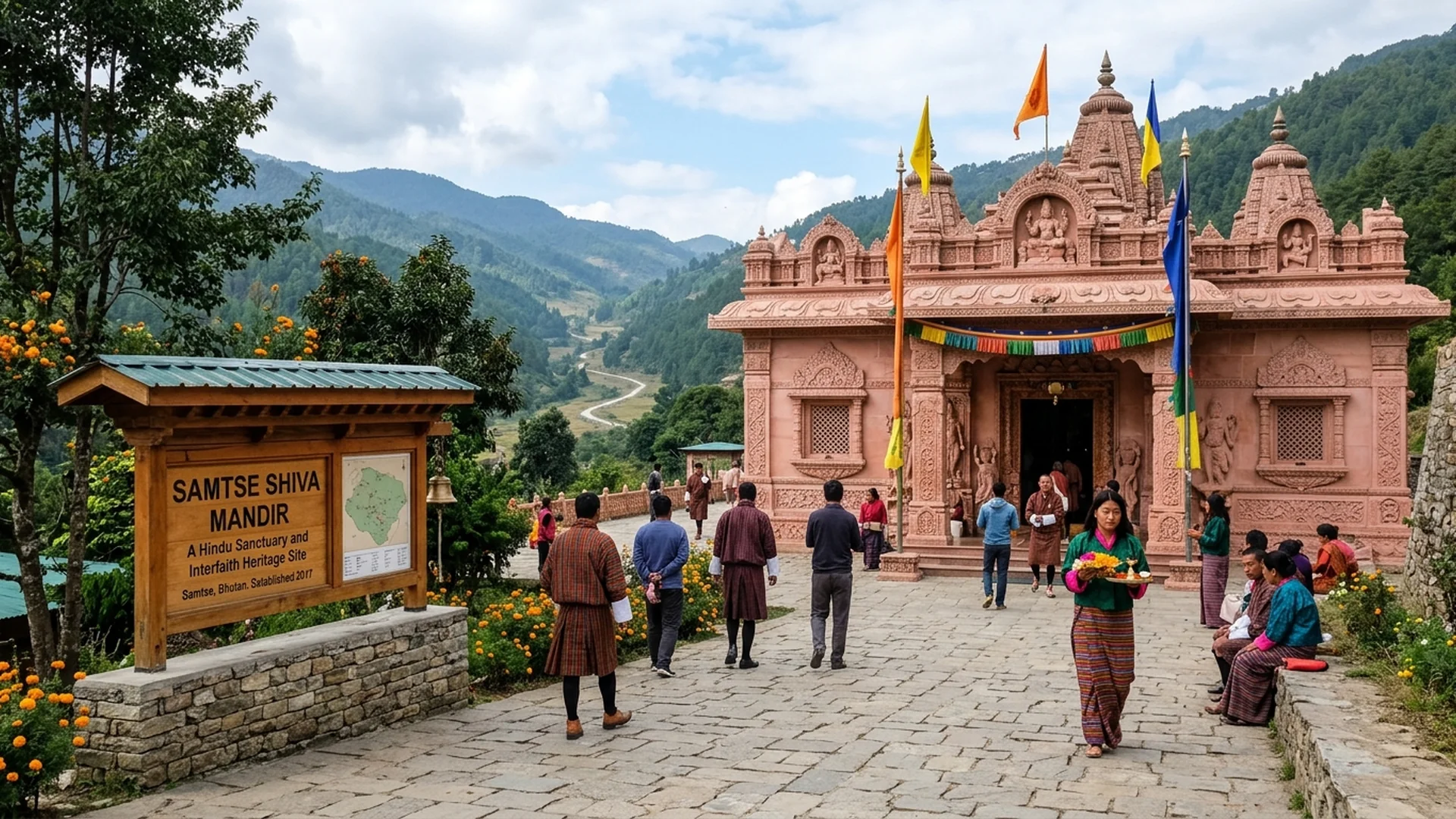
When the Kingdom of Bhutan is invoked, the mind instinctively conjures visions of pristine pine forests, imposing cliffside dzongs, and ancient Vajrayana monasteries veiled in mountain mists. Yet, beyond these iconic alpine reaches lies a lesser-known dimension of the kingdom’s cultural tapestry. In the verdant southern foothills of the Samtse district, where international borders blur, the breath of devotion extends gracefully beyond a single spiritual tradition.
Here stands the Samtse Shiva Mandir, often simply called the Shivalaya Mandir—a breathtaking sanctuary carved from roseate pink sandstone. Far more than a mere place of worship, this architectural marvel serves as a living testament to the visionary ethos of His Majesty King Jigme Khesar Namgyel Wangchuck, who envisioned a realm where citizens of all backgrounds thrive together under the protective canopy of the golden throne. Intricately sculpted by master artisans, this sanctuary stands as a timeless offering of unity and spiritual grace.
Trans-Himalayan Architecture: When Rajasthani Stone Meets Bhutanese Craft
Crossing the threshold of the Samtse Shiva Mandir feels akin to stepping into a sanctuary untouched by the rush of modern time. The structure is fashioned from the finest pink sandstone and white marble, meticulously hand-carved by master artisans in Rajasthan before making the long overland journey to find its permanent home in Bhutan. Delicate friezes of deities, blooming lotus motifs, and sacred Sanskrit inscriptions etched into the stone facade bear witness to generations of traditional Indian stonemasonry.
Yet what makes the temple profoundly unique is its architectural synthesis. The robust Northern Indian aesthetic is thoughtfully married to traditional Bhutanese structural elements—from the sweeping eaves and intricate multi-colored woodwork on the window frames to the balanced proportions that echo indigenous Bhutanese architecture. This dialogue between cultures creates a visual harmony found nowhere else on earth.
A Royal Vision of Unity and the Heart of the South
Beneath the intricate stonework lies a deep narrative of sovereign care and community belonging. The Shiva Mandir was born from the personal initiative of His Majesty King Jigme Khesar Namgyel Wangchuck, who recognized the spiritual needs of the thriving Hindu communities residing in the fertile southern plains of Samtse. By royal command, this sanctuary was brought to life as a dedicated space for daily worship, community gatherings, and national celebrations.
The presence of this temple reinforces Bhutan’s guiding developmental philosophy of Gross National Happiness (GNH), which measures national progress not merely through cold economic metrics, but through the preservation of cultural diversity, communal peace, and the shared well-being of all people under one flag.
The Quiet Elegance of Samtse
Samtse may remain off the well-trodden tourist itineraries, but for the discerning traveler in search of profound authenticity, this southern district reveals a quiet, unheralded charm. The atmosphere surrounding the temple is one of profound stillness. The soft chiming of brass bells mingles with the gentle murmur of evening prayers, inviting deep contemplation among visitors.
As the waning afternoon sun casts a warm, golden amber hue across the pink sandstone facade, the entire temple seems to glow from within. It is an exquisite, unhurried moment to stand in quiet reflection, absorbing the living energy of a sanctuary dedicated to the divine.