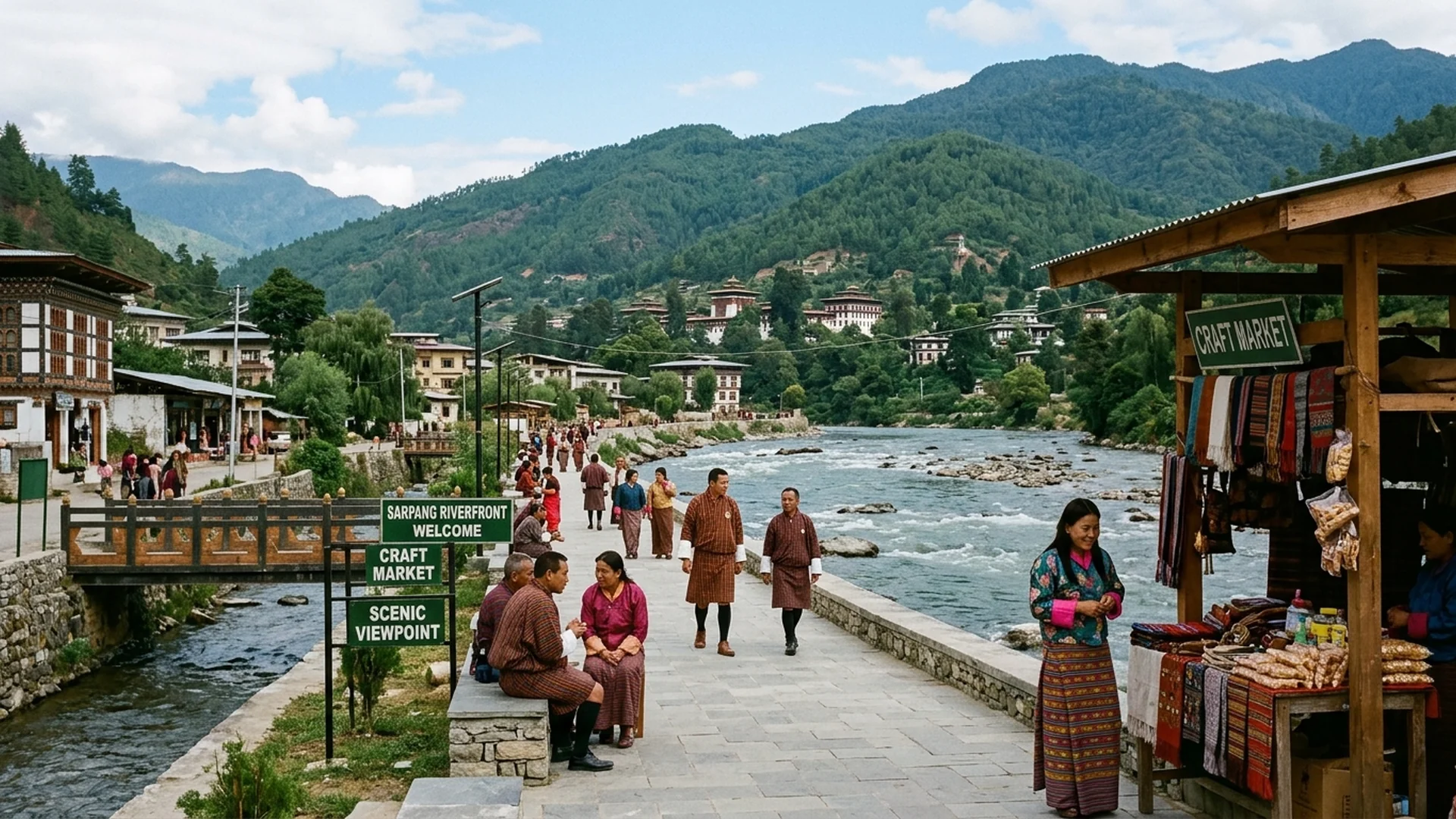
When conjuring the image of Bhutan, the mind instinctively wanders to high-altitude Himalayan passes, wind-whipped prayer flags snapping in crisp mountain air, and snow-draped northern peaks. Yet, far to the south of the Thunder Dragon Kingdom lies a completely different yet equally captivating geographical and cultural dimension. The Sarpang Riverfront—a realm of lush wetlands and subtropical forests—is rapidly emerging as a compelling destination for discerning global travelers seeking untouched, off-the-beaten-path experiences where sweeping river waters meet boundless biodiversity.
In this southern frontier, the resonant rush of the Sarpang River carving through dense emerald canopies is more than just a picturesque backdrop; it serves as a living boundary and a vital ecological corridor. Breathing under a gentle subtropical climate, the riverfront presents a fresh, vibrant facet of Bhutan rich in wildlife and multi-ethnic communities, even as it steps boldly into history as the geographic heart of the Gelephu Mindfulness City (GMC)—a revolutionary, globally pioneering sustainable smart city.
Subtropical Ecology and the Untamed Riverways
The landscape of Sarpang district in southernmost Bhutan feels like an entirely separate realm of pristine abundance. The subtropical climate cloaks the region in evergreen rainforests year-round. The Sarpang Riverfront is defined by expansive, wide river courses that wind effortlessly through rolling hills and fertile lowlands, entirely untouched by massive hydraulic engineering. Nature is left to dictate the rhythm of the hydrological systems.
This riparian zone acts as a vital natural migration corridor for magnificent wildlife, including wild elephants, majestic hornbills, and Bengal tigers that roam freely along biological corridors linking to Royal Manas National Park. Standing quietly by the Sarpang River at dawn as thin veils of mist lift over the canopy delivers a profound sense of stillness, inviting wildlife enthusiasts and connoisseurs of untouched wilderness to immerse themselves in a landscape fiercely protected by Bhutan’s uncompromising environmental legislation.
Multi-Ethnic Heritage and Riverbank Livelihoods
Beyond its natural splendor, the Sarpang Riverfront and its surrounding settlements harbor a cultural diversity rarely found in the higher Himalayan valleys. The communities inhabiting the Sarpang district include various indigenous and settled groups—such as Sharchopas, Ngalops, and local lowland communities—whose interwoven heritages blend traditional customs with a serene, water-centric way of life.
Visiting Sarpang offers travelers an intimate window into the warm hospitality of the southern populace. Local markets and sustainable farming practices along the riverbanks reflect a daily existence tuned to the pulse of the earth, echoing a deep-rooted respect for nature and the Bhutanese philosophy of well-being. This convergence allows guests to appreciate a different, harmonious facet of human coexistence with the primeval forest.
The Horizon of Tomorrow: Gateway to Gelephu Mindfulness City
The significance of the Sarpang Riverfront extends far beyond its ecological beauty; the region is currently undergoing a visionary transformation as the cornerstone of the Gelephu Mindfulness City (GMC). Conceived as a special economic zone and global template for mindful, sustainable urban design, this visionary initiative redefines the future of the kingdom.
This monumental project is master-planned to honor the natural topography, river systems, and wildlife corridors, anchored firmly in the principles of Gross National Happiness (GNH). Future urban development here prioritizes clean technology, renewable energy, and eco-sensitive architecture. Arriving at the Sarpang Riverfront today feels akin to stepping into a living historical pivot point where ancient wisdom and forward-thinking innovation intersect in perfect equilibrium.