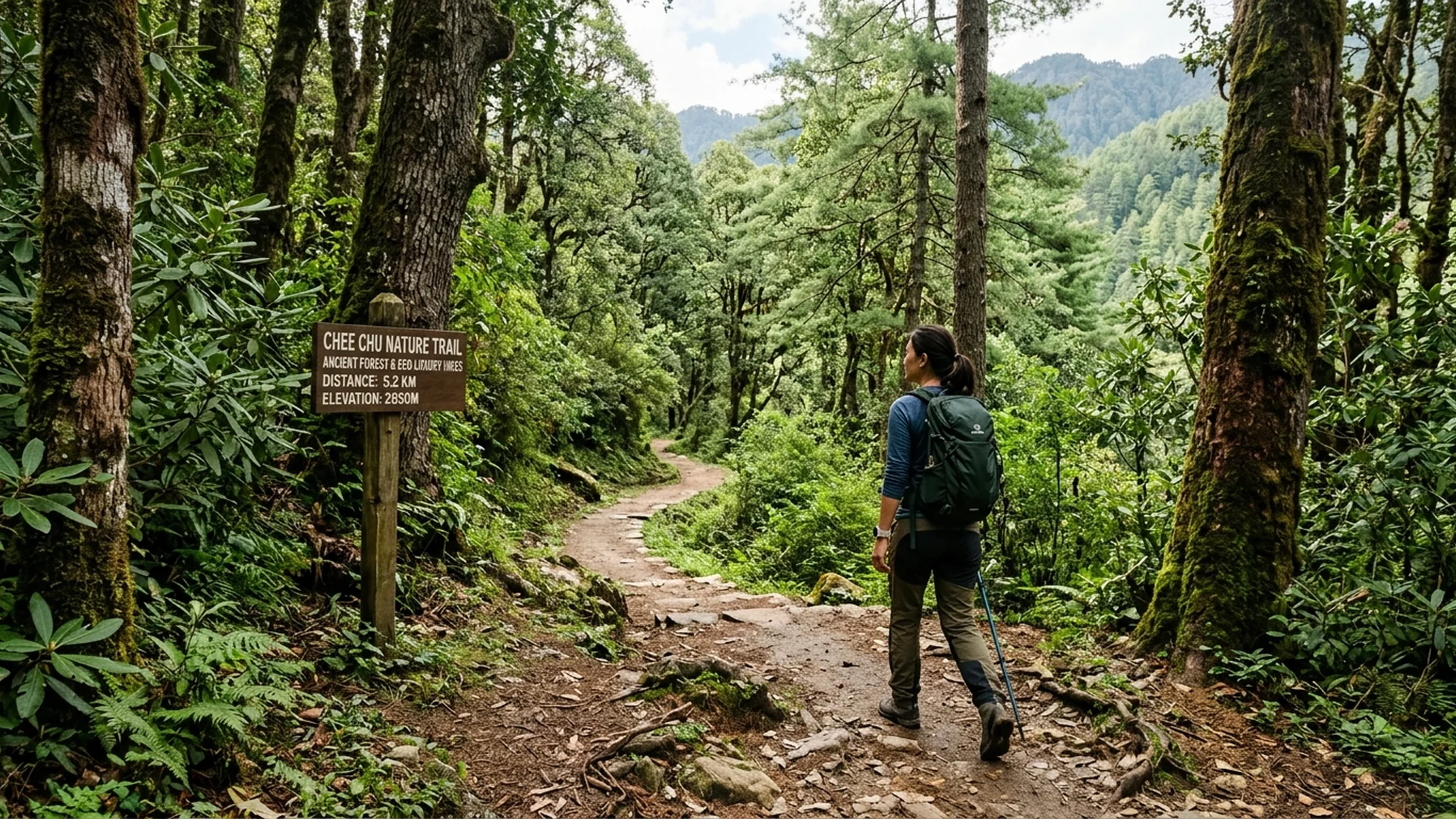
As the morning mist gradually lifts from the high ridges, it leaves behind a delicate golden luminescence filtering through centuries-old blue pine canopies and ancient rhododendron groves. The only sound here is the rhythmic cadence of your own breath and the distant, soothing murmur of crystalline mountain streams rushing down from remote Himalayan valleys. In this sacred landscape, time slows to an unhurried tempo where journeys are measured not by distance or velocity, but by the quiet purification of the spirit amidst some of the most untouched wilderness on Earth.
The Chee Chu Nature Trail is far more than a mere walking path in the Kingdom of Bhutan; it serves as a grand portal into an elevated realm of eco-luxury and mindful repose. It invites discerning global travelers seeking deeper meaning to immerse themselves in a profoundly vibrant ecosystem where culture and nature exist in timeless harmony, entirely removed from arduous physical exertion. This is an untouched haven for those wishing to slip away from worldly commotion and commune with the natural world with an awakened heart.
Heart of the Himalayan Wild: Exploring the Untouched Ecosystem of Chee Chu
Stepping onto the Chee Chu Nature Trail is akin to entering a living sanctuary of natural history. Towering blue pines and ancient firs stand as silent sentinels challenging the passage of time, while the forest floor is blanketed in emerald-green mosses and a rich tapestry of native ferns—testaments to the exceptional moisture and fertility of the volcanic mountain soils in this sheltered valley.
The defining hallmark of this route is its quiet, thriving biodiversity. Rare high-altitude Himalayan avifauna serenade passing travelers, while seasonal alpine wildflowers paint the understory with bursts of vivid color. A premium Bhutan trekking experience along this path centers fundamentally upon the practice of Shinrin-yoku, or forest bathing—an immersive sensory ritual designed to alleviate modern stress and restore nervous system equilibrium through incomparably pure, crisp mountain air.
The Aesthetics of Footfalls: The Art of Slow-Travel Hiking
For connoisseurs of mindful outdoor exploration, the Chee Chu route is meticulously designed to honor an unhurried, contemplative pace. With moderate distances and gentle elevation gradients, the trail encourages a deep visual and sensory engagement with the surrounding landscape. Walkers are invited to linger over subtle details: morning dew glistening on blades of high-altitude grass, the intricate fissures of ancient tree bark, or slanting sunbeams piercing through low-slung valley mists.
This deliberate style of movement embodies the true philosophy of eco-tourism. Every step along the natural earth path is preserved in its raw, unpaved state, free from intrusive architectural developments. This deliberate restraint reinforces a profound respect for the delicate interdependence between humanity and the environment, allowing visitors to gather moments of stillness unattainable within the frenetic confines of modern global cities.
Cultural Heritage and Sustainability: The Pulse of the Thunder Dragon Kingdom
Beneath the verdant beauty of the Chee Chu trail lies Bhutan’s unwavering commitment to Gross National Happiness (GNH)—a national development philosophy prioritizing holistic well-being over raw economic output. This ancient forest is not merely an ecological asset; it is deeply intertwined with the spiritual consciousness of local communities who regard the wilderness as a living sanctuary that sustains all life.
Trail administration reflects strict conservation mandates alongside the reinvestment of the Sustainable Development Fee (SDF), ensuring that the delicate natural balance remains undisturbed by mass tourism pressures. Travelers who choose to walk this path become active patrons of the preservation efforts safeguarding these ancient woodlands for generations yet unborn.