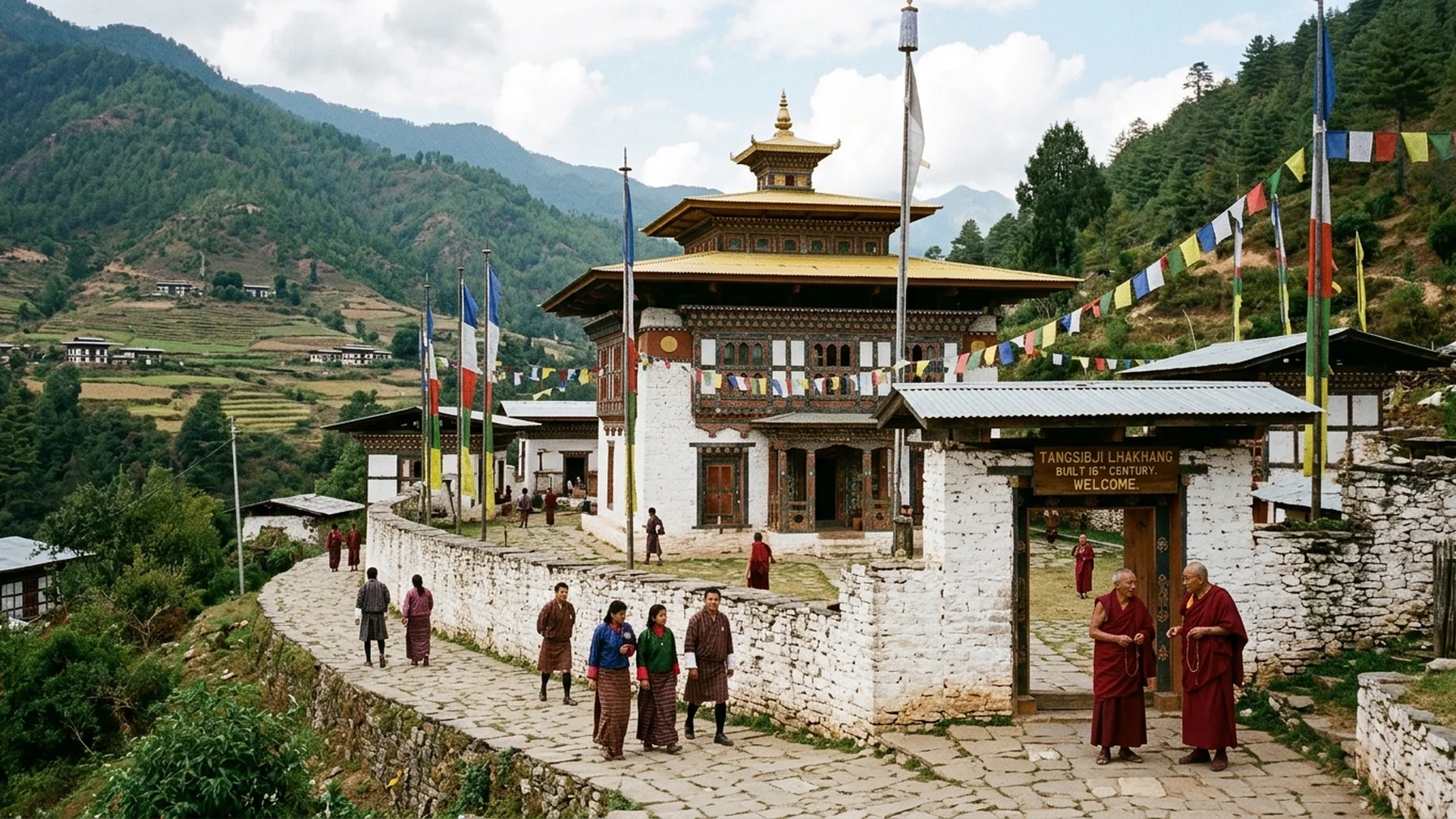
As the morning mist gradually lifts from the intricate, deep valleys of Trongsa, the silent silhouette of an ancient stone monastery emerges on the horizon. This is not a bustling commercial landmark, but rather Tangsibji Lhakhang—a deeply humble cultural jewel that continues to pulse with the devotional heartbeat of traditional Bhutan.
Journeying to Tangsibji Lhakhang feels akin to stepping across the threshold of time, slipping away from the turbulence of the modern world and into a realm of sacred tranquility. The traditional Vajrayana architecture harmonizes effortlessly with the surrounding topography, mirroring a philosophy of living in absolute synchronicity with the mountains. Here, the soft murmur of prayer and the subtle scent of incense drift upon the breeze, enfolding the traveler’s soul in profound stillness.
Architecture and the Allure of the Three-Tiered Sanctuary
Tangsibji Lhakhang is distinguished by its classic three-story architectural structure, meticulously preserved by the local community and monastic body. Built from indigenous stone and timber in accordance with ancient geomantic tenets, the edifice exemplifies Bhutanese master craftsmanship, gracefully adapting to the steep contours of the valley slope. The interior is steeped in history, where every corner narrates timeless tales through ancient thangka murals rendered in natural mineral and botanical pigments. These artworks retain an artistic and historical brilliance unique to the Vajrayana tradition.
Spiritual Epicenter and the Historical Echoes of Trongsa
Renowned as a cradle of fortresses and the ancestral lineage of the Bhutanese monarchy, Trongsa finds its spiritual anchor in Tangsibji Lhakhang, an institution that has quietly accompanied the daily lives of local inhabitants for generations. Beyond serving as a venue for religious rites, the monastery acts as a communal hearth, safeguarding sacred traditions and Buddhist teachings. Within its sanctum rest revered statues and holy artifacts where senior monks and devoted pilgrims gather to seek auspicious blessings. The serene ambiance within the sacred hall invites visitors to pause, introspect, and commune with a pure energetic resonance rarely found in the outside world.
Retreating into Silence: A New Dimension of Cultural Travel
Visiting Tangsibji Lhakhang in Bhutan constitutes an ideal pilgrimage for travelers captivated by quietude and mindful exploration. Journeying to this sacred enclave dissolves the restless rush of daily life, inviting leisurely strolls through the surrounding valley landscapes, exchanges of sincere smiles with local residents, and active participation in preserving a delicate cultural heritage free from the pressures of mass tourism.