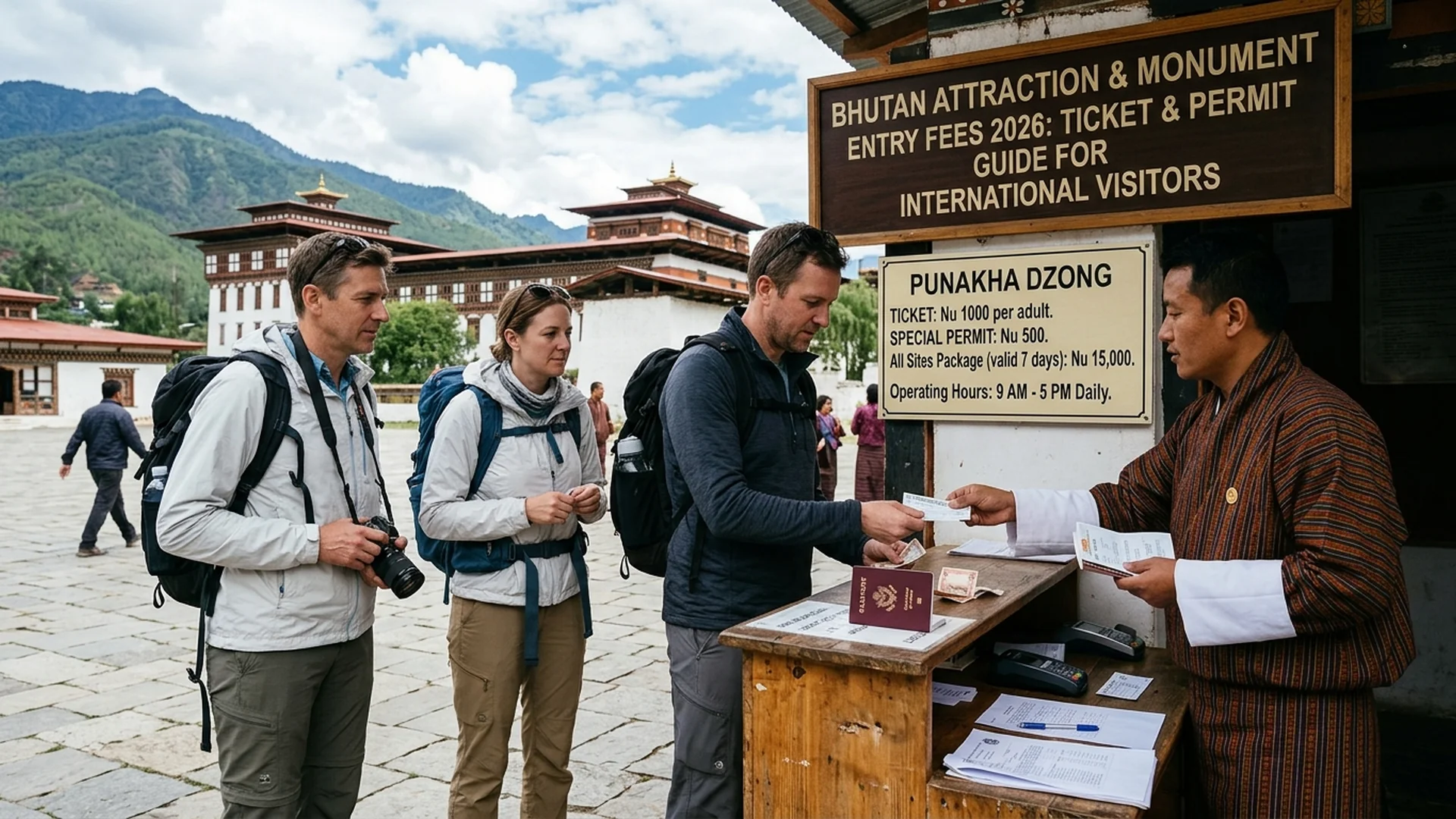
As the sacred valleys of the Thunder Dragon Kingdom continue to safeguard their pristine landscapes through thoughtful preservation policies, a journey to Bhutan transcends mere sightseeing. It is an invitation to engage with a sophisticated framework protecting a delicate living heritage. In 2026, the kingdom’s tourism management structure has evolved further to accommodate discerning travelers who appreciate meticulous planning. Discerning the critical distinction between the Sustainable Development Fee (SDF) and site-specific monument fees is the foundational step every visitor must master before setting foot upon these revered Himalayan heights.
Far from a standard bureaucratic hurdle, this dual-tier structure ensures that the immense spiritual and architectural treasures of the realm receive dedicated, sustainable care. Understanding how these systems operate guarantees an unhurried, deeply immersive exploration of ancient fortresses and sacred shrines.
Decoded Budget Architecture: SDF Versus Monument Fees
A frequent misconception among first-time visitors is the assumption that the daily Sustainable Development Fee (SDF) of 100 USD per night encompasses all entrance tickets to attractions and sacred sites. In truth, this daily contribution acts as an entry key to the nation, directly funding education, healthcare, and carbon-neutral initiatives. However, when visiting heritage architecture—such as sacred monasteries and fortified dzongs—travelers must allocate a separate budget for monument fees.
For instance, the arduous yet transcendent ascent to the Tiger’s Nest, or Taktshang Goemba, carries a specific entry tariff, while primary dzongs in districts like Punakha and Thimphu require distinct local contributions. This separation ensures that revenue flows directly toward the meticulous conservation and artisan restoration of each individual sanctuary, preserving intricate murals and ancient woodwork for generations to come.
A Seamless Transition: Digital Ticketing and Guide Integration
The era of queuing at temple entrances with paper currency has gracefully drawn to a close. Bhutan has fully integrated the National Monument Ticketing System, a sophisticated digital platform utilizing secure QR codes coordinated through official tour operators and licensed local guides. This innovation eliminates crowding at sensitive spiritual nodes, maintains accurate visitor flow analytics, and protects the contemplative silence of monastic sanctuaries.
For high-net-worth travelers accustomed to frictionless service, this system provides absolute convenience. Every procedural detail—from e-ticket generation to credential verification—is handled invisibly in the background by your dedicated guide, allowing you to remain entirely present in the moment.
Exceptions and Privileges: Cultivating Young Explorers
Even as an exclusive, high-value destination, Bhutan maintains a deeply compassionate and family-oriented fee structure. For families introducing the next generation to global heritage, children under the age of five enjoy complimentary admission to all cultural monuments and sacred grounds without exception.
Furthermore, young explorers between the ages of six and seventeen receive a fifty percent reduction across all national monument tariffs. This thoughtful policy not only alleviates family travel expenses but actively encourages younger minds to develop a profound, early appreciation for Himalayan art, philosophy, and environmental stewardship.