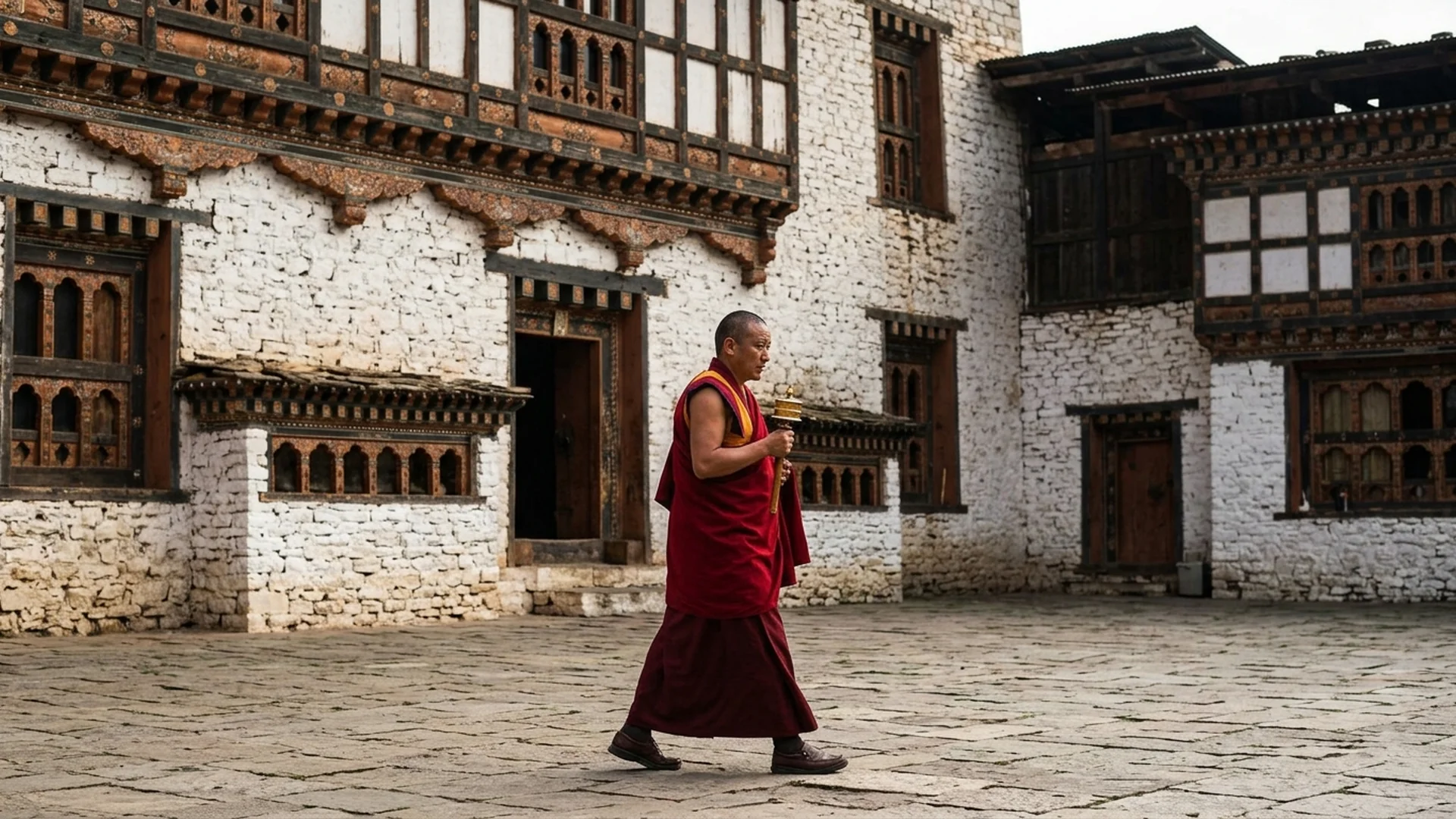
When you step beyond the familiar western thresholds of Paro and Thimphu, Bhutan begins to reveal its truest, most unadulterated face—raw, beautiful, and steeped in ancient spirituality untouched by the modern world. At the terminus of the eastern highway lies Trashigang, a magnificent jewel tucked deep within complex, folded mountain ranges where morning mists caress towering cliffs and the gentle roar of the Dangme Chhu river sings an eternal song of time.
Visiting Trashigang is not merely a geographical excursion; it is a journey backward into the roots of a tranquil valley civilization. Here, discerning global travelers encounter a profound new paradigm of luxury—one defined by stillness, absolute privacy, and seamless cultural dialogue. This is the heartbeat of the east, opening its doors to those who seek the true essence of transformative travel.
Trashigang Dzong: The Floating Fortress Over Himalayan Abysses
Perched upon a dramatic promontory resembling a fairy-tale stronghold, Trashigang Dzong has defied the winds of time since its establishment in 1659 by Shong-drung Ngawang Namgyal, erected originally to defend the eastern marches against external incursions. The architecture of this fortress is striking, encircled by sheer vertical cliffs below where the Dangme Chhu and Gamri Chhu rivers converge to create a breathtaking panorama of a citadel suspended in mid-air. When golden afternoon light strikes the whitewashed walls and vibrant timber carvings, the mystical dimensions of ancient Bhutanese architecture achieve absolute harmony. Serving as both the administrative and spiritual heart of the region, the dzong’s interior exudes a profound, unhurried serenity distinct from its western counterparts. Travelers can wander quietly through the expansive Deyang courtyard, observing monks and local devotees engaging in daily rituals with unvarnished, sincere faith.
Radhi Village: The Legendary Cradle of Bura Silk Weaving
A short journey from the town center reveals the verdant valley of Radhi, universally esteemed as the silk-weaving capital of Bhutan. The landscape here is characterized by cascading emerald rice terraces interspersed with traditional timber farmhouses, where the ground level shelters livestock and stores fodder while the upper wooden floor opens gracefully to catch the sunlight for traditional looms. What elevates Radhi to global cultural significance is its production of ‘Bura,’ an exquisite raw silk textile spun from natural fibers and dyed with barks, roots, and leaves following ancestral techniques passed down across generations. Sitting with master weavers inside their ancestral homes, observing complex geometric motifs emerge thread by patient thread, offers an irreplaceable cultural encounter that honors the true artistic spirit of eastern Bhutanese women.
Nomadic Legacies: Encountering the Lifeways of Merak and Sakteng
The outermost reaches of Trashigang connect intimately with the Sakteng Wildlife Sanctuary, an ecologically pristine protected forest and the ancestral homeland of South Asia’s most fascinating semi-nomadic pastoralists: the Merak and Sakteng highlanders. These resilient communities inhabit alpine pastures thousands of meters above sea level, herding yaks and harvesting natural resources with profound ecological reverence. Their most distinctive signature is attire crafted from yak hair and broad-brimmed felt hats featuring specialized tail-like extensions designed to shed rain and snow in the harsh high-altitude climate. Venturing into their pastoral territory offers profound insight into the intricate relationship between humanity, untamed wilderness, and ancient folklore, including enduring legends of the ‘Yeti’ or mountain snowman said to roam these secretive highland forests, adding an extraordinary layer of exploration to the journey.