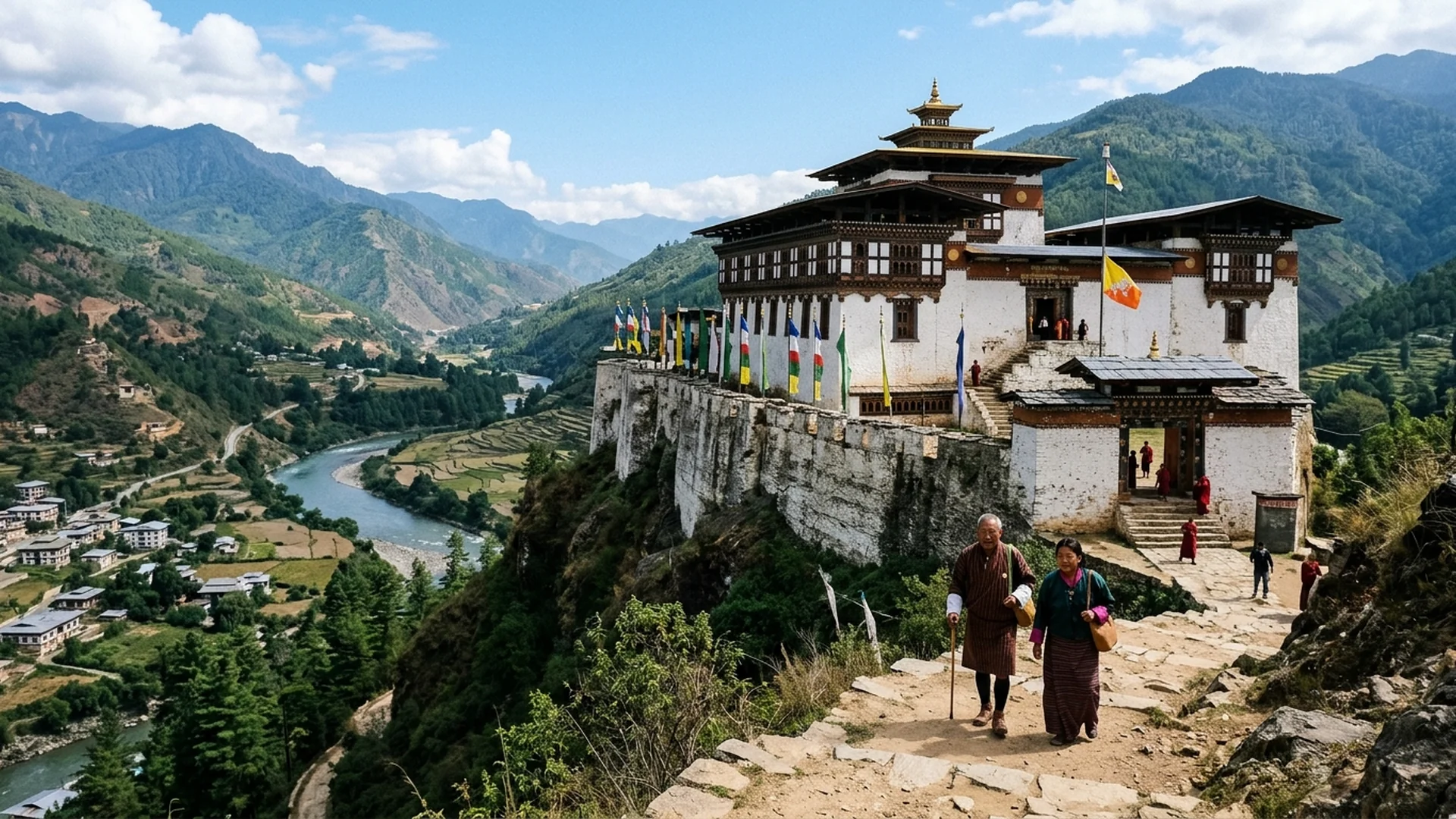
As you round the final curve of the winding mountain roads traversing eastern Bhutan’s dramatic topography, a mesmerizing vision emerges from the mist: Trashigang Dzong. Perched precariously on a steep precipice above the roaring currents of the Dangmechu River, this ancient fortress appears suspended mid-air against the heavens. More than merely a seat of regional administration or a sacred sanctuary, it serves as the beating heart of Bhutan’s eastern reaches—a timeless refuge where sacred chants mingle with crisp mountain winds.
Journeying to Trashigang Dzong represents a deliberate departure from standard tourist itineraries, drawing the discerning traveler deep into an off-the-beaten-path landscape that fiercely preserves its authentic cultural identity. For those seeking profound meaning and raw, unvarnished beauty, this fortress stands as an enduring testament to architectural bravery and the steadfast guardianship of ancestral heritage amidst a challenging Himalayan landscape.
Historical Roots and Skyscraper Architecture on the Precipice
Trashigang Dzong was founded in 1659 by Minjur Tempa, a distinguished noble acting under the guidance of Zhabdrung Ngawang Namgyel, the unifier of Bhutan. Legend holds that the builders selected this formidable topographical anchor to ensure the fortress could survey four strategic river valleys without a single blind spot. The structure is masterfully integrated into the natural contours of the sheer rock face, utilizing the cliffside as an impregnable natural battlement. Externally, the dzong showcases pristine white masonry framed by deep ochre bands, complemented by intricate gold woodcarvings and vibrant motifs adorning window frames and interior pillars—hallmarks of master craftsmanship passed down through generations. Crossing the heavy timber doors into the inner courtyard feels akin to stepping across the threshold of time itself, enveloping visitors in the tranquil resonance of assembly halls steeped in the scent of butter lamps and fine incense.
Spiritual Pulse and the Rhythm of the Dangmechu Valley
Far below the towering fortress flows the Dangmechu River, the vital lifeblood sustaining local communities across the valley. Trashigang Dzong transcends its role as a mere symbol of temporal authority, acting instead as a shared spiritual epicenter where monks and villagers converge for sacred rituals and communal life. The daily rhythm unfolding around the dzong reflects ancient agrarian traditions and the celebrated weaving heritage of the Sharchop people, an indigenous community with a distinct cultural legacy. This profound stillness, punctuated only by the gentle spinning of prayer wheels and the joyful laughter of children clad in vibrant gho and kira, cultivates an atmosphere of transcendent peace rarely encountered in the modern, fast-paced world.
Trashigang Tshechu: The Sacred Art of Masked Dance
When the annual Trashigang Tshechu arrives, the fortress undergoes a breathtaking transformation from a quiet monastic sanctuary into a vibrant stage of devotion. Monks and local villagers gather within the dzong’s grand courtyards to celebrate ancient heritage through sacred Cham dances. These revered performances narrate the triumph of virtue over ignorance while paying homage to Guru Rinpoche, who brought Vajrayana Buddhism to the Himalayan kingdom. Every measured step of the dance and every resonant beat of the ceremonial drums echoes an unwavering faith and spiritual vitality that continues to breathe deeply through the mountains.