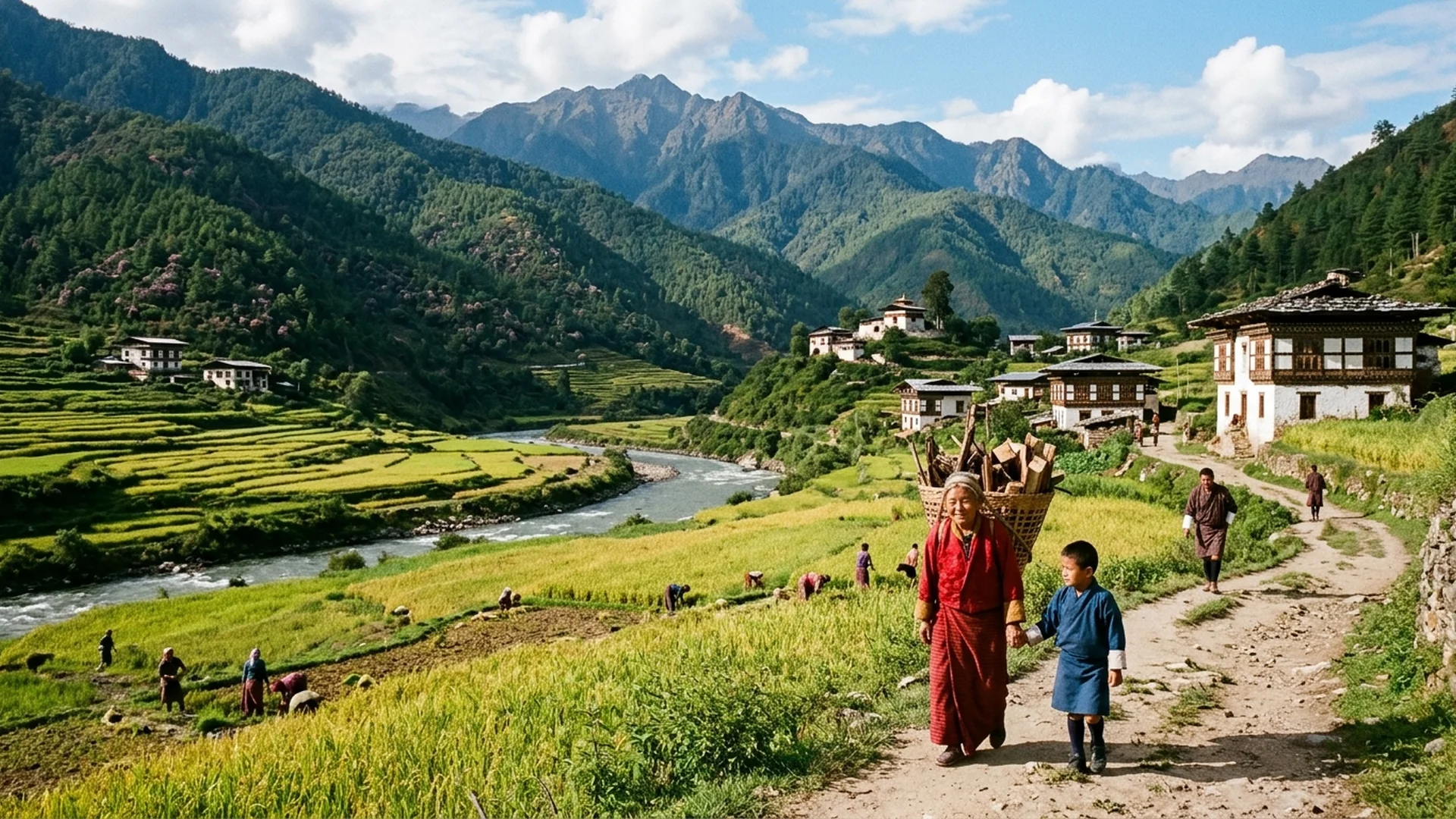
When the currents of time flow through the steep, mist-shrouded gorges of eastern Bhutan, the gentle roar of the Gamri Chhu (Gamri River) beats like an unhurried, timeless pulse. Situated within the Trashigang district, the Gamri River Valley remains a deeply hidden sanctuary, far removed from the more heavily traveled pilgrimage routes of the west. Here, nature transcends mere scenic splendor; it serves as a living canvas where untamed waters, emerald terraced fields, and unwavering spiritual devotion converge in profound harmony.
Venturing into the eastern reaches of the Kingdom of Bhutan evokes the rare exhilaration of genuine discovery. Discerning travelers seeking deeper cultural resonance far beyond familiar iconography will encounter an ancient heritage that breathes and thrives in everyday moments. Every sweeping curve of the mountain road reveals cascading alpine villages, morning mists lingering among ancient pines, and the warm, unfeigned hospitality of locals eager to share wisdom passed down through generations.
The Gamri River and the Pulse of Trashigang
Born from the snow-crowned summits of the eastern Himalayas, the Gamri Chhu carves its way through deep, exceptionally fertile valleys. Along its banks lie intricate tiers of terraced fields meticulously cultivated by villagers to harvest wheat, maize, and indigenous red rice. This dramatic topography not only yields a shifting aesthetic palette—transforming from the vibrant emerald of the growing season to the rich gold of harvest—but also bears testament to an intuitive mastery of mountain ecology. Daily life here is inextricably bound to the river, sustaining local agriculture while seamlessly connecting remote homesteads scattered across the steep hillsides.
Radhi Village: The Art of Silk and Eastern Craftsmanship
Deep within the valley lies Radhi Village, celebrated across the kingdom as the spiritual capital of natural raw silk, locally known as ‘Bura’. The rustic air here is gently punctuated by the rhythmic clatter of traditional wooden backstrap looms housed beneath timber farmhouses. The women of Radhi possess an extraordinary mastery of spinning and dyeing silk using indigenous forest botanicals before translating them into complex, geometric motifs. Each textile requires months of painstaking concentration, reflecting a patience and aesthetic sophistication passed down through unbroken maternal lineages into a tangible, enduring art form.
Architecture and Spirit: From Trashigang’s Cliffs to Rangjung Monastery
The architectural majesty of Bhutanese history finds a commanding expression at Trashigang Dzong. Perched since 1659 upon a soaring promontory that appears to float above the confluence of the Gamri and Drangme Chhu rivers, this fortress-monastery commands the region as both an administrative and spiritual bulwark. Close by, Rangjung Monastery serves as a prominent sanctuary of the Nyingma tradition, harmonizing classical Tibetan Buddhist artistry with the serene, contemplative atmosphere of the valley. The resonance of evening prayers echoing through the canyon offers visitors a rare opportunity for inner stillness and quiet reflection.