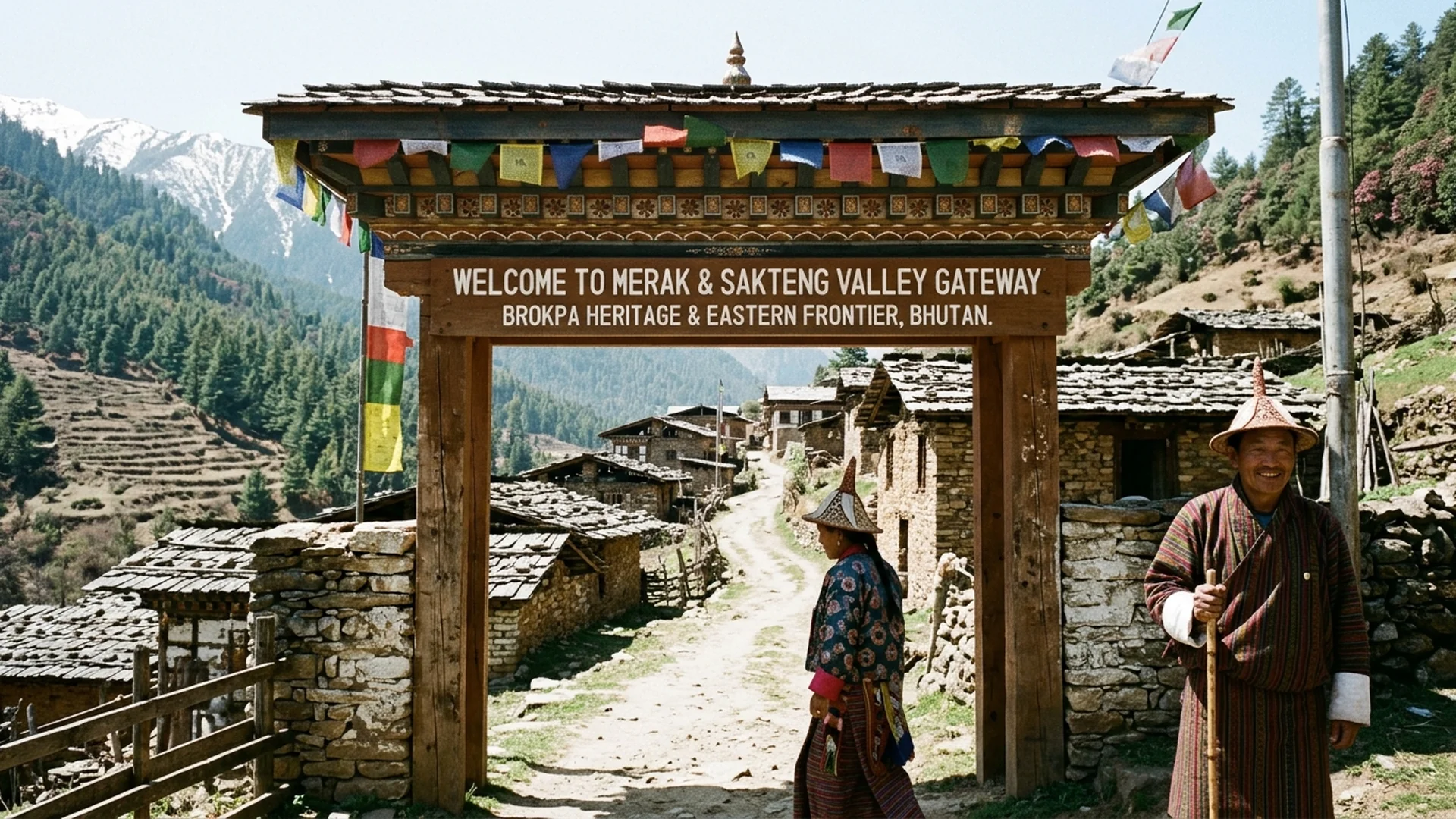
As the morning mist slowly unfurls across the steep, pine-clad ridges of eastern Bhutan, the landscape assumes an aura of stillness outside of ordinary time. This is the distant frontier far beyond the classic western valleys—the threshold of the Merak and Sakteng sanctuary, where nature remains untamed and the high Himalayan winds carry ancient legends of the nomads who call these heights home.
Crossing this geographical threshold is more than traversing rugged alpine terrain; it is an unhurried step back into one of Asia’s most fiercely preserved cultural tapestries. Tucked away in quiet, high-altitude folds, the Brokpa community—an ethnic group distinct from mainstream Bhutanese society—has spent centuries entwining its existence with herds of resilient yaks and sacred forests. To journey through Bhutan’s eastern reaches is not merely to sightsee, but to seek deep resonance through a life lived simply, resiliently, and in profound harmony with the spiritual landscape.
Crossing the Eastern Threshold: Into the High Realm of Merak and Sakteng
Traveling through eastern Bhutan offers a dramatic contrast to the manicured serenity of Paro or Punakha. Beyond the mountain gate leading to Merak and Sakteng lies a rugged, elemental topography. Narrow earthen tracks cling to precipitous slopes, weaving through primeval pine forests and rushing glacial streams. The air here is extraordinarily crisp and thin, carrying a silence that is increasingly rare in the modern world. This frontier serves as a natural filter for travelers, welcoming only those with a genuine dedication to slow, immersive exploration and a deep appreciation for untamed geography.
The Brokpa: High-Altitude Guardians of an Ancient Heritage
Deep within the high valleys of Merak and Sakteng reside the Brokpa, an ethnic minority whose ancestors migrated centuries ago from the Central Asian steppes and the high plateaus of Tibet. They have preserved their unique dialect, customs, and worldview with remarkable fidelity. Their most striking signature is the distinctive tall yak-hair hat featuring fish-tail projections designed to deflect rain and biting mountain gales. Adorned in rich, hand-loomed woolens and traditional silver-and-shell jewelry, the Brokpa lead an austere pastoral life centered around yaks and sheep. Their spiritual landscape is anchored by profound devotion to Ama Jomo, the revered divine protector of their pastures and herds.
Sakteng Wildlife Sanctuary: Sanctuary of Rare Flora and the Migyur
Sakteng Wildlife Sanctuary, blanketing the vast expanse of the valley, functions as an immense natural classroom of pristine ecosystems. In spring, blooming rhododendrons paint the slopes in vibrant hues of crimson and rose, while expansive alpine meadows serve as traditional grazing grounds. Beyond its rich floral tapestry and elusive fauna—such as the snow leopard and red panda—Sakteng is internationally renowned as the legendary realm of the Migyur, or Himalayan yeti. Tales of this enigmatic mountain dweller have been passed down through generations, casting an enduring veil of mystery that continues to captivate naturalists and inquiring minds alike.