As the winter winds sweep across the serene forests of the Tohoku region, the quiet percussion of nature and drifting snowflakes creates a timeless lullaby. Akita emerges from this stillness as a true sanctuary of authentic elegance, hidden far from the frantic pace of modern metropolises. This is not merely a destination for conventional sightseeing, but a sacred landscape where time seems to slow down, inviting mindful travelers to immerse themselves in pristine wilderness, enduring ancient traditions, and uncompromising craftsmanship in every facet of daily life.
To cross the threshold into Akita is to turn the pages of a living history book. From majestic, snow-draped mountain ranges and mysterious cobalt-blue caldera lakes to remarkably preserved samurai districts whispering tales of the Edo period, the region offers an unhurried journey. This curated voyage bridges the gap between heritage and modern luxury, inviting you to experience Japan’s northern soul with absolute grace and refinement.
The Aesthetics of Time: The Ancient Samurai Quarter of Kakunodate
If Akita were a classical scroll painting, the historic samurai district of Kakunodate—poetically hailed as the ‘Little Kyoto of Michinoku’—would be its masterstroke. As you step onto the tranquil asphalt of Buke-yashiki street, your gaze is immediately drawn to towering black-wood fences and meticulously preserved samurai manors. In springtime, weeping shidarezakura cherry trees arch gracefully overhead to greet visitors, while winter casts a serene mantle of snow across deep thatched roofs, amplifying the profound architectural dignity. Passing through heavy timber gates into the ancestral compounds of families such as the Aoyagi or Ishiguro offers an intimate window into the refined lifestyles, heirlooms, and unyielding spirit of elite samurai warriors.
Wilderness and Waters: Nyuto Onsen and Lake Tazawako
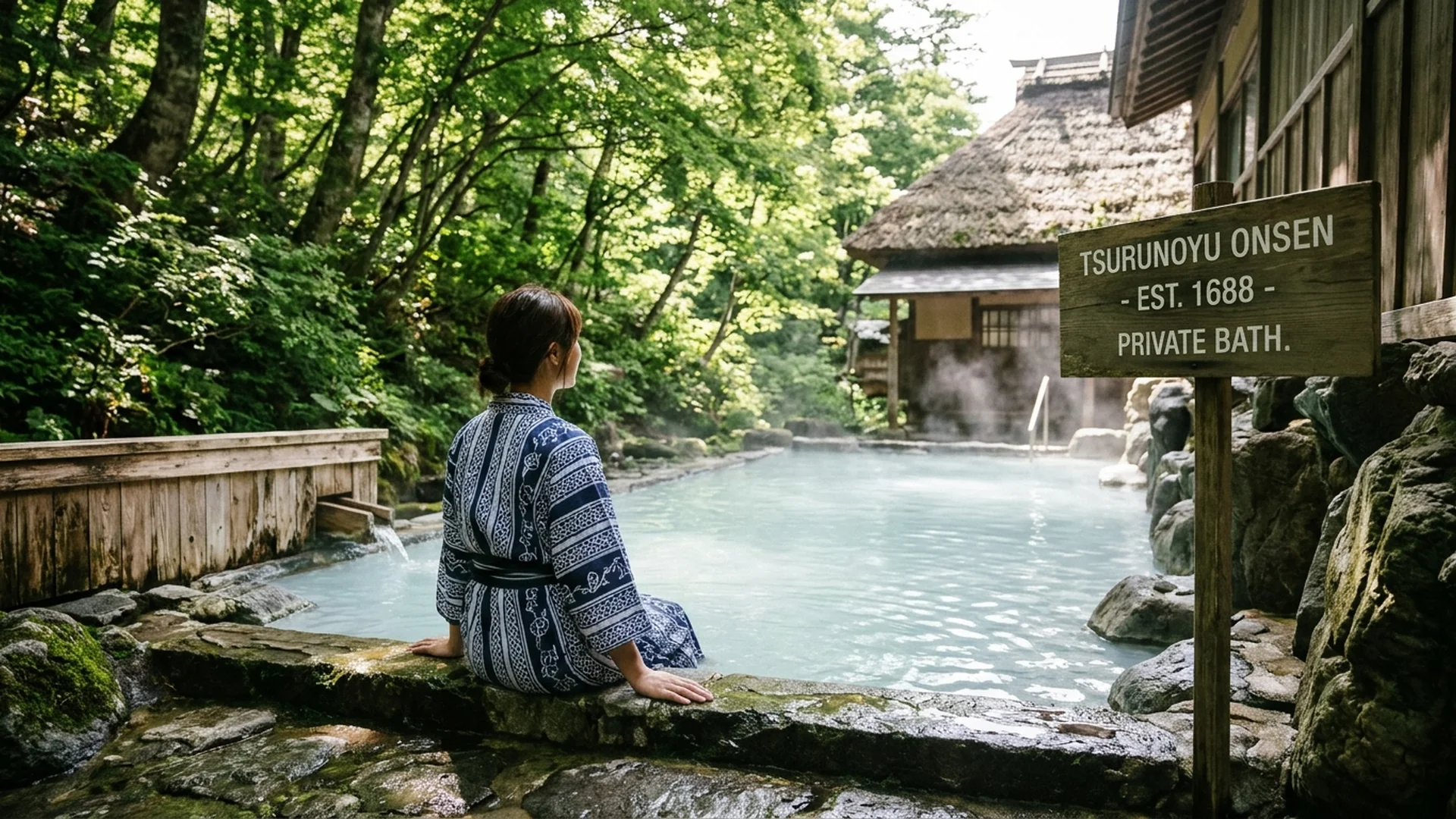
Deep within the secluded, mist-shrouded valleys of Towada-Hachimantai National Park lies Nyuto Onsenkyo, a legendary enclave of hot spring sanctuaries sequestered by ancient beech trees. Historic wooden ryokan such as Tsurunoyu Onsen—once frequented by the feudal lords of the Akita domain—profoundly preserve an atmosphere of rustic seclusion. The milky-white, mineral-rich thermal waters, contrasted against biting mountain air and absolute forest silence, offer a restorative ritual for both body and spirit. Not far away rests Lake Tazawako, a volcanic caldera renowned as Japan’s deepest lake at 423 meters. Its crystalline cobalt waters never freeze, even in the dead of winter, while the haunting legend of Princess Tatsuko, who sought eternal beauty, lends an emotional resonance to every step along its shores.
The Palate of the Land: Culinary Heritage and Artisanal Fermentation
No exploration of Akita is complete without engaging with its masterclass of regional gastronomy. Blessed with pristine mountain snowmelt and exceptional local rice harvests, the prefecture’s sake brewing tradition stands among the finest in the nation. Centuries-old breweries impart deep, complex profiles born of patience and terroir. During evening repasts, guests are treated to Hinai Jidori, one of Japan’s premier heritage poultry varieties, celebrated for its dense texture and rich, savory depth. Simmered delicately in a warming nabemono alongside handcrafted Inaniwa udon—a thin, silky noodle with a lineage exceeding 350 years—every bite reflects the bountiful, unhurried generosity of Akita’s natural environment.