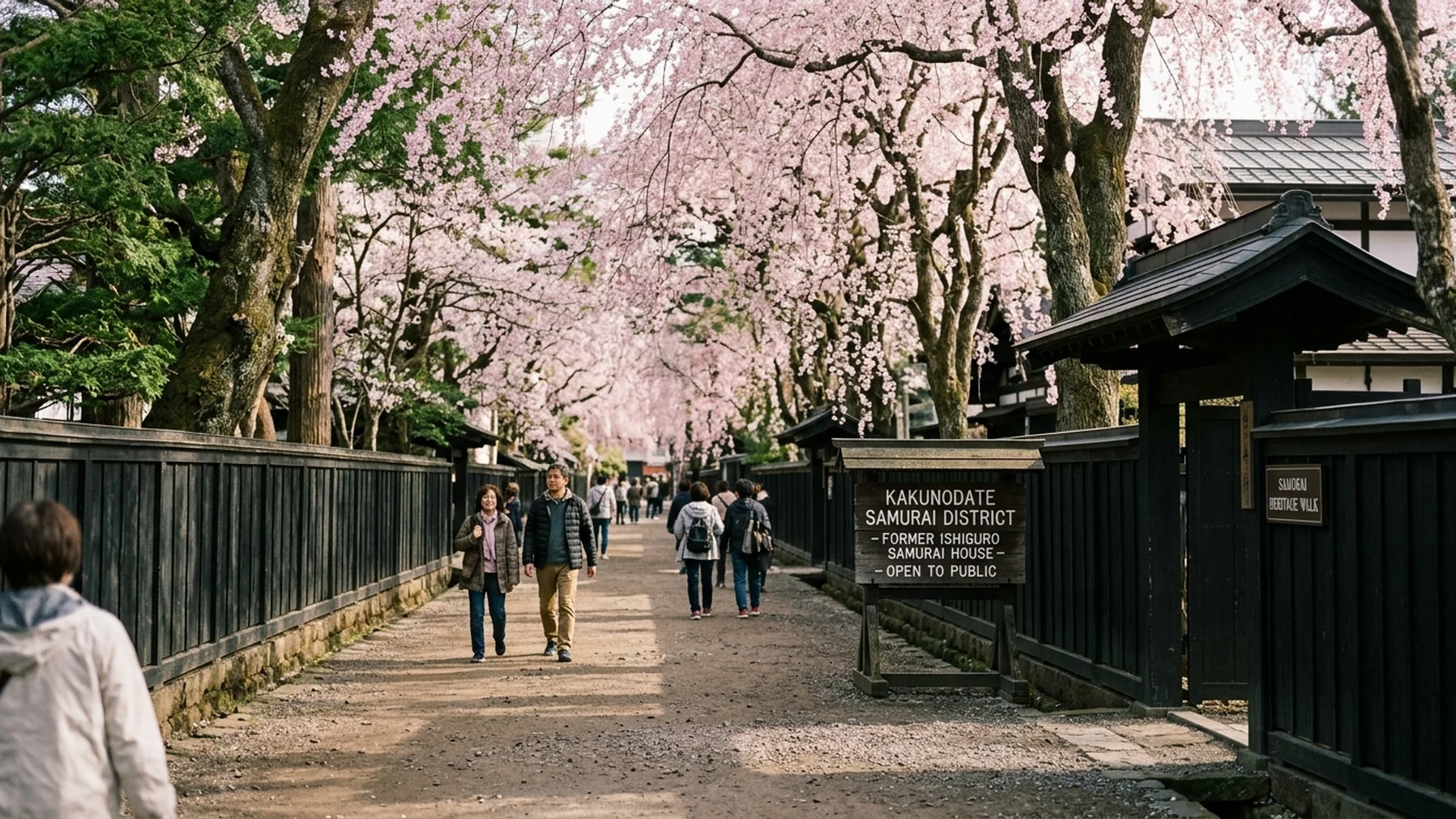
Passing through the dark timber gates and blackened earth-and-plaster walls of the Kakunodate Samurai District in Akita Prefecture, the clamor of the modern world dissolves as if swallowed by a time tunnel. Often celebrated as the Little Kyoto of the Tohoku region, this historic fortress town was founded in 1620 under the stewardship of the Satake-kita clan. Yet what elevates Kakunodate far beyond ordinary heritage sites is not merely the immaculate preservation of aristocratic residential architecture, but the palpable warrior spirit lingering beneath ancient cherry branches and centuries-old cedar planks weathered by harsh northern winters.
Journeying to Kakunodate transcends simple sightseeing or the capture of commemorative photographs. It is an invitation to decode the lifestyle, meticulous refinement, and philosophical ethos of influential samurai families. Grand estates still open their heavy timber doors to travelers in dignified silence, whispering profound historical narratives set against landscapes that transform in striking harmony with the turning of the seasons.
Decoding Architecture and Aristocracy: Inside Aoyagi-ke and Ishiguro-ke
The Uchimachi district, or samurai quarter of Kakunodate, operates as a living museum illustrating the rigorous social stratification of Edo-period Japan. Residences of high-ranking warriors were planned with disciplined geometry yet infused with elevated aesthetic sensibilities. Two magnificent estates demand unhurried contemplation from history enthusiasts.
Aoyagi-ke functions as a comprehensive samurai museum spanning over 3,000 square meters. The complex encompasses multiple buildings, including the Bunkoin treasury which preserves ancient weaponry, complete suits of armor, razor-sharp katana, and priceless historical documents. Exploring the main residence reveals private reception rooms segregated by social rank, framed by meticulously manicured Zen gardens arranged according to traditional geomancy.
Just a short stroll away stands Ishiguro-ke, the oldest surviving samurai mansion in Kakunodate. Its distinction lies in a living reality: direct descendants of the founding lineage continue to reside within the estate. The main building retains authentic bullet marks and structural evidence from tumultuous eras of political transition. A highlight is the clever lattice window design allowing warriors to survey outside movements completely unseen from without, testifying to the sharp defensive intelligence of the feudal era.
Four-Season Symphony: From Weeping Cherries to Pristine Snowscapes
Kakunodate resists definition as a static relic, functioning instead as a living canvas painted in utterly contrasting hues throughout the turning year.
In spring (April to May), the town transforms beneath a gentle pastel cloud of Shidarezakura (weeping cherry blossoms) whose seeds were originally transported from Kyoto by nostalgic samurai nobles. Hundreds of weeping branches drape gracefully over stark black wooden fences, creating a breathtaking visual contrast reminiscent of classical painted scrolls and earning the district renown as one of Japan’s premier cherry blossom destinations.
By autumn (October to November), surrounding mountain foliage blazes in incandescent reds and brilliant golds, contrasting sharply against blackened mansion timber and crisp cobalt skies to evoke a profound sense of serenity. In winter (December to February), pristine blankets of snow settle over thatched roofs and ancient enclosures, cloaking Kakunodate in the quiet hush of a timeless fairy tale.
Kabazaiku: Two Centuries of Wild Cherry Bark Craftsmanship
Beneath the stern facade of warrior discipline, Kakunodate harbors a delicate high art known as Kabazaiku, the traditional craft of decorating everyday utensils with wild mountain cherry bark (Yamazakura). Born in the late 18th century as a stipend-supplementing vocation for lower-ranking samurai, artisans harnessed the bark’s smooth tactile quality, organic grain patterns, natural moisture resistance, and flexibility to fashion tea caddies, decorative trays, and refined personal accessories.
The intricate creation of Kabazaiku demands advanced expertise in harvesting bark during optimal seasonal windows, pressing it smooth with thermal precision, and bonding it to cherry or magnolia wood substrates. Today, travelers can visit traditional workshops and acquire these masterworks along the historic Hirafukumachi street, making them some of the most soulful and enduring artifacts of Akita.