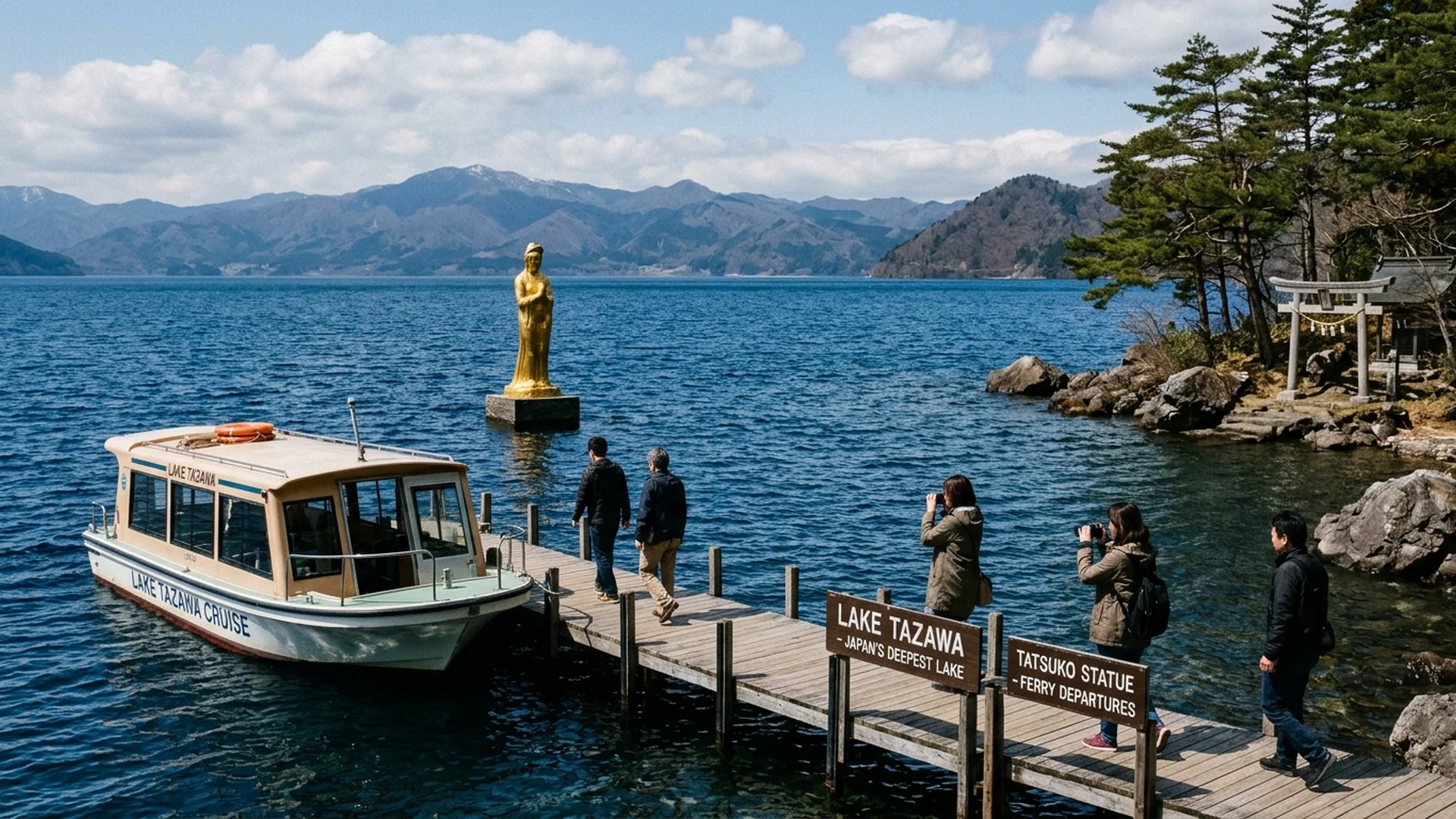
When the first morning light caresses the vast expanse, the surface of Lake Tazawa in Akita Prefecture transforms from a deep indigo to a vibrant, living cobalt blue that shimmers like a precious gemstone. This is far more than a transient roadside viewpoint; it is an enigmatic ancient caldera lake that holds the title of Japan’s deepest body of water, plummeting to an astonishing 423.4 meters. Enveloped by the pristine wilderness of the Tohoku region, the serene atmosphere weaves seamlessly with the romantic and haunting legend of Princess Tatsuko, transforming every footstep into a resonant experience for travelers seeking true elegance and the profound meaning of unhurried repose.
Architecture of Nature: The Depth and Eternal Hues of a Volcanic Caldera
Born from a massive volcanic collapse millions of years ago, Lake Tazawa commands a geological wonder that defies the passage of time, with its deepest basin resting well below sea level despite its elevated alpine perimeter. What sets these waters apart from ordinary lakes is a fascinating physical phenomenon: the immense volume and subterranean warmth ensure the surface never freezes during harsh northern winters. This extraordinary clarity allows sunlight to refract through the water column, creating ever-shifting palettes of cobalt, deep navy, and emerald green throughout the day. Experiencing these crystalline depths via private kayak excursion or a gentle boat cruise remains the finest way to absorb nature’s meticulously crafted grandeur.
Codes of Myth and Faith: Princess Tatsuko and the Mystique of Gozanoishi Shrine
Beneath its breathtaking beauty, Lake Tazawa pulses with ancient folklore concerning Princess Tatsuko, a maiden whose desperate desire for eternal youth and beauty led to her transformation into a dragon deity guarding the crystalline depths. A gleaming golden statue of the princess stands resolute on the western shore, catching the light against gentle ripples and serving as an evocative symbol for pilgrims of myth. Further along the northern shore rests Gozanoishi Shrine, distinguished by its vermilion torii gate starkly contrasting against deep blue waters and pine forests. Historically frequented by the ruling lords of Akita for leisure and contemplation, the enclave retains a palpable sacred gravity and lingering historical resonance.
Curating an Elevated Journey: Weaving Nature, Art, and Repose Across Tohoku
A pilgrimage to Lake Tazawa easily transcends standard sightseeing when approached as an immersive, slow-travel narrative. A twenty-kilometer scenic drive encircling the shore reveals a seasonal shifting canvas, from verdant summer canopies to the brilliant amber reflections of autumn foliage. Furthermore, the region serves as a natural threshold to the Nyuto Onsen Village, an ancient cluster of restorative hot spring retreats deeply hidden within primeval beech forests that fiercely guard their traditional ryokan heritage. Paired with an excursion to the remarkably preserved samurai quarters of Kakunodate, the journey fulfills every dimension of refined, contemplative luxury.