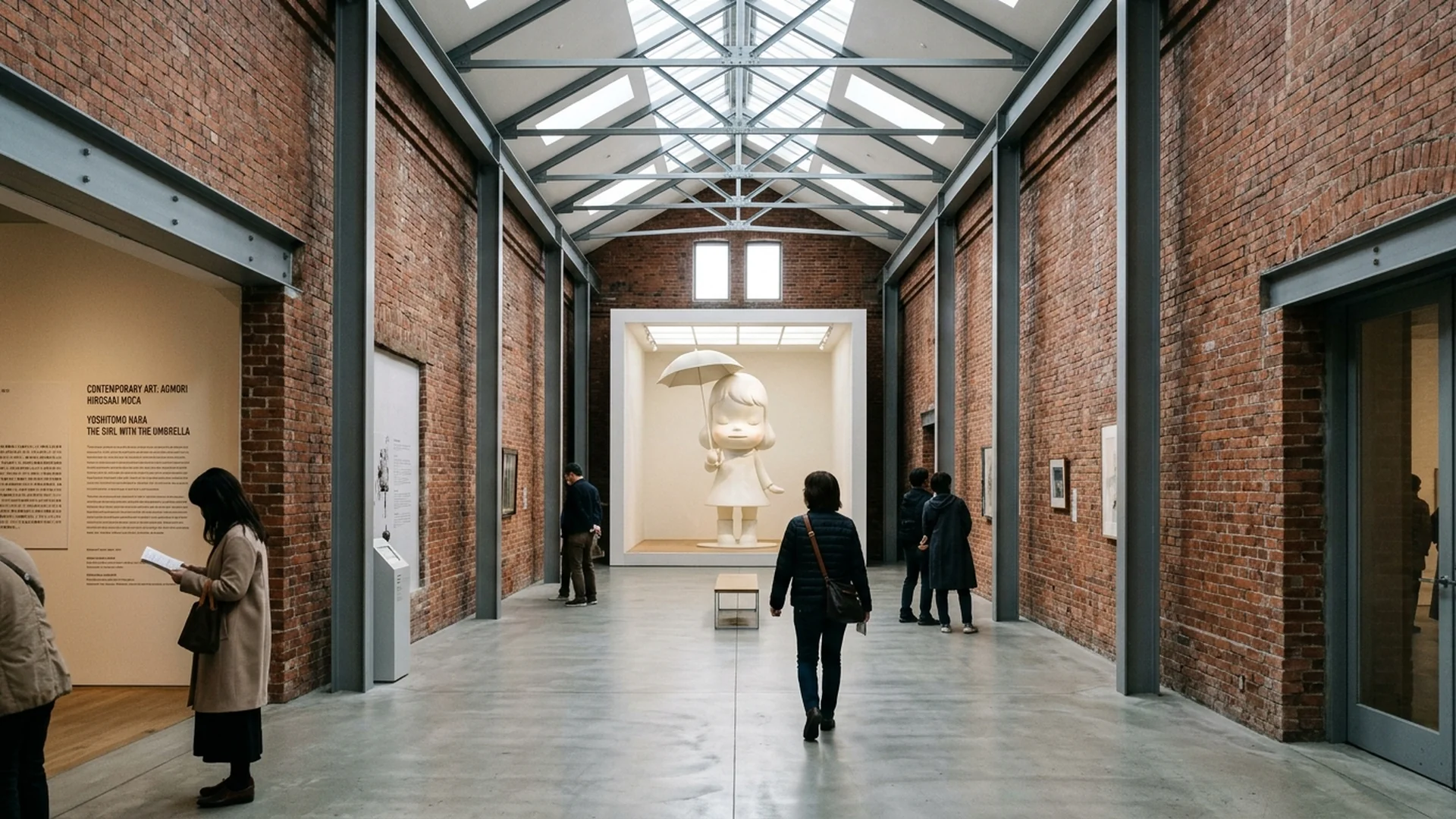
Amidst the crisp northern breeze sweeping across the sprawling apple orchards of Hirosaki in Aomori Prefecture, a massive red-brick structure stands in quiet yet formidable command of time. This architectural landmark is far more than a mere historical artifact; it is a profound intersection linking the glorious agricultural past of the region with the vanguard of international contemporary art.
This is the transfiguration of a century-old apple storehouse and cider fermentation plant into the Hirosaki Museum of Contemporary Art. Celebrated Japanese architect Tsuyoshi Tane, guided by his signature philosophy of the ‘Succession of Memories,’ has meticulously woven the lingering fragments of the city’s history into a living architecture that breathes in rhythm with the passing eras.
Architecture of Memory: From Cider Brewery to Global Art Sanctuary
The roots of this museum trace back to the early Meiji era, when this Western-style red-brick edifice was originally erected as Japan’s inaugural alcohol and cider production facility before later transitioning into a storehouse for Hirosaki’s celebrated apple harvests. Over a century of harsh northern winters weathered the hand-laid dark red masonry until architect Tsuyoshi Tane stepped in to revitalize the structure without ever severing its original spirit.
Tane embraced the ethos of ‘Succession of Memories,’ carefully restoring every individual brick through a specialized technique known as Hirosaki-zumi. This was crowned by the installation of a folded titanium roof shimmering with the honeyed hue of fermented cider—aptly named ‘Cider Gold’—which contrasts dramatically against the dark, weathered walls below. This exquisite dialogue between ancient materiality and avant-garde engineering gives the building a sentient presence, immediately narrating the city’s story the moment one approaches.
Yoshitomo Nara and the Indelible Spirit of Hirosaki
To speak of Hirosaki is to invoke the name of Yoshitomo Nara, the globally acclaimed contemporary artist whose formative years were rooted in this very soil. Nara maintains a profound, symbiotic bond with the region, famously catalysing the legendary ‘A to Z’ project years prior, which temporarily transformed abandoned warehouses into ephemeral palaces of art.
Within the museum galleries, visitors encounter the permanent masterwork ‘A to Z Memorial Dog,’ a colossal white canine sculpture imbued with a gaze of quiet contemplation and vulnerability—a quintessential signature of Nara’s exploration of solitude and purity. Standing before this monumental piece beneath soaring timber-truss ceilings, with natural light filtering delicately through weathered brick crevices, offers a contemplative, spiritual resonance rarely found in standard metropolitan white-cube galleries.
Aesthetics of Slow Living and Cultural Dimensions in Tohoku
Beyond its celebrated permanent collection, the Hirosaki Museum of Contemporary Art serves as a vital cultural bridge connecting emerging international contemporary artists with the local Tohoku community. Curated rotating exhibitions here examine urgent contemporary dialogues concerning ecology, community identity, and regional heritage across a diverse spectrum of media, including photography, painting, and immersive spatial installations.
Experiencing the art here transcends conventional viewing; it becomes an invitation to embrace slow living amidst the lingering echoes of early industrial history, harmonized with the profound, meditative stillness characteristic of Japan’s northern frontier.