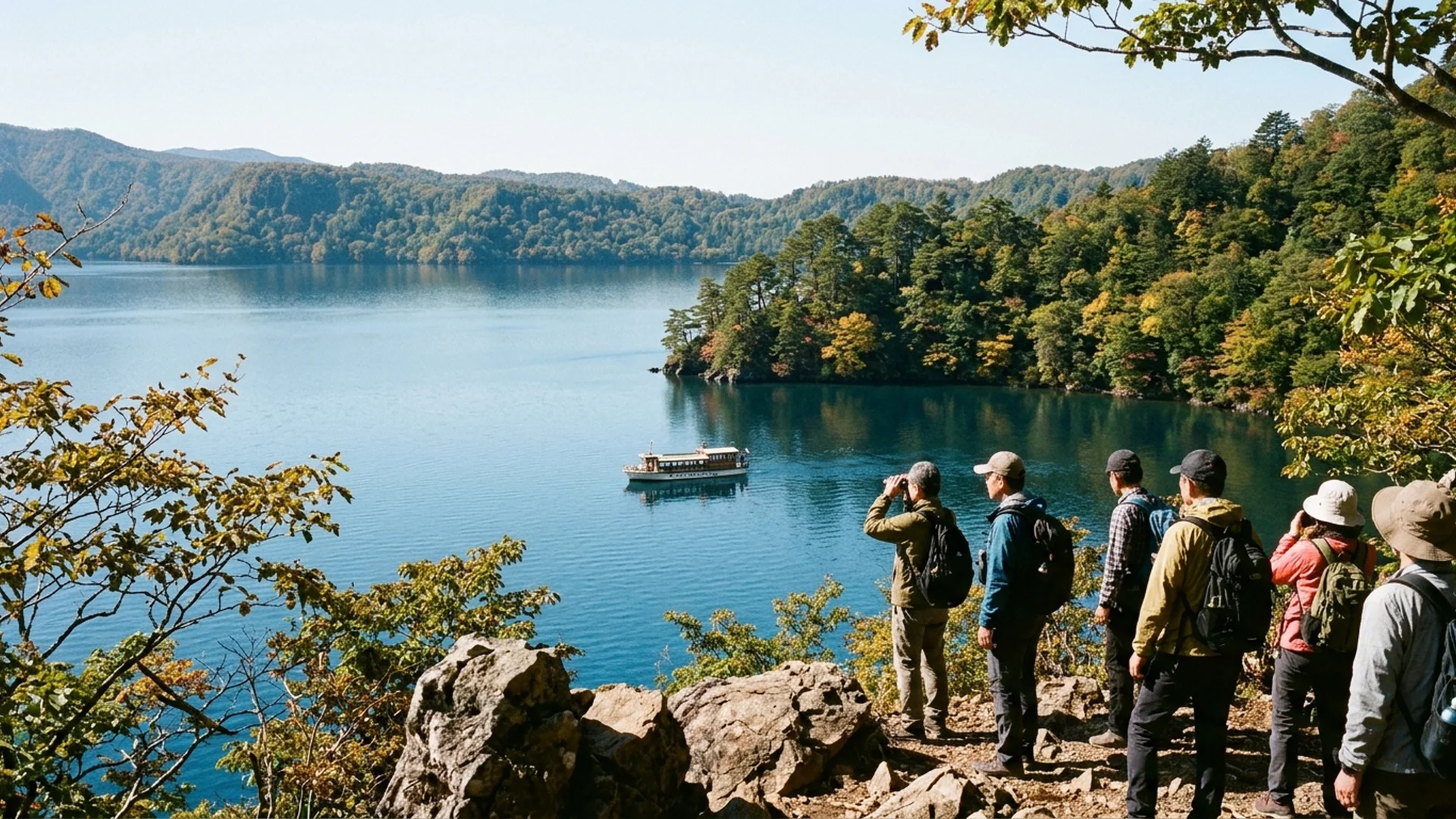
Amidst the intricate, ancient forests straddling the prefectural boundaries of Aomori and Akita lies a body of water so brilliantly clear and profound that it reflects a celestial lapis lazuli hue known locally as ‘Towada Blue’. Lake Towada is far more than a mere scenic destination; it is the enduring legacy of a cataclysmic volcanic eruption from hundreds of millennia ago, now forming a colossal double caldera lake that ranks as the third deepest in all of Japan. Protected within the pristine confines of the Towada-Hachimantai National Park, this serene sanctuary invites discerning travelers in search of quiet contemplation and refined natural aesthetics to witness landscapes that gracefully transform with the turning of each season.
Journeying to this elevated realm feels akin to stepping away from the ceaseless tempo of the modern world and entering an unhurried dimension sculpted entirely by nature. Whether it is the dewy, vibrant canopy of emerald foliage in the nascent stillness of early summer or the fiery embrace of autumn leaves shimmering upon glassy waters, Lake Towada does not merely capture the eye. It resonates deeply with the soul through ancestral heritage, legendary folklore, and a way of life in harmonious, sustainable equilibrium with the earth.
The Genesis of Towada Blue: Geological Marvel and Japan’s Third-Deepest Basin
Lake Towada was forged through over 200,000 years of intense geological evolution, shaped by successive volcanic eruptions and subsequent collapses that ultimately created a vast double caldera. Plunging to a maximum depth of 327 meters, its colossal volume of water remains remarkably pure and untainted, fed solely by rain and snowmelt from the surrounding peaks rather than major inflowing rivers. This pristine clarity allows the surface to shift dramatically in response to the changing sky and light, transforming from deep, contemplative indigo to shimmering emerald turquoise. Travelers frequently spend hours absorbing this profound stillness from elevated mountain lookouts or picturesque peninsulas jutting out into the tranquil expanse.
A Four-Season Tapestry: From Emerald Spring to the Golden Jewels of Autumn
The splendor of Lake Towada presents a striking, ever-evolving personality across the four seasons. From late spring through early summer (May to June), the ancient beech forests cloaking the shores burst into vivid shades of fresh shin-ryoku green, accompanied by crisp mountain air ideal for gliding across glassy waters in a canoe. By October, the landscape undergoes a magnificent transformation. The surrounding mountains and valleys ignite in brilliant hues of crimson, amber, and molten gold, earning widespread acclaim as one of the preeminent foliage destinations in the Tohoku region and across Japan. When winter arrives, the lake descends into a hushed, monochromatic reverie of soft white snow and immaculate alpine air.
Whispers of Faith and Art by the Water’s Edge: Towada Shrine and the Maiden Monument
Along the shores at the Yasumiya district lies a vital spiritual and cultural crossroads for history-loving voyagers. Towada Shrine, secluded within dense, solemn woodlands, carries centuries of mystical lore tied to the ascetic monk Nanso, who is fabled to have transformed into the guardian spirit of these waters. A short, reflective stroll away stands the Otome no Statue (Maiden Monument), the final masterwork of renowned poet and sculptor Kotaro Takamura. Elegantly poised against the lakeshore, the bronze twin figures reflect a quiet grace that merges seamlessly with the surrounding wilderness.
Seamless Wilderness Corridors: Journeying Down the Oirase Stream
No exploration of Lake Towada is genuinely complete without traversing the Oirase Stream, the sole outlet river carrying the lake’s waters outward across a picturesque fourteen-kilometer descent toward Yakeyama. The stream is celebrated for its distinctive character—coursing over moss-covered boulders, weaving through velvety green forest floors, and passing over fourteen cascading waterfalls, including the magnificent Choshi Otaki Falls. Meticulously designed walking trails allow mindful travelers to absorb the cool mist, lush flora, and pure mountain oxygen at an unhurried, meditative pace.