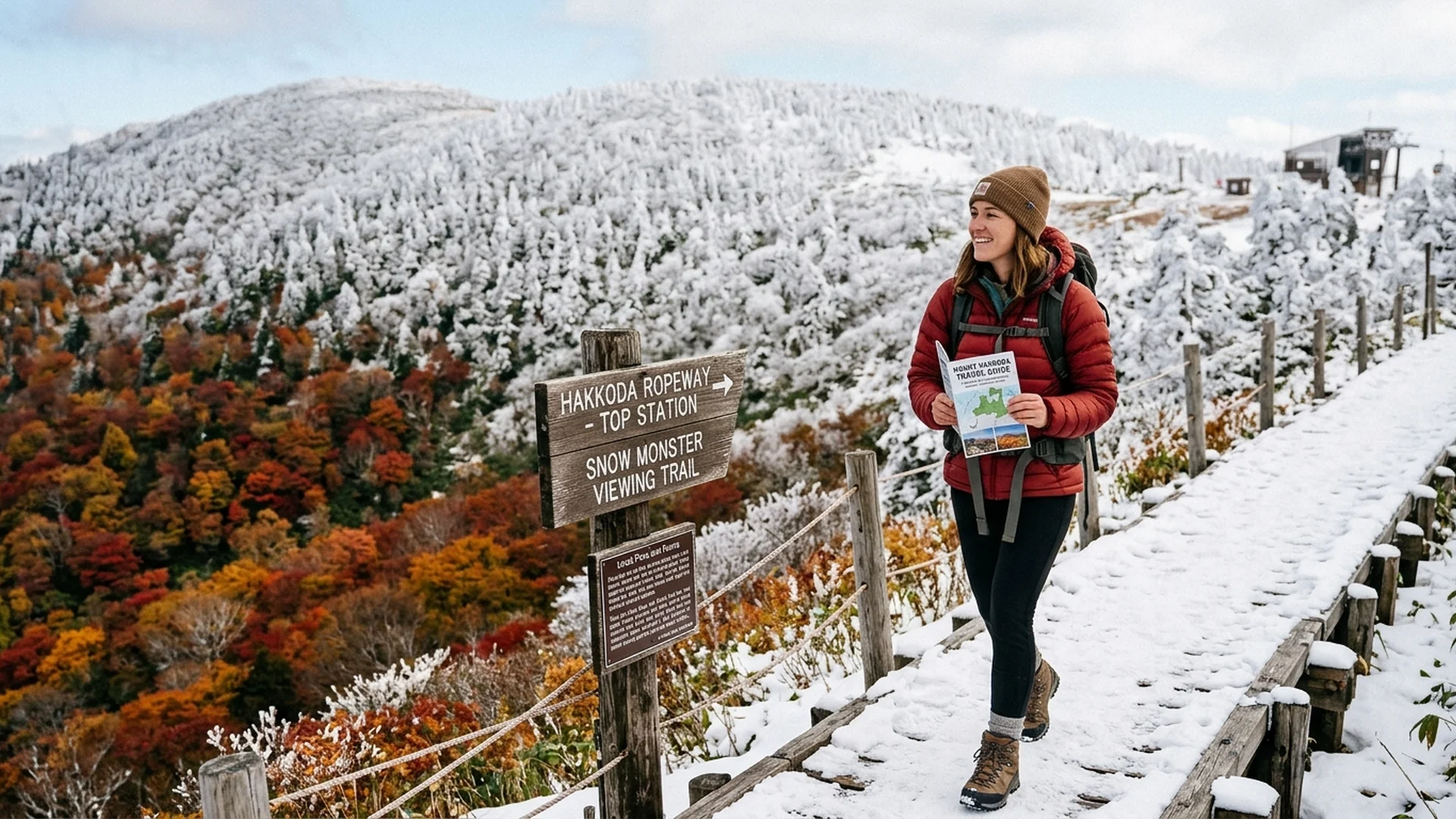
When crisp autumn winds sweep across the ancient primeval forests of the Shimokita and Tsugaru peninsulas, Mount Hakkoda—the crowning majesty of Tohoku’s volcanic highlands—begins its ethereal transformation. Far more than a dormant volcanic ridge, this sanctuary is an exquisite canvas painted in two fiercely contrasting yet equally captivating dimensions. Amid drifting mists, pristine snowflakes, and the restorative warmth of geothermal springs below, Hakkoda summons discerning travelers into a realm where deep time and silent wonder reign supreme.
From frost-sculpted peaks draped in mysterious ice formations to sprawling lower slopes set ablaze by the russet and gold of October, Mount Hakkoda embodies the soulful spirit of Aomori. Ascending above the treeline via the ropeway feels akin to crossing a threshold into another dimension—one where a profound, resonant stillness envelops the spirit, offering a humbling reminder of nature’s untouched grandeur.
Dimension One: The Crimson Canopy and Alpine Poetry Aboard the Hakkoda Ropeway
As October unfurls across the northern latitudes, Mount Hakkoda is cloaked in the fiery embrace of maple, birch, and mountain pine, creating a graduated gradient from molten gold to brilliant rust and deep crimson. The journey commences at the base station of the Hakkoda Ropeway, where glass-walled cabins gently lift passengers more than 1,300 meters above sea level. Below, an endless expanse of virgin forest unfolds like a bespoke tapestry no human artist could ever replicate. Gliding over the rugged ridge, breath catches as sweeping vistas of Mutsu Bay and the Shimokita Peninsula reveal themselves, granting photographers and contemplative travelers a rare encounter with untouched wilderness in utter serenity.
Dimension Two: The Realm of the Snow Monsters and Sacred Winter Silence
When winter descends, however, Hakkoda assumes an equally formidable persona. Bitter winds carrying moisture from the Sea of Japan collide with alpine firs along the crest, coating every needle and branch in heavy, frost-rimed ice that forms the legendary ‘Juhyo’—or snow monsters. These otherworldly, silent sentinels stand resolute against howling squalls. To ride the ropeway through this monochromatic dreamscape is to traverse a living fantasy. Adventurous spirits may also explore the backcountry terrain on foot or carve through legendary powder snow, widely celebrated among global connoisseurs as some of the finest on earth.
The Sanctuary of Healing: Sukayu Onsen and Ancient Thermal Waters
No exploration of Hakkoda’s wild, windswept grandeur is complete without a pilgrimage to Sukayu Onsen, a venerable hot spring sanctuary hidden within the folds of the mountains for over three centuries. Its crown jewel is the ‘Henniburo’, a vast, magnificent cypress-wood bathhouse constructed entirely without interior support pillars. The subtle fragrance of aged timber mingled with the mineral-rich, milky sulfur waters effortlessly washes away the chill of the heights. It serves as an ultimate restorative coda, seamlessly bridging the wanderer’s spirit with the gentle, healing energies of earth and spring.