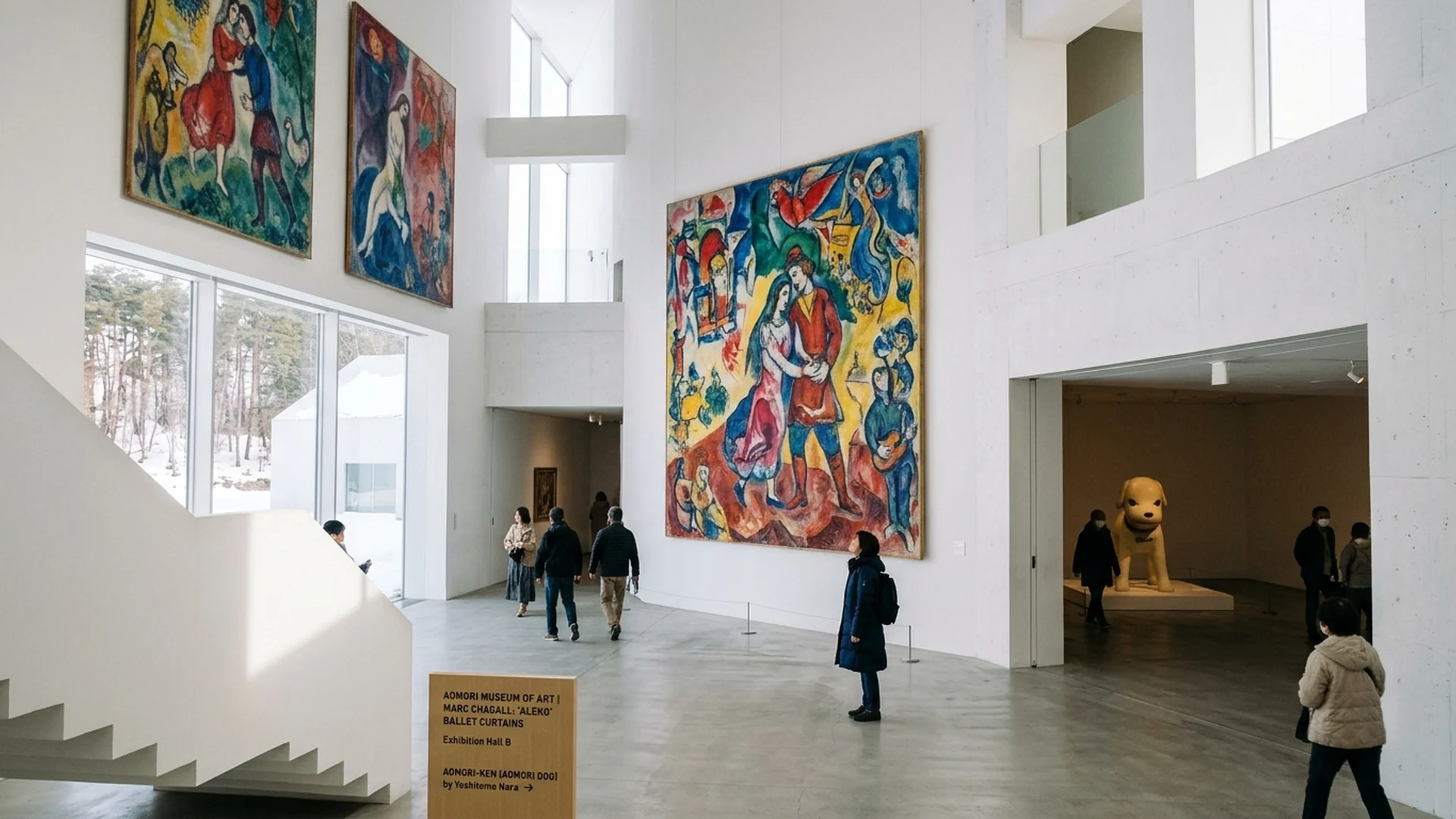
As the crisp northern wind sweeps across the vast apple orchards and pine forests of the Tōhoku region, the realm of contemporary art does not hide within the frantic rush of the capital. Instead, it stands in quiet contemplation in Aomori Prefecture, a place where past and present converge seamlessly. The Aomori Museum of Art is far more than a superficial pitstop for a hurried photograph; it is a profound sanctuary that invites discerning travelers to cross pristine white thresholds and decode the deep resonance of ancient history, iconic sculpture, and sublime solitude.
Journeying to this northern frontier is an exercise in understanding a design philosophy woven intricately into geographical and historical contexts. From archaeological excavations echoed through raw concrete structures to the haunting, cavernous eyes of a giant white dog rising from the snow, every square meter has been meticulously conceived to awaken the senses and redefine the aesthetics of global travelers.
Trench Architecture: Echoing Ancient Strata
The conceptual genius behind Jun Aoki’s design for the Aomori Museum of Art represents a masterpiece in bridging contemporary architecture with archaeological heritage. Clean, stark white structures alternate with subterranean concrete trenches—an explicit nod to the neighboring Sannai-Maruyama Jōmon ruins. Strolling through these clean geometric corridors, where light and shadow stretch across raw concrete walls, evokes the sensation of descending through the stratigraphy of human history. At once, visitors are invited to experience the quiet, meditative stillness characteristic of northern Japan’s pristine winter landscapes.
Aomori Dog and the Innocence of Yoshitomo Nara’s Universe
Perhaps the most iconic presence within the museum’s domain is the Aomori Dog, an immaculate white canine standing an astonishing 8.5 meters tall. Conceived by world-renowned contemporary artist and Aomori native Yoshitomo Nara, the giant hound rests silently within a sunken cavern bathed in natural light. Its gentle, ambiguous expression—eyes half-closed in contemplation—encapsulates Nara’s enduring exploration of isolation, childhood innocence, and distant memory. Confronting this monumental sculpture in utter silence delivers an emotional gravity that lingers long after departure.
Aleko Hall: Marc Chagall’s Monumental Symphony of Color
Another breathtaking revelation awaits within Aleko Hall, a dramatic 19-meter-high gallery custom-built to display three of the four monumental stage backdrop paintings created by French-Russian master Marc Chagall for the 1942 ballet Aleko. These immense canvases radiate with vibrant, dreamlike palettes that capture the turbulence and magic of the performance. Under the dramatic illumination of the cavernous hall, viewers find themselves enveloped in a celestial theater of color, emotion, and unbridled imagination.