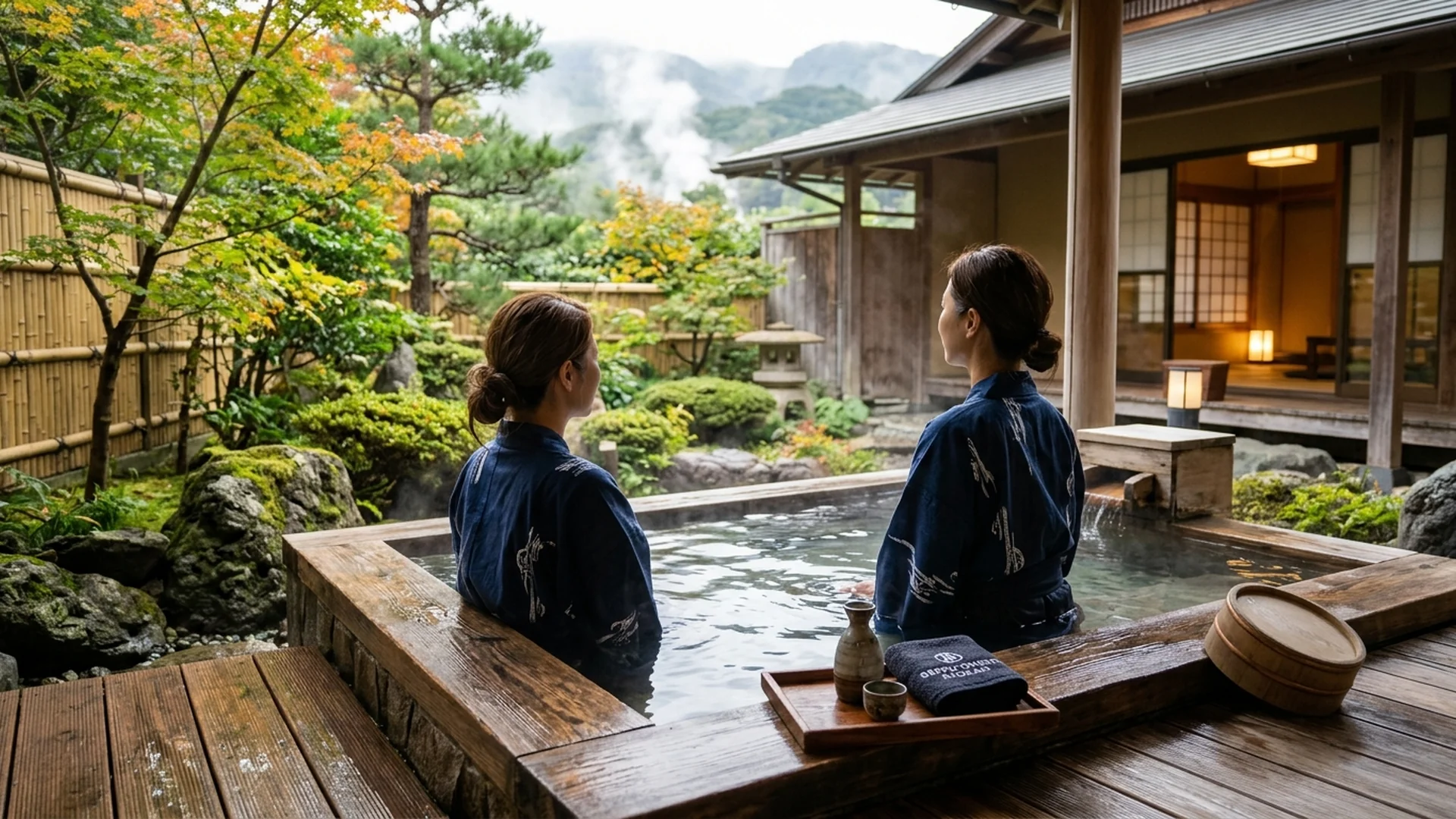
When delicate plumes of white steam begin to curl softly from the asphalt and twilight alleys, one knows they have crossed into the great thermal heartland of the world. Beppu, an exquisite jewel of Kyushu Island, is far more than a destination boasting one of the world’s highest yields of mineral-rich spring water. It is a living, breathing natural laboratory where humanity has learned to coexist with, and draw spiritual sustenance from, the subterranean fury of the earth for centuries.
To experience Beppu with true discernment is to lay aside the hurried pace of modern life and open one’s senses to the steady, rhythmic breathing of geothermal vapor. Here, the gaze meets the vast, tranquil expanse of Beppu Bay as it dissolves into overlapping volcanic ridges. Every drop of mineral water tells a story, and every quiet step through these mist-laden streets is a deliberate journey back toward inner equilibrium.
The Aesthetics of Beppu Hatto: Eight Guardians of Thermal Lore
Beppu is not merely a single expansive spa town; rather, it is a constellation of eight distinct hot spring zones known collectively as the Beppu Hatto—comprising Beppu, Kannawa, Kamegawa, Shibaseki, Hamawaki, Kankaiji, and Horita. Each district functions as a living museum of geological diversity. Kannawa is wrapped in dense, billowing steam and framed by ancient timber architecture that preserves a timeless rhythm of daily life. In contrast, Kankaiji perches gracefully on higher slopes, offering panoramic vistas of indigo waters framed by the glittering lights of the city below. To bathe across these distinct enclaves is not simply an act of physical purification, but an immersion into the complex mineral narratives forged deep within the earth’s stratified crust.
The Allure of the Eight Hells and Natural Architecture
While touring the Jigoku Meguri, or ‘Hells’ tour, remains a classic pilgrimage, the discerning traveler approaches these geothermal wonders with a sense of contemplative awe. Umi Jigoku, the ‘Sea Hell,’ shimmers in an impossible cobalt hue reminiscent of the open Pacific while boiling at a searing 98 degrees Celsius. Nearby, Shinoike Jigoku, the ‘Blood Pond Hell,’ spreads a crimson expanse dyed by rich iron oxides and clay. Every perspective bears witness to the colossal tectonic forces that have sculpted this dramatic landscape over millennia.
The Art of Rest: Luxury Ryokans and the Therapy of Volcanic Sands
The art of high-end relaxation in Beppu finds its ultimate expression in contemporary ryokan architecture that honors traditional vernacular roots. Exceptional inns are discreetly tucked away among lush mountain foliage, offering profound serenity alongside private onsens that invite the cool sea breeze inside. For an entirely distinct therapeutic ritual, visitors must seek out suna-yu—the historic practice of being gently entombed in seaside black sands naturally warmed by geothermal currents. The steady weight of the sand combined with gentle radiant heat stimulates circulation and induces a profound state of physical and mental repose unattainable in standard baths.
Jigoku Mushi: Flavors of the Earth Wrought in Steam
Beppu’s culinary heritage is inextricably bound to its subterranean breath through a cooking method known as Jigoku Mushi, or ‘hell steaming.’ Fresh seafood, crisp local vegetables, and prime cuts of meat are arranged inside woven bamboo baskets and lowered into stone chambers heated by high-pressure volcanic steam. This gentle cooking process seals in the pure, natural sweetness of each ingredient while imparting a subtle, earthy minerality that belongs exclusively to the terroir of Beppu.