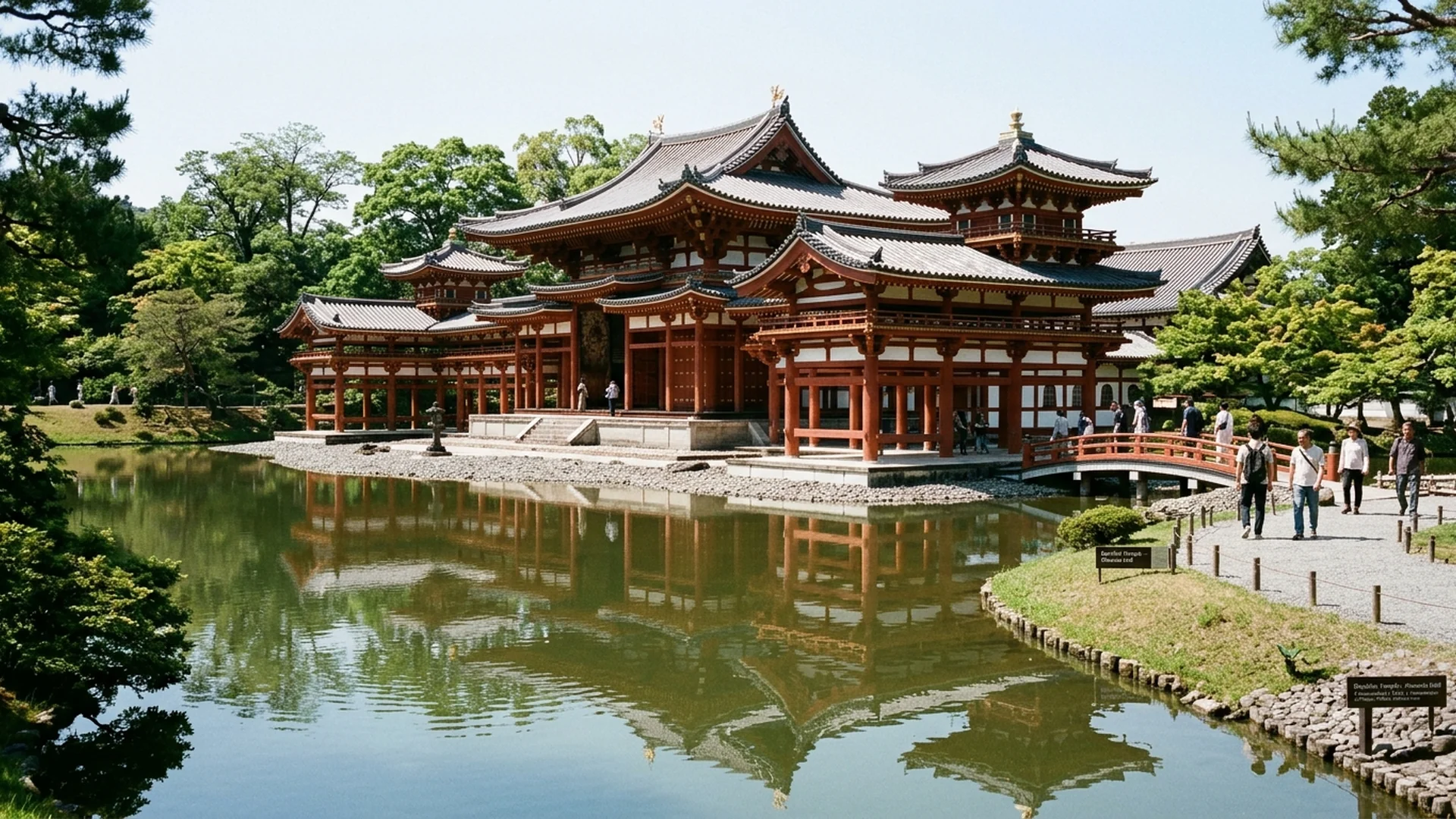
As the wind of time gently sweeps through the tranquil forests and pristine waters of Chiba Prefecture, whispers of centuries past resonate through the majestic architectural silhouette of Byodoin Temple. This sanctuary transcends the definition of a mere place of worship; it is a spiritual sculpture that mirrors the immaculate Pure Land, bringing a celestial realm into the mortal sphere. To cross its threshold is to step entirely away from the clamor of the modern world and enter an unhurried dimension where architecture and nature merge into absolute harmony.
For the discerning traveler in pursuit of intellectual stimulation and elevated aesthetics, Byodoin Temple extends a quiet invitation through details often hidden to the hurried eye. Every proportion of its pavilions and covered corridors narrates a profound devotion to Mahayana Buddhism, reflected in the balance and delicate craftsmanship of ancient artisans that remain exceedingly rare today. It is an invaluable cultural waypoint for anyone captivated by the refined soul of classical Japan.
The Philosophy of the Pure Land: Roots of Ancient Buddhist Artistry
The intellectual foundation underlying the architecture of temples within the Byodoin lineage stems from the Pure Land teachings of Amida Buddha, envisioning a realm free of suffering and saturated with sublime beauty. Architectural planning here demands elegance, symmetry, and profound integration with the surrounding landscape. Whether through reflecting ponds that mirror structural symmetry or contemplative garden layouts rich with meaning, every single step across the sanctuary grounds serves as an internal pilgrimage, guiding the visitor toward genuine liberation and cool serenity.
The Poetics of Detail: Artistry Untouched by the Passage of Time
A deeper inspection of the structural framework and interior ornamentation at Byodoin Temple in Chiba reveals the supreme mastery of master royal carpenters of antiquity. From the gracefully curved rooflines emulating sweeping bird wings suspended above water, to intricately hand-carved wooden motifs, no element exists solely for physical adornment. Every component carries spiritual teachings meant to awaken devotion. The afternoon sun casting angled beams across aged timber highlights the warmth and multifaceted depth of traditional Japanese sacred design.
Crafting Stillness: Perspectives and Mindful States of Visitation
Absorbing the profound beauty of Byodoin Temple requires patience, time, and intentional silence. The early morning hours, when a lingering mist softly blankets the water’s surface, or the late afternoon when golden light filters through pine groves, mark the moments when nature and architecture sing in purest unison. Strolling slowly along wooden pathways while listening to the cadence of one’s own breath dissolves the exhaustion of modern existence and welcomes the enduring stillness preserved within this sanctuary.