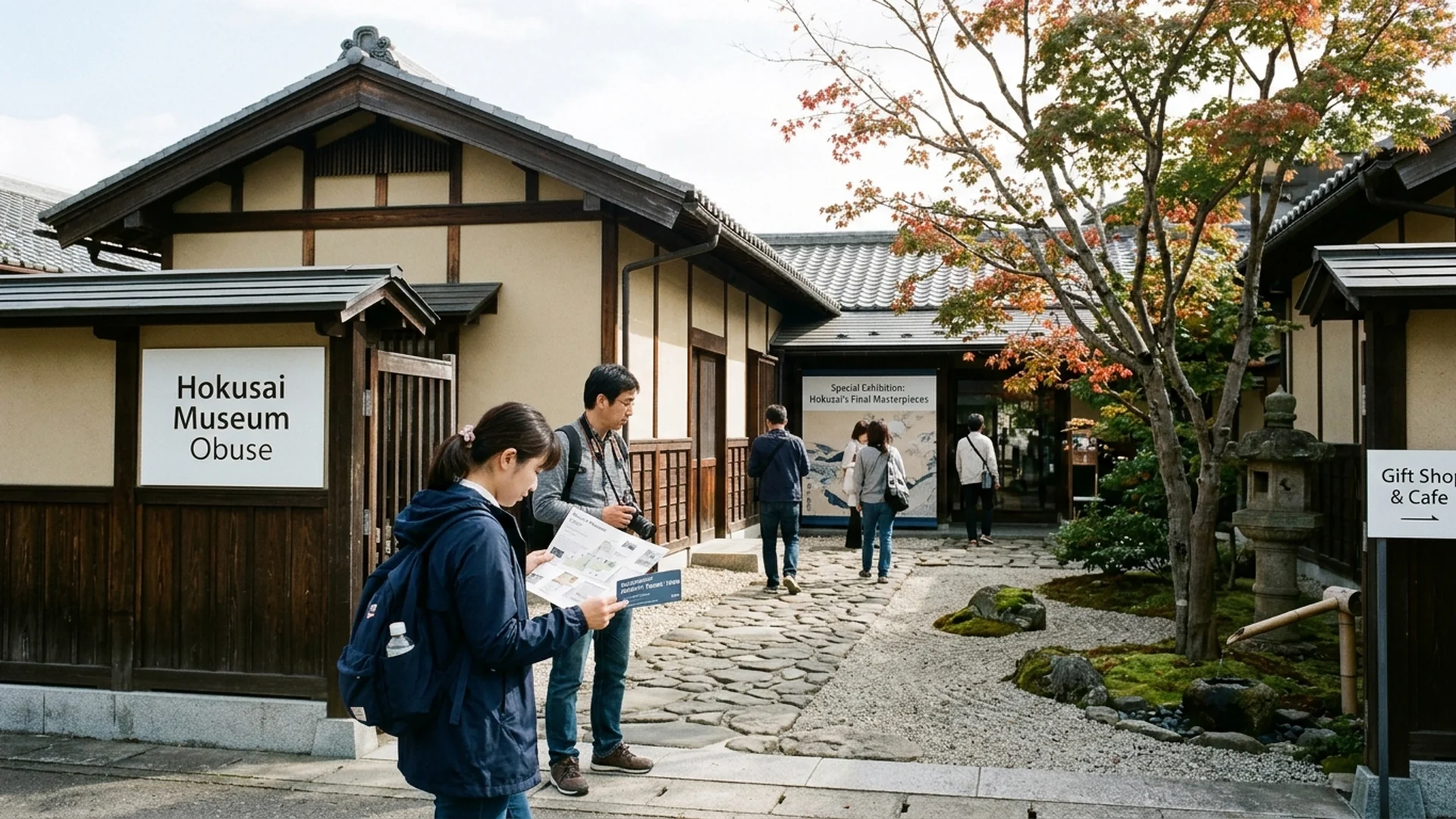
When most individuals reach their eightieth year, they naturally choose to lay down life’s heavier burdens and seek rest. Yet for Katsushika Hokusai, the peerless master of Japanese woodblock printing, this advanced age marked the ignition of the most explosive creative renaissance in art history. Nestled within Obuse, a tranquil Nagano enclave embraced by mist-veiled peaks and ancient orchards, lies the well-kept sanctuary of the master’s twilight years—the very retreat where the visionary behind the iconic ‘Great Wave off Kanagawa’ continued his relentless pursuit of perfection. Journeying to the Hokusai Museum Obuse transcends a conventional gallery visit; it is a spiritual pilgrimage into a dimension where delicate brushstrokes, vibrant mineral pigments, and the unyielding stamina of an aging genius continue to resonate across the centuries.
Today, Obuse is far more than a charming hamlet along the Chikuma River; it remains a sacred horizon for global connoisseurs of fine art. This is the fabled domain where Hokusai found patronage and intellectual kinship with Takai Kito, a discerning local merchant who recognized the profound philosophical depth of the master. The enduring bond between artist and landscape birthed priceless masterpieces of staggering intricacy. This editorial invites you to decipher the sublime aesthetics of Hokusai’s late works while immersing yourself in a contemplative journey that will forever transform your appreciation of Ukiyo-e aesthetics.
Philosophy at the Tip of a Brush: When Eighty Years Is Merely the Beginning
Spanning a life exceeding ninety years, Hokusai relocated residence over ninety times and assumed upwards of thirty distinct pseudonyms, behaving forever as an insatiable spiritual seeker. During the concluding decades of his long life, he accepted the invitation of Takai Kito, a wealthy merchant and local scholar devoted to his genius, and settled quietly in Obuse. Here, Hokusai sought no repose; instead, he poured every ounce of his remaining vitality into creating works that defied human limitations. The original paintings preserved within the Hokusai Museum Obuse display a sublime refinement far surpassing standard commercial prints. Every drop of ink and every contour possesses a profound stillness, born from a lifetime of artistic crystallization. As the master famously remarked, had heaven granted him just another decade of life, he would have finally become a truly authentic painter.
Architecture of Faith: Festival Float Ceilings and the Immortal Phoenix of Gansho-in
The defining attribute that elevates this institution far beyond ordinary galleries is the exhibition of two authentic festival floats (Yatai), upon whose wooden ceiling panels Hokusai personally applied intricate masterworks. The dynamic imagery of dragons, swirling tempests, tigers, and churning seas on the Higashimachi and Kammachi floats manifests tremendous kinetic force balanced flawlessly through Daoist principles of yin and yang. Furthermore, no pilgrimage in Hokusai’s footsteps is complete without visiting Gansho-in Temple. Here, the historic wooden ceiling of the main hall is transfigured into a magnificent ‘Phoenix’ (Hoo) spanning twenty-one tatami mats. Rendered in unfading cinnabar and gold leaf, the mythical bird radiates living energy amidst the mountain silence and the lingering resonance of afternoon sutra chanting.
Slow Travel Amidst Chestnut Aromas and Edo-Era Architecture
Beyond its profound artistic pedigree, Obuse preserves an atmosphere of peerless heritage and refined everyday elegance. The pathways paved with crushed chestnut shells—known locally as Kuri-no-Komichi—emit a gentle, earthy fragrance beneath each footstep. Preserved Edo and Meiji-era merchant dwellings, historic sake breweries, and traditional storefronts operate harmoniously within a community ethos known as Open Gardens, where residents graciously share their blossoming sanctuaries with mindful wanderers without physical barriers. Savoring high-grade green tea paired with artisanal confections crafted from prized local chestnuts amidst such timeless tranquility fulfills the deepest aspirations of the discerning global traveler.