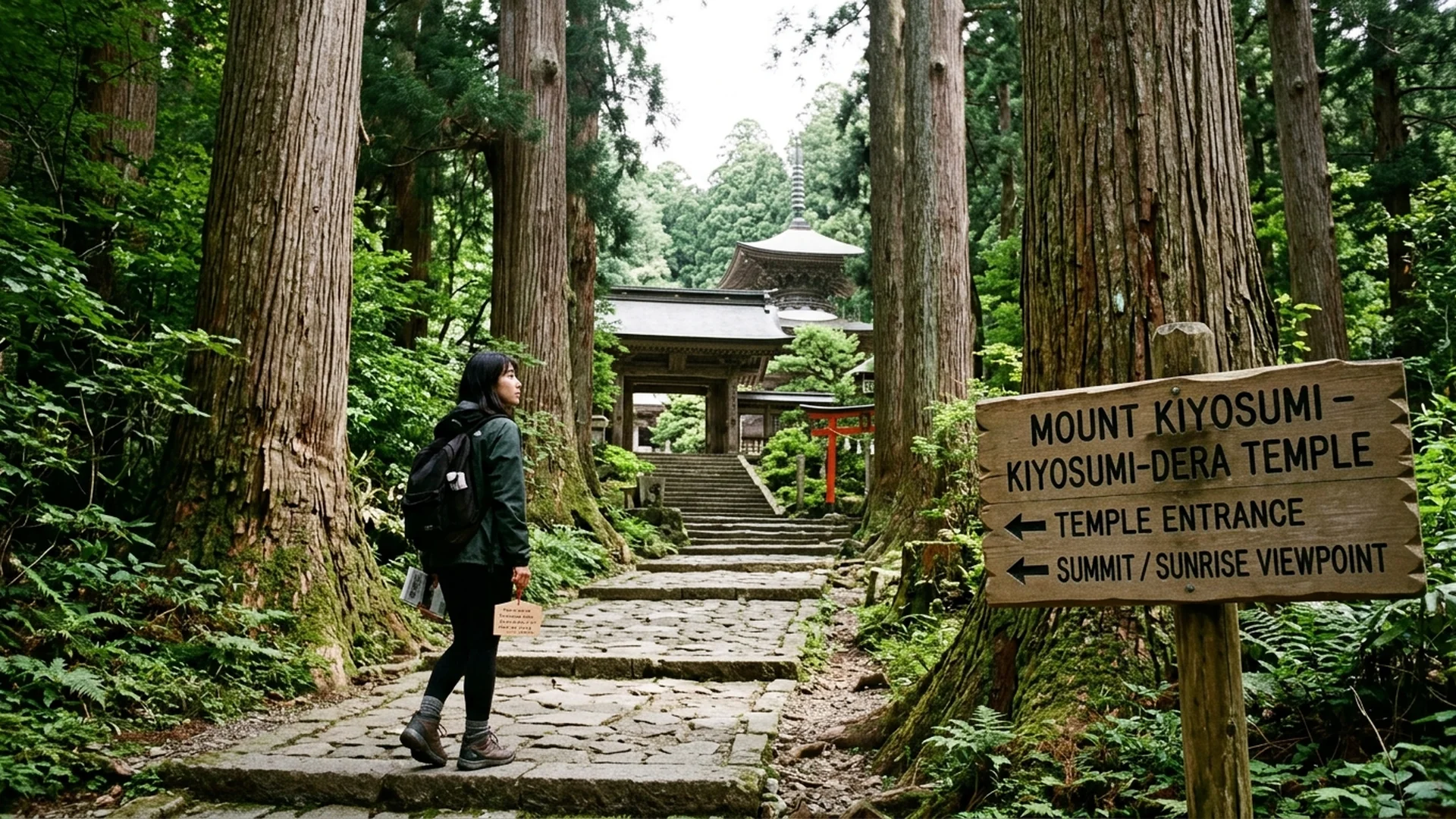
As the restless pulse of Tokyo begins to dissolve into the morning mists of the Boso Peninsula, a profound sanctuary for inner quietude emerges. Mount Kiyosumi is far more than a verdant elevation in Chiba Prefecture; it is a sacred landscape steeped in over a millennium of spiritual history, where the whispered secrets of ancient woodlands invite travelers to shed the noise of modern life.
Here, profound religious heritage converges with untouched nature. Cradled by mist-shrouded peaks stands Seichoji Temple, the hallowed cradle of Nichiren Buddhism and one of the earliest vantage points on Honshu to greet the dawn. This celestial convergence of light and ancient forest offers a restorative pilgrimage for mindful travelers seeking renewal.
Seichoji Temple: The Roots of Faith and the Footsteps of Nichiren
Deep within the tranquil embrace of the forested highlands, Seichoji Temple has anchored the spiritual identity of Mount Kiyosumi since its founding in the early 8th century. Most notably, this sacred ground served as the formative study and meditation sanctuary for Master Nichiren, the influential 13th-century Buddhist reformer who spent his early years immersed in scripture here before proclaiming his revolutionary teachings. The historic wooden halls are meticulously preserved, radiating an architectural harmony with the surrounding cedar groves. The rhythmic resonance of morning chants and the faint, sweet trace of incense curling into the crisp mountain air gently anchor visitors in the present moment.
Living Legacy: The Ancient Majesty of Sennen Sugi
Following the winding nature trails beneath a dense canopy of ancient boughs leads inevitably to the magnificent Sennen Sugi, a thousand-year-old cedar designated as a natural treasure. Its colossal trunk, requiring multiple travelers joining hands to encircle, stands as a silent chronicler of centuries past. The gnarled bark and deep fissures speak of endurance through shifting eras. Standing in stillness before this towering sentinel evokes a humbling yet wondrous sensation, as though the deep earthen roots are radiating stability straight into the observer.
Asahikamori: Witnessing Honshu’s Sacred First Light
Perched on a uniquely advantageous geographical ridge, the Asahikamori forest area on Mount Kiyosumi is celebrated as one of the most sublime sunrise viewpoints in the region. When the first amber rays pierce the shroud of morning mist and crown the ancient pines, the entire landscape ignites in golden hues. Sweeping vistas stretch all the way to the distant Pacific Ocean, opening an expansive perspective on existence. Accompanied only by birdsong and the cadence of one’s own breath, this quiet dawn becomes a masterclass in deep self-reflection.