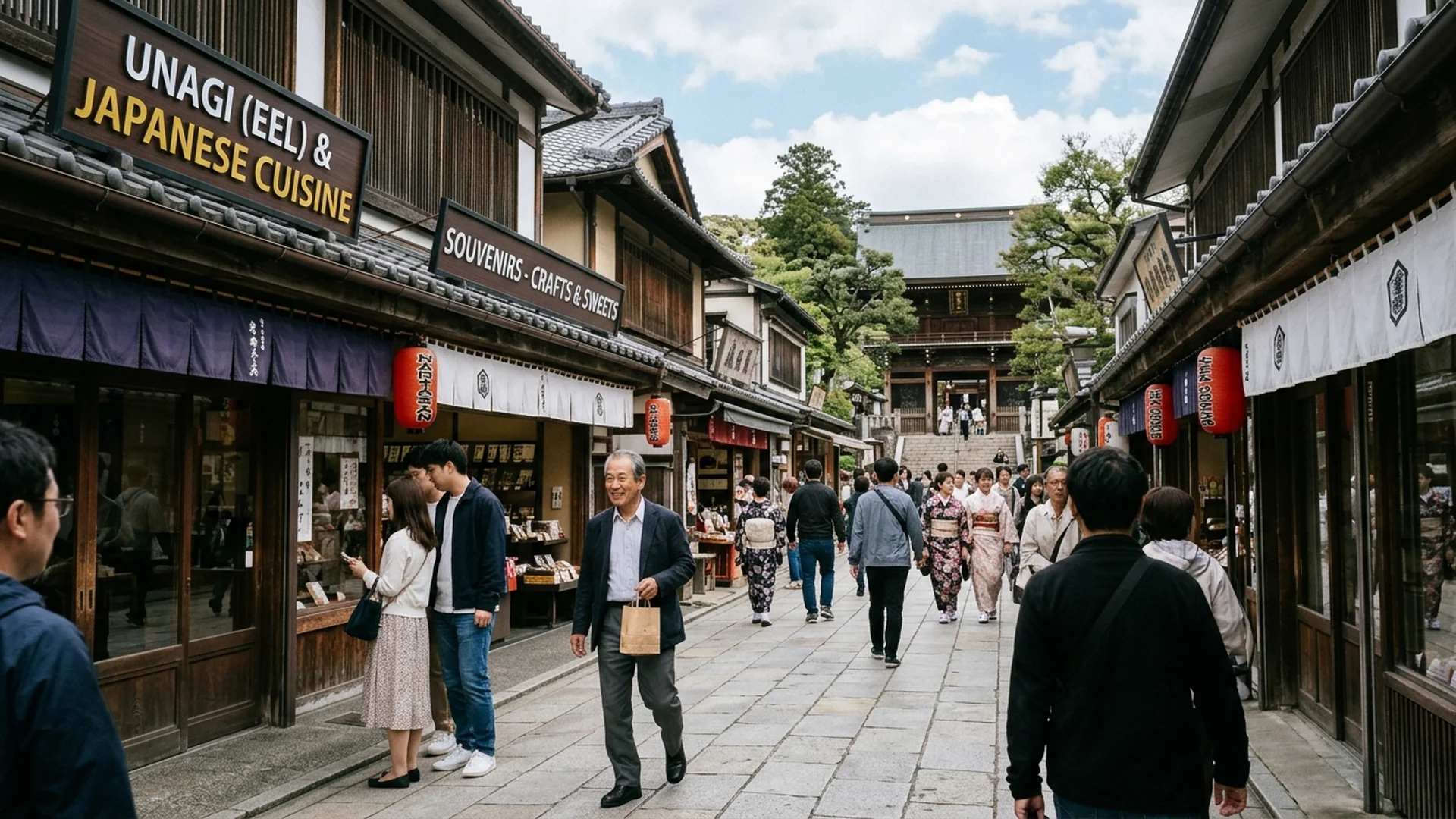
For most global travelers, Narita International Airport is merely a transit threshold—a final portal separating foreign memories from domestic reality. Yet, stepping just minutes beyond the terminal turns back the clock to the Edo era. Stretching 800 meters toward the serene sanctuaries of an ancient temple, Naritasan Omotesando is far more than a convenient layover or a way to pass the time. It is a living museum steeped in history, where weathered timber creaks beneath your footsteps and the rich, charcoal-kissed aroma of roasting unagi has seduced weary travelers for centuries.
Visiting this historic avenue serves as a meditative ritual and an exquisite culinary farewell before your wheels lift toward the clouds. Strolling down the sloping thoroughfare, flanked by preserved merchant houses, artisan workshops, and time-honored storefronts, invites you to decelerate. Here, amidst bustling charm, a profound stillness endures, offering a glimpse into Chiba’s unwavering commitment to harmonizing the past with the present.
Retracing 800 Meters of Sacred History: Timber Architecture and Edo-Era Spirit
The moment you step away from the train station, Naritasan Omotesando envelops you in the ambiance of a period cinema. This historic street once guided millions of pious pilgrims toward Naritasan Shinshoji Temple, a deeply revered Buddhist sanctuary. The two-story wooden buildings lining the path are quintessential machiya structures—former inns and merchant houses thoughtfully adapted into contemporary ateliers while fiercely preserving their ancestral character.
Strolling down this gentle slope is an unhurried journey through time. Every corner reveals the quiet dedication of multigenerational artisans and shopkeepers. Hand-painted cedar signboards, fluttering noren curtains swaying in the breeze, and the amber glow of lanterns at dusk create an atmosphere utterly distinct from modern Tokyo. Here, you are not merely purchasing goods; you are acquiring moments suspended in time.
The Three-Centuries-Old Unagi Tradition: The Fine Art of Charcoal Grilling
No exploration of Narita’s culinary identity is complete without experiencing unagi-don or unaju. This gastronomic heritage traces its roots to the Edo period, when exhausted travelers refreshed themselves with fresh catches from nearby Lake Inbanuma.
The magic of Omotesando’s eel masters lies in their meticulous craftsmanship. Each fish is masterfully filleted, delicately steamed to melt away excess fat, and then grilled over bamboo charcoal while being repeatedly dipped in a proprietary sweet soy glaze passed down through generations. The caramelized aroma rising from the grill acts as an irresistible siren song, drawing patient queues down the smoky alleyways.
Artisanal Crafts, Freshly Grilled Senbei, and Heritage Yokan
Beyond its celebrated eel, Omotesando is a sanctuary for lovers of artisanal confectionary. Along the thoroughfare, traditional shops craft senbei rice crackers over glowing charcoal braziers, filling the air with the satisfying snap of roasting grain and savory soy sauce. Nearby, venerable shops offer yokan—a dense, subtly sweet azuki bean jelly that finds its ultimate pairing in a bowl of steaming matcha.
In the realm of craftsmanship, the neighborhood is celebrated for Narita pottery and woodworking traditions unique to Chiba Prefecture. Browsing these local works offers a direct connection to regional heritage, allowing you to carry home tangible memories imbued with genuine narrative depth.