For most international travelers, Narita is little morev than a final checkpoint before wheels touch the runway or a fleeting transit hub en route to the ceaseless electric pulse of Tokyo. Yet for those willing to step beyond the hurried rhythm of intercontinental transit and wander down the sloping stone pathway of an ancient merchant quarter, an entirely different dimension of quiet grace reveals itself.
Set back from the modern world behind a veil of centuries-old pines, Naritasan Shinshoji Temple stands as a monumental Shingon Buddhist sanctuary with a lineage spanning over a millennium. Established in the Heian period, the temple is far more than a mere repository of prayer; it is a profound cultural hearth where art, history, and unyielding faith have intertwined for generations.
Upon entering the temple precincts, the ambient roar of the modern world dissolves beneath the resonant bronze chimes of hanging bells and rising plumes of incense mingling with the crisp scent of aged conifers. This sacred ground is the eternal home of Fudo Myoo—the wrathful yet deeply compassionate deity of wisdom and fierce protection—to whom millions have journeyed over the centuries to seek sanctuary from worldly obstacles. Here, amid architectural treasures and timeless rituals, lies an invitation to slow down and attune oneself to the spiritual heartbeat of old Japan.
A Millennium of Faith and the Wrathful Grace of Fudo Myoo
The narrative of Naritasan Shinshoji begins in 940 AD, an era marked by intense political unrest and civil strife across Japan. Seeking to restore peace to the Kantō region, a revered ascetic named Kancho carried a sacred wooden statue of Fudo Myoo—carved by Kobo Daishi, the founding patriarch of Shingon Buddhism—from Kyoto. Legend holds that when approaching rebel forces sought to halt his journey, the divine presence of the image miraculously quelled the uprising and restored harmony to the land. From that pivotal moment onward, Shinshoji became an enduring symbol of triumph over adversity.
Fudo Myoo, often identified in Sanskrit traditions as Acala, is depicted with a fierce and imposing visage: wide, unblinking eyes and bared teeth symbolizing an absolute determination to eradicate human ignorance. In his right hand, he wields a fiery sword to sever greed, anger, and delusion, while his left holds a lasso to bind and guide straying souls back toward the path of righteousness. Yet beneath this formidable exterior lies boundless compassion, offering unconditional shelter to those navigating life’s most turbulent trials.
Architectural Masterpieces of the Edo Period: The Niomon Gate and Three-Story Pagoda
Beyond its spiritual significance, the temple functions as an open-air museum of traditional Japanese architectural mastery. Passing through the bustling merchant district brings visitors directly before the Niomon Gate, a magnificent two-story structure dating to the early 19th century, distinguished by intricate wood carvings and a striking vermilion lantern. Passing through the gate opens onto a vast gravel courtyard flanked by timeless sacred edifices.
Chief among these is the Three-Story Pagoda, a brilliant crimson monument constructed in 1712. Every surface is adorned with delicate reliefs of swirling clouds, celestial dragons, and Buddhist cosmology, reflecting the esoteric philosophy of the Shingon sect. Visitors will also encounter the Great Pagoda of Peace (Koundo), a towering 58-meter structure erected in 1984 as a monument to global harmony, housing serene golden Buddhas within its quiet halls.
The Goma Fire Ritual: Purifying the Spirit Through Sacred Flames
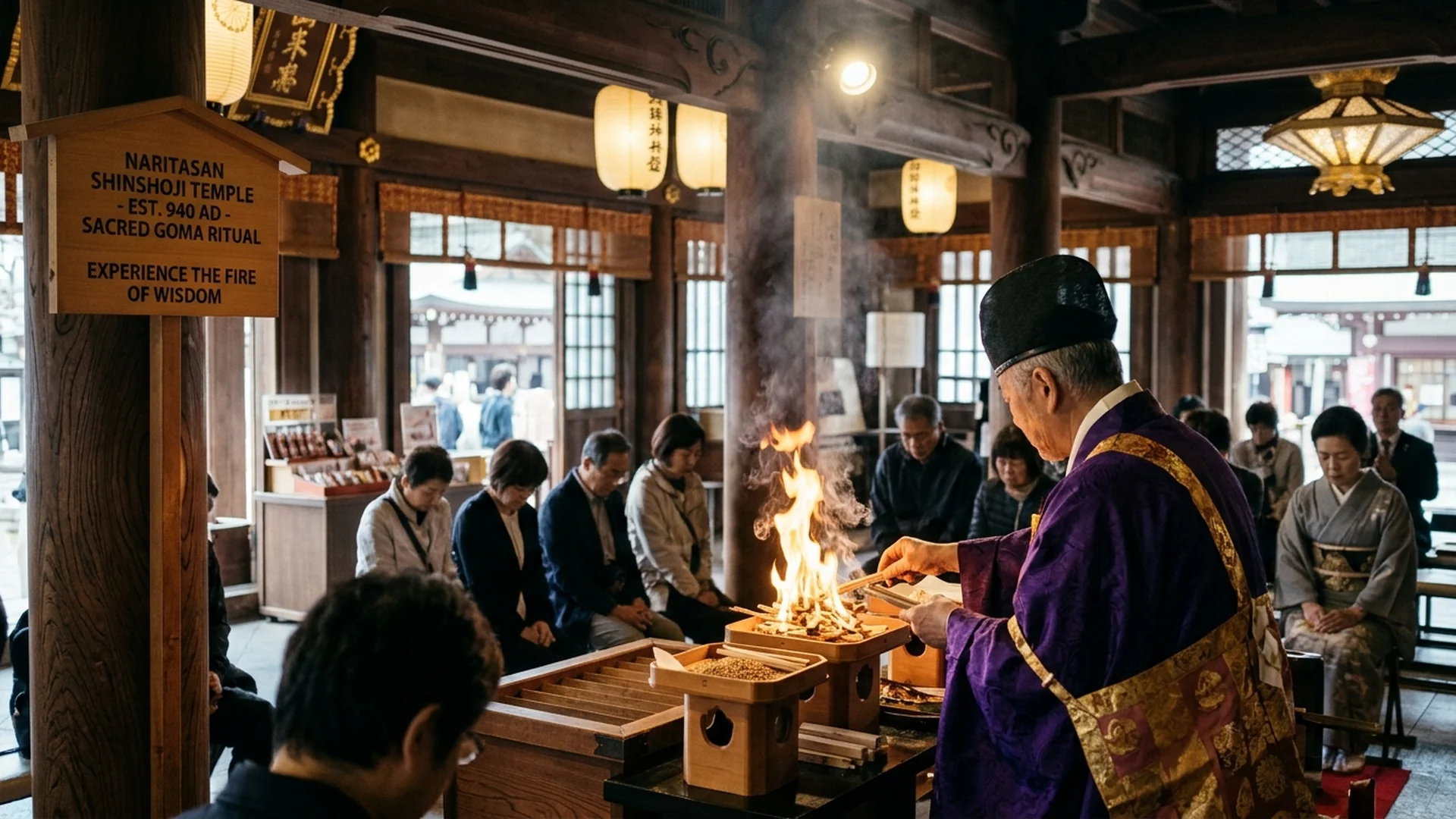
The beating heart of Naritasan’s enduring appeal is the Goma Fire Ritual, an esoteric rite performed continuously for over a thousand years. Within the hallowed interior of the main hall, robed priests kindle a consecrated hearth while rhythmic drumbeats reverberate against timber beams and resonant chants echo through the sanctuary.
As towering orange flames leap toward the ceiling, they are believed to manifest the transformative presence of Fudo Myoo, consuming inner defilements and worldly afflictions. Attendees are often invited to hold personal belongings—such as notebooks or wallets—near the purifying smoke to invite prosperity and protection. It is an intensely immersive, meditative experience that leaves even the most seasoned global wanderer quietly transfixed.
Narita Omotesando: The Living Heritage of an Ancient Pilgrim Route
No exploration of Naritasan is complete without traversing the Narita Omotesando, a kilometer-long slope stretching from the railway station to the temple gates. Lined with impeccably preserved timber buildings from the Edo and Meiji eras, the street offers a sensory delight of woodsmoke, sweet bean pastes, and savory soy reductions drifting from open kitchens.
The culinary hallmark of the district is undoubtedly unadon—freshwater eel grilled over binchotan charcoal. Historically, the nearby Lake Inbanuma provided an abundant supply of wild eel, which local innkeepers prepared to sustain weary pilgrims. Today, master chefs continue this heritage, butterflying and broiling tender eel brushed with closely guarded tare sauces passed down through generations alongside freshly toasted rice crackers.