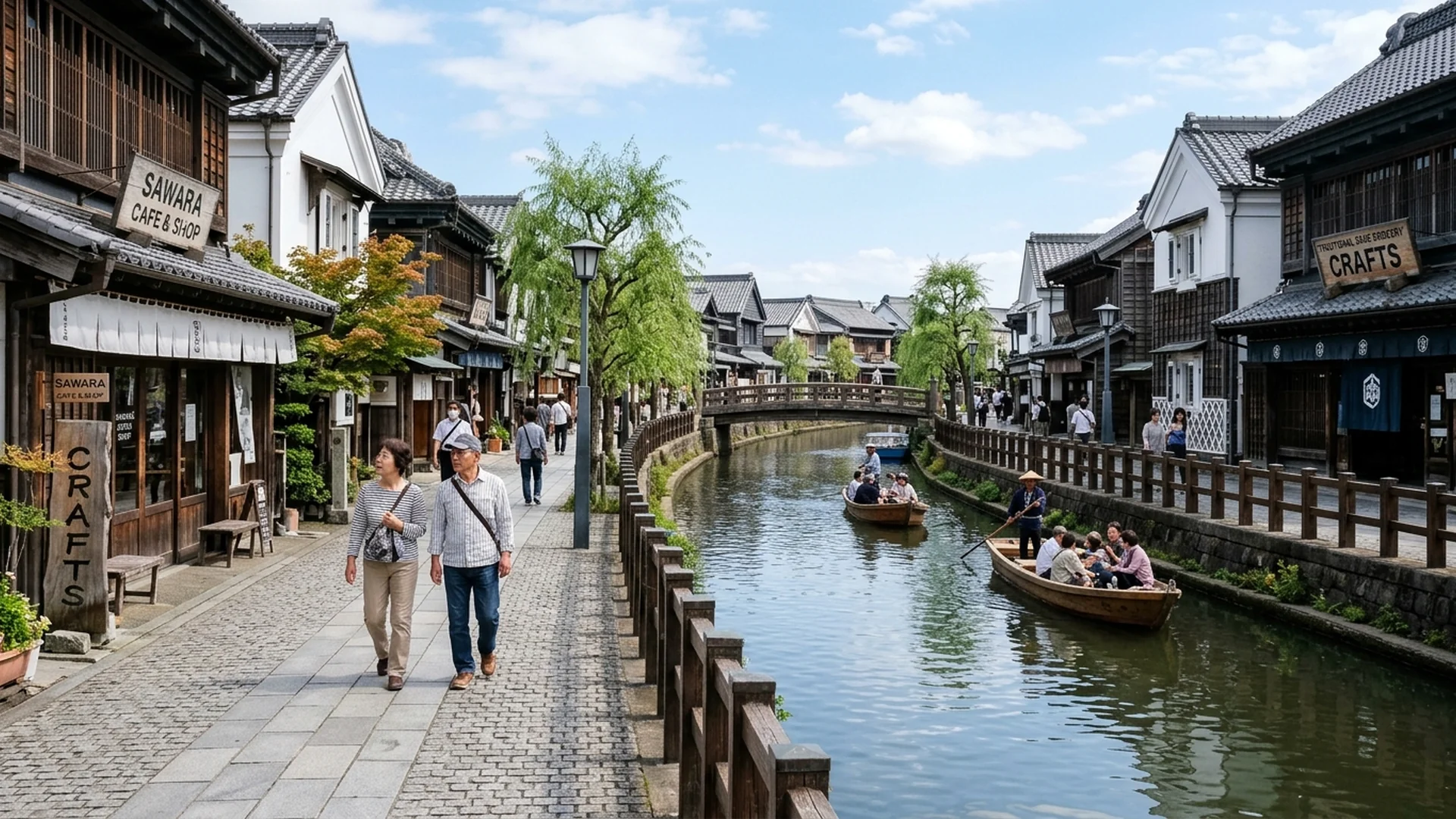
When the gentle breath of time sweeps across the shimmering expanse of the Onoe-gawa canal, the rustling willow fronds and the slow glide of wooden skiffs evoke an era frozen in refined amber. The Sawara Historic District, celebrated as the Little Edo of the Kantō region and Chiba prefecture, is a sanctuary where the relentless roar of metropolitan Tokyo dissolves into the rhythmic cadence of footsteps on ancient timber and the tranquil murmur of flowing water.
This is far more than a mere historical settlement; Sawara once served as a vital maritime artery, ferrying rice and precious commodities to the great metropolis of Edo, ultimately rivaling the capital in commercial prosperity. For the discerning global traveler yearning for authenticity and cultural stillness, a pilgrimage to Sawara is akin to opening an invaluable chronicle, where every quiet corner breathes with the quiet enchantment of heritage.
In the tradition of discerning publication-grade travel journalism, our exploration of Chiba’s northern waterways reveals an unhurried world of merchant dynasties, cartographic pioneers, and centuries-old culinary artistry.
Architectural Legacy: Earthen Storehouses and the Onoe-gawa Canal
Flanking the winding bends of the Onoe-gawa canal at the heart of Sawara stand magnificent rows of timber buildings and white-plastered earthen storehouses known as Kura. Constructed across the Edo and Meiji eras, these stately structures bear silent witness to the immense wealth amassed by merchants who transported essential goods to the capital via the inland waterways. What distinguishes Sawara from open-air architectural museums is its living, breathing community; traditional dry-goods merchants, kimono outfitters, artisan tea shops, and centuries-old sake breweries continue to conduct daily commerce within these historic walls.
To wander across the stone footbridges arching over the canal, or to pause beneath the misty cascade of the Ja Ja Bridge—which releases water at scheduled intervals—is to step effortlessly into a bygone century. The gentle hum of local life coupled with the preserved aesthetic creates an immersive canvas of classic Japanese urban design.
Footsteps of a Cartographic Pioneer: The World of Ino Tadataka
Sawara’s cultural resonance extends far beyond picturesque landscapes, serving as the ancestral home of Ino Tadataka, a visionary merchant who retired at the age of forty-nine to master astronomy and geography. He subsequently pioneered the first scientifically accurate cartographic survey of the Japanese archipelago. Travelers may walk through his original canal-side residence, designated as a National Historic Site, where the inner courtyards, quiet study chambers, and original storage rooms remain impeccably intact.
Directly across the canal stands the Ino Tadataka Museum, housing extensive travel journals, surveying instruments, and invaluable original maps. This institutional repository honors a lifetime of relentless intellectual curiosity, offering visitors a profound encounter with one of Japan’s most celebrated minds.
The Art of the Waterway: Skiff Cruises and Century-Old Gastronomy
No exploration of Sawara is complete without boarding a traditional wooden flat-bottomed boat, known locally as a Sappa-bune. Gliding quietly along the Onoe-gawa canal provides an intimate perspective of the architectural detailing on the overhanging eaves and the arching willow branches, accompanied solely by the soft dip of the oars against the water.
Following this aquatic journey, the town’s gastronomic heritage welcomes the traveler. Century-old dining establishments prepare unagi—freshwater eel glazed in secret ancestral soy sauces and grilled over binchotan charcoal—offering a meltingly tender texture that defines local culinary mastery. Complementing this with inventive soy-sauce-infused artisanal gelato rounds out a multisensory journey through Chiba’s culinary soul.