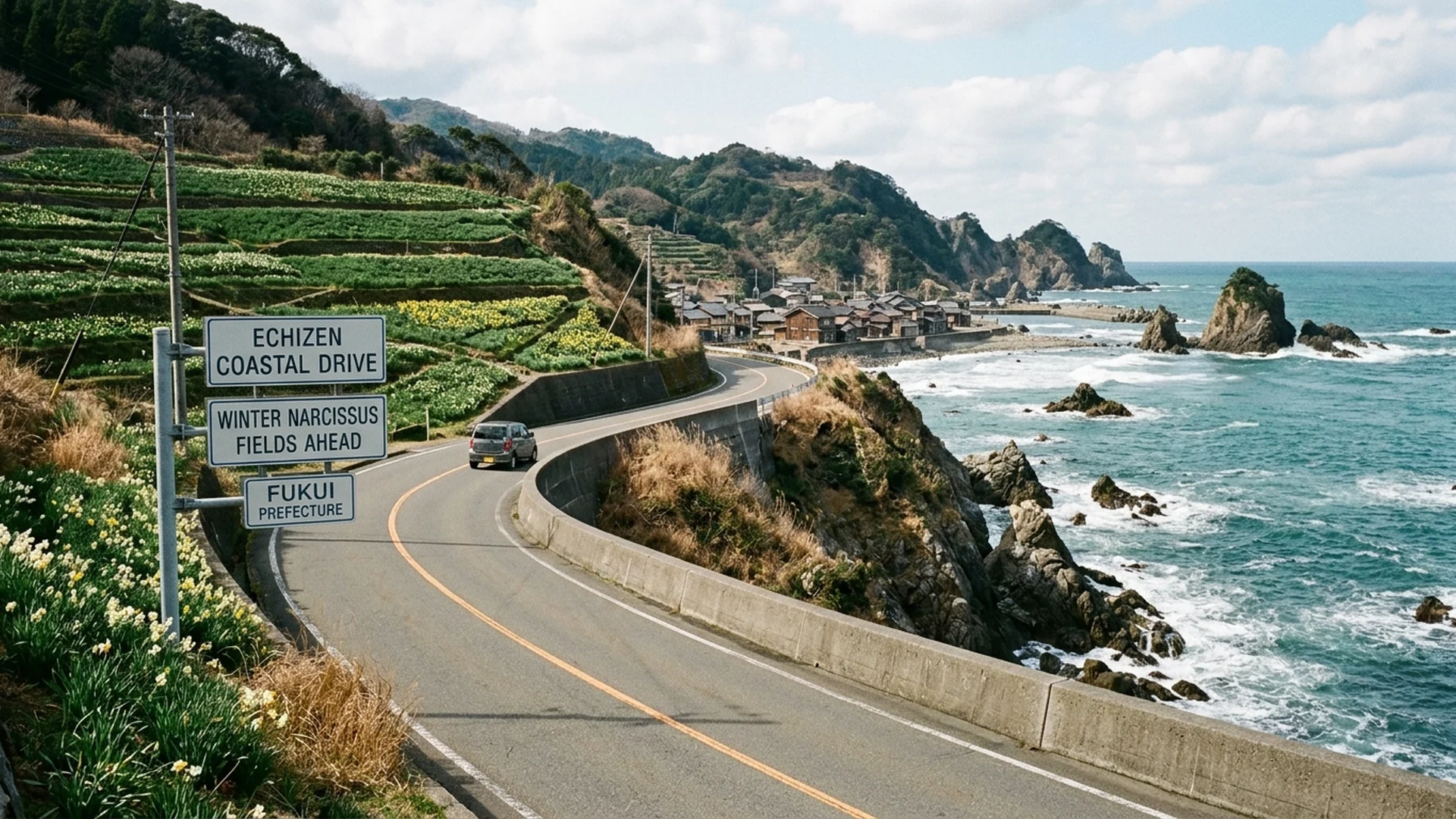
As the winter winds sweep across the powerful, obsidian waves of the Sea of Japan, the Echizen Coast in Fukui Prefecture undergoes a breathtaking transformation into the most evocative and magical season of the year. This is far more than a rugged stretch of weather-sculpted stone; it is a sacred meeting ground where the raw, untamed fury of the elements meets the exquisite, understated refinement of local heritage. Here, dark basalt cliffs are brush-stroked with the pure, fragile white of wild narcissus blossoms that brave the biting gales, while sheltered coastal coves warm with the anticipation of the annual Echizen crab fishing season—an imperial delicacy that draws discerning travelers to experience its legendary flavors firsthand.
Architecture of the Tides: The Wild Splendor of Cape Echizen and Basalt Cliffs
Carved into the rugged peninsula of Fukui Prefecture, the Echizen Coast has faced the relentless, gale-force fury of the Sea of Japan for millennia. The topography is defined by soaring basalt cliffs washed dark by relentless spray, creating astonishing natural archways and surreal geological formations such as the Yochomon Arch and Hokojima island, which links to the mainland via a vermilion pedestrian bridge contrasting sharply with the deep indigo sea. To stand atop Cape Echizen with the white lighthouse sentinel rising against the thunderous roar of the waves is to witness a landscape of raw, elemental majesty that effortlessly instills a profound sense of quiet contemplation.
A Blanket of White in the Winter Gale: The Wonder of Echizen Narcissus Fields
With the arrival of winter—stretching from December through February—the sheer sea cliffs of Echizen undergo a miraculous transformation, blanketing themselves in the wild beauty of the Echizen Narcissus fields. Recognized as one of Japan’s three largest natural narcissus habitats, these delicate white petals and golden stamens defy the freezing sea salt winds to carpet the coastline in understated elegance. Their subtle, sweet fragrance drifting on the winter breeze creates an atmosphere of rare serenity, turning the cliffside pathways into an unhurried sanctuary for poets, naturalists, and contemplative travelers alike.
Legends of the Deep: The Epicurean Majesty of Imperial Echizen Crab
No exploration of the Echizen Coast’s contemplative soul is complete without surrendering to the culinary mastery of Echizen crab. Harvested from these mineral-rich waters starting in early November, this regional snow crab is legendary for its pristine sweetness, firm yet tender flesh, and deeply satisfying flavor profile born from the convergence of warm and cold currents. Echizen crab holds the historic distinction of being the very first brand of snow crab in Japan to bear a distinctive yellow tag guaranteeing its provenance and strict grading standards, and it remains the exclusive variety traditionally presented to the Japanese Imperial Court. Savoring freshly boiled or charcoal-grilled crab at a coastal ryokan elevates simple sustenance into a transcendent, memory-making ritual.