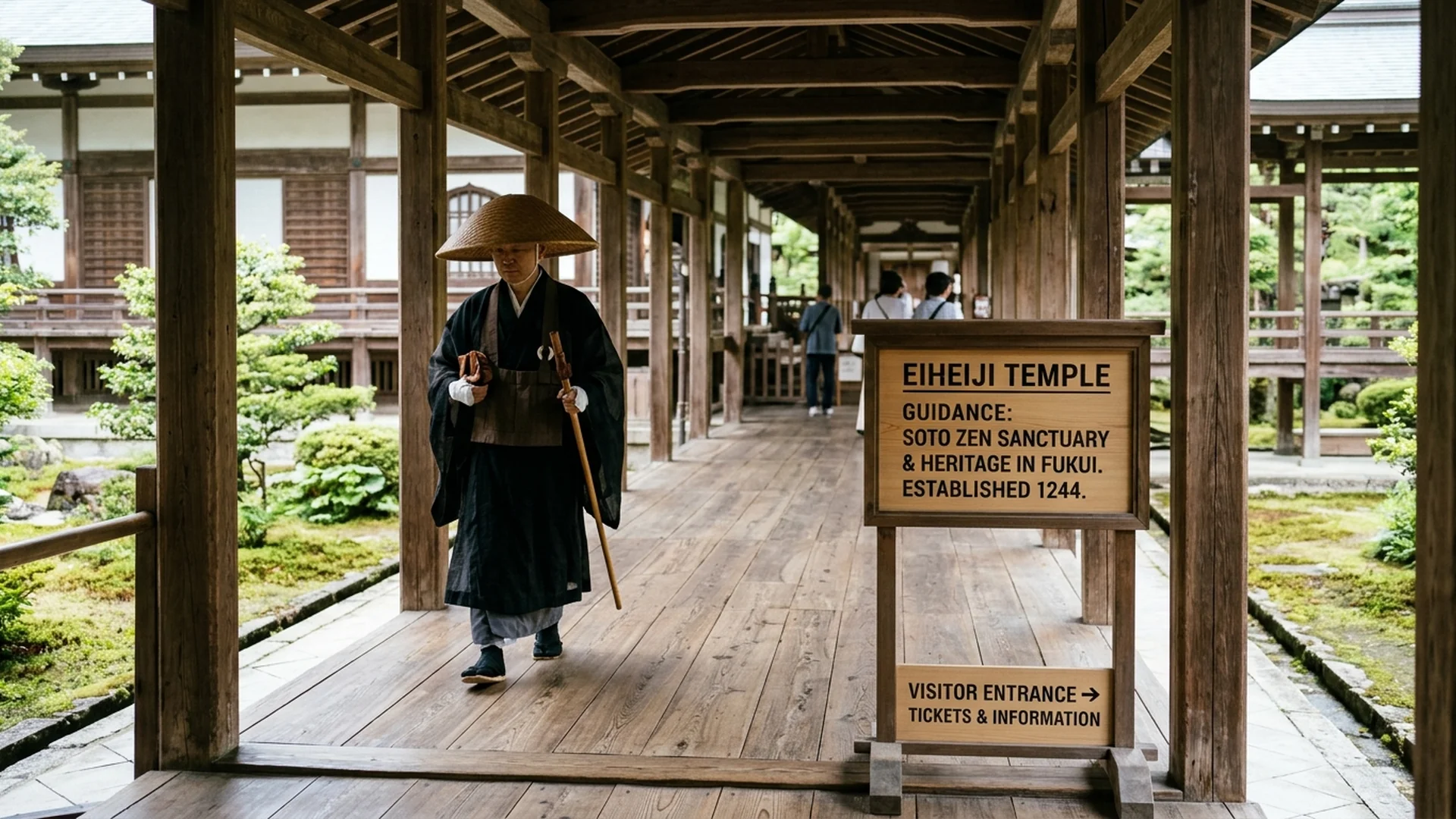
When the morning mists drift through the centuries-old cedar forests enveloping a serene valley in Fukui Prefecture, the sonorous chime of an ancient bronze bell awakens Eiheiji Temple from its slumber. This is far more than a mere sanctuary; it is the grand spiritual epicenter of Soto Zen Buddhism, established in 1244 by Master Dogen Zenji, a revered patriarch who imparted the philosophy of awakening through the quiet rhythm of daily monastic life.
Crossing the threshold into this sacred precinct is akin to stepping through a portal into another dimension of time, where every footstep, every breath, and every glistening dewdrop upon emerald moss carries profound meaning. The gentle aroma of Hinoki cypress wood mingling with the crisp mountain air refines the traveler’s spirit, inviting a direct encounter with the vastness of emptiness and the understated elegance of wabi-sabi.
The Shichido Garan Architecture: Harmonizing Faith and Natural Topography
The beating heart of Eiheiji is the Shichido Garan, the traditional architectural ensemble comprising seven principal structures: the Hatto (lecture hall), Hodo (monks’ quarters), Sodo (meditation hall), kitchen for preparing shojin ryori, bathhouse, toilet facilities, and the imposing Sanmon gate. These timber structures cascade gracefully along the steep mountain slope, constructed entirely without a single metal nail—a testament to the ingenious foresight of ancient master carpenters who understood the natural weight distribution and expansion of timber.
What invariably leaves an indelible impression on visitors are the gleaming, polished wooden corridors that seamlessly bridge the various halls. Young monks and trainees, known as unsui, sweep and buff these wooden floors by hand multiple times a day until the surfaces achieve a mirror-like finish, reflecting the filtered daylight streaming through delicate fusuma paper screens. Walking these corridors transcends simple locomotion; it becomes an active exercise in mindfulness, echoing the meditative footsteps known as kinhin.
The Sanshokaku Ceiling Paintings and Invaluable Artistic Heritage
Though Zen philosophy emphasizes simplicity and the release of material attachments, Eiheiji houses a breathtaking collection of high art that mirrors a profound reverence for nature. A compelling highlight is the Sanshokaku room, situated on the second level of the Hodo building, conceived later in the temple’s history to welcome distinguished guests. The expansive wooden ceiling of this magnificent hall is adorned with 230 vibrant paintings executed by 144 preeminent Japanese artists of the Showa era.
The compositions predominantly depict flora, fauna, and idyllic natural landscapes, interspersed with depictions of rare creatures such as colorful koi, majestic lions, and prowling tigers. Gazing upward into this intricate wooden canopy evokes the sensation of standing beneath the sheltering boughs of a living, breathing primeval forest, reinforcing the Zen worldview that all sentient life is profoundly interconnected.
The Zen Way of Life and the Unsui Monastic Tradition
A pilgrimage to Eiheiji serves as a rare window into the rigorous, austere daily life of the unsui. Meaning ‘clouds and water,’ the term poeticizes the existence of young monks who wander without worldly attachments, releasing the ego to flow effortlessly along the currents of the Dharma. The resident monks rise at half-past three every morning for early devotions, seated meditation (zazen), and diligent temple maintenance carried out with absolute focus.
Within these sacred boundaries, conversational chatter is absent, replaced only by the soft pad of footsteps, the rhythm of respiration, and the resonant strike of the wooden han used to mark the hours. Every meal partaken here is shojin ryori, plant-based Zen cuisine prepared without meat or pungent spices, crafted with exquisite care to nourish both body and spirit while honoring the gifts of the natural world.