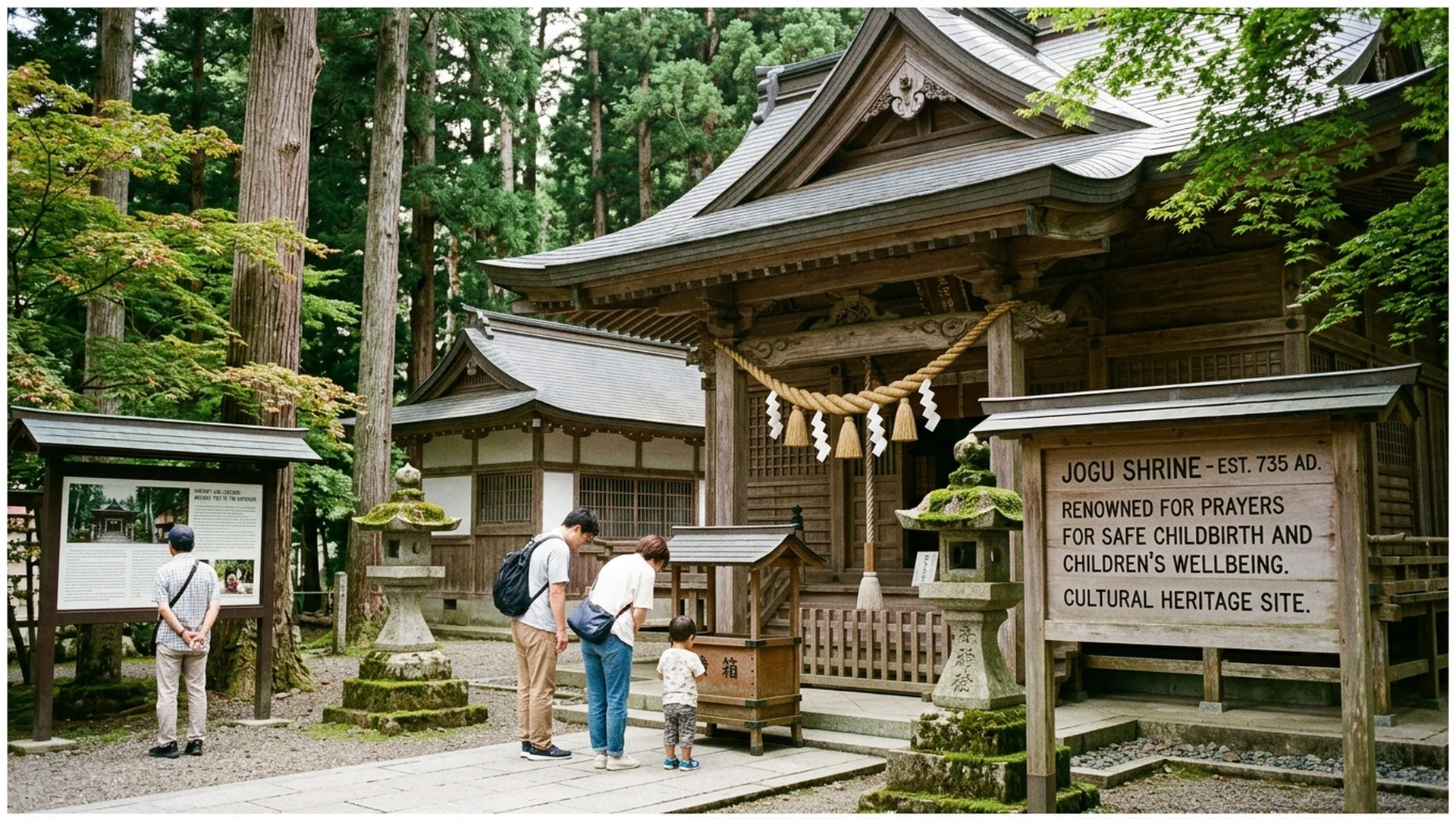
Step beyond the primary tourist corridors into Tsuruga, an ancient port city along the Sea of Japan whose centuries-old maritime legacy whispers through pine-draped hills. Here, nestled within a canopy of timeless greenery, stands Jogu Shrine—a revered sanctuary of quiet spiritual gravity. Far from a mere architectural relic, this sacred ground serves as an enduring generational anchor, intimately tied to the protection of new life and safe childbirth. Woven deeply into the greater spiritual tapestry of the monumental Kehi Jingu, Jogu Shrine invites the discerning traveler to pause, breathe, and bear witness to an unhurried, contemplative dimension of Japanese heritage.
Historical Roots and the Sacred Bond with Kehi Jingu
To truly appreciate Jogu Shrine, one must first trace its profound lineage back to Kehi Jingu, the grand guardian shrine of the ancient Echizen province. Tsuruga has long served as a vital maritime gateway linking the Sea of Japan with the mainland, a strategic crossroads that fostered immense cultural and economic prosperity. Jogu Shrine emerged organically within this storied historical landscape, acting as an intimate front-line guardian and an integral node in a vast network of faith. Every architectural element within its precincts—from the austere torii gate to the sacred honden (main hall)—strictly adheres to classical Shinto principles. Here, structural simplicity becomes the highest form of elegance, perfectly attuned to the murmuring cedars and ancient stone paths that embrace it.
‘Osan no Jogu-san’: The Living Resonance of Faith and New Life
Among pilgrims and local families alike, Jogu Shrine commands deep reverence for its spiritual efficacy concerning fertility and safe childbirth. Affectionately invoked as ‘Osan no Jogu-san’, this intimate sanctuary embodies centuries of collective prayers offered by expectant mothers wishing for peaceful pregnancies and healthy lineages. Walking these moss-draped grounds imparts an enveloping sense of maternal compassion and enduring protection. The prevailing silence encourages introspective calm, reflecting a deeply ingrained cultural ethos that honors ancestral continuity, the sanctity of the family unit, and the fragile, miraculous dawn of new life.
Slow Travel Amidst the Serene Harbor Town of Tsuruga
A pilgrimage to Jogu Shrine offers the quintessential slow travel experience for the culturally attuned wanderer. Tsuruga is a destination where time unfurls unhurriedly, far removed from the sensory overload of Japan’s major metropolitan hubs. Travelers are encouraged to wander at a deliberate pace, breathing in the crisp sea breezes drifting from the bay while admiring the towering groves of ancient timber. The crunch of gravel beneathfoot and the subtle, resinous fragrance of Japanese cedar work in quiet concert to clear the mind, opening a window into the pure, understated aesthetic philosophy of wabi-sabi in its most authentic natural setting.