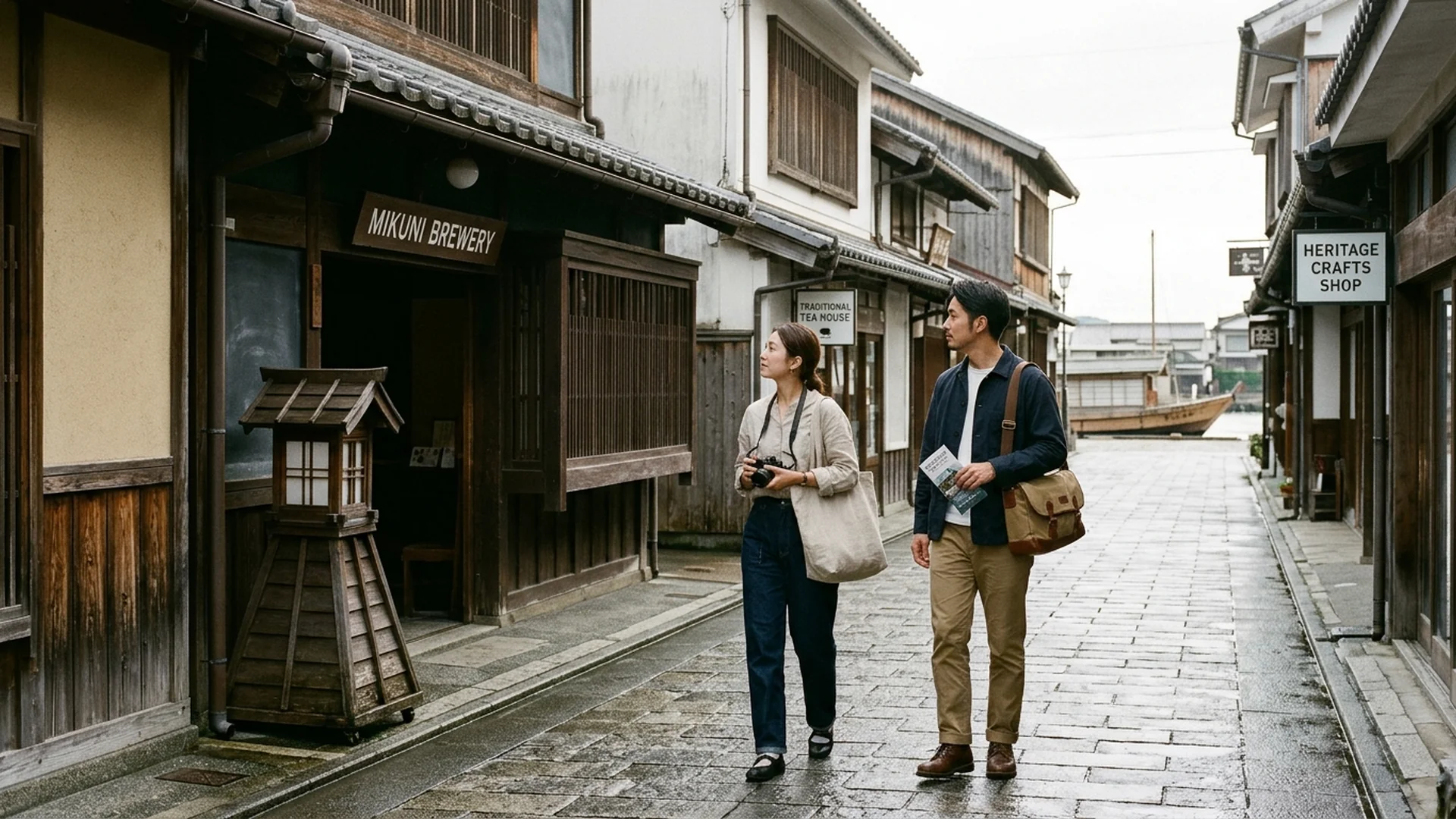
When the distant mournful calls of maritime steamers gave way to the steady, rhythmic percussion of the Sea of Japan, Mikuni Port Town quietly preserved the golden patina of its storied past. Far more than a mere coastal settlement in Fukui Prefecture, this historic port operates as a living museum chronicling Japan’s glorious era of coastal commerce. It was here that the legendary Kitamaebune merchant vessels once rode the restless white-capped swells, stitching together the economic fabric of Kansai and Hokkaido, leaving behind an indelible architectural and cultural legacy.
For the discerning traveler seeking depth and profound stillness, Mikuni offers an unhurried pilgrimage untouched by the breathless pace of commercial tourism. Every narrow lane breathes with the fragrance of aged cedar, reflecting a sublime architectural synthesis of traditional Japanese craftsmanship and refined Meiji-era ornamentation. Combined with world-class gastronomy harvested directly from the nutrient-rich depths of the local sea, a sojourn through this historic harbor is a rewarding return to intellectual roots and living aesthetics.
The Maritime Silk Road: The Legacy of Kitamaebune
Throughout the Edo and Meiji epochs, the Sea of Japan was far more than a geographical boundary; it was the vital circulatory system driving the nation’s economy. The Kitamaebune—coastal merchant freighters that braved treacherous northern waters to transport vital commodities, particularly rice and Hokkaido kelp, down to Kyoto and Osaka—chose Mikuni as an essential anchorage for trade and respite. The immense wealth carried inward on the tide transformed this humble settlement into a bustling commercial nexus. Influential magnates erected opulent residences and sprawling riverside warehouses, which today endure as architectural testaments to past prosperity. To wander the vintage avenues of Mikuni is to turn the heavy pages of history by hand, feeling the enduring resonance of wealth woven seamlessly into the rhythms of coastal life.
An Architectural Symphony: From Machiya Craftsmanship to Meiji Grandeur
The architectural character of Mikuni is defined by a balanced coexistence of contrasting styles. Flanking the historic pathways are classic Machiya townhouses, defined by narrow street frontages that stretch deep backward—a historical artifact of archaic tax structures. Their facades are adorned with delicate wooden lattices known as koshi, while their interiors conceal remarkably spacious layouts and tranquil inner courtyard gardens. A crowning architectural highlight is the former headquarters of the Morita Bank, a striking Meiji-era edifice marrying European Renaissance detailing with traditional Japanese building arts. Within, soaring ceilings boast intricate plasterwork and hand-carved woodwork, testifying to the apex of merchant affluence in Mikuni. Visitors can also explore the historic villa of the Kishina family, powerful shipping magnates who once commanded the harbor’s economic destiny.
Coastal Gastronomy: The Legend of Mikuni’s Echizen Crab
Beyond its tangible architectural heritage, Mikuni commands international renown among connoisseurs of high gastronomy, primarily due to the legendary Echizen Gani. These prized male and female snow crabs, hauled from the freezing offshore waters of Fukui, possess an incomparable sweetness and succulence born from the convergence of warm and cold ocean currents laden with deep-sea minerals. Landed directly at the piers of Mikuni, Echizen crab holds the rare historical distinction of being the sole variety presented as an annual tribute to the Imperial Court. With firm, sweet flesh and rich, creamy tomago, it remains a transcendent ingredient celebrated by Michelin-starred masters and venerable traditional kitchens alike. Savoring a freshly steamed crab against the backdrop of a centuries-old port elevates travel into an unforgettable sensory art form.