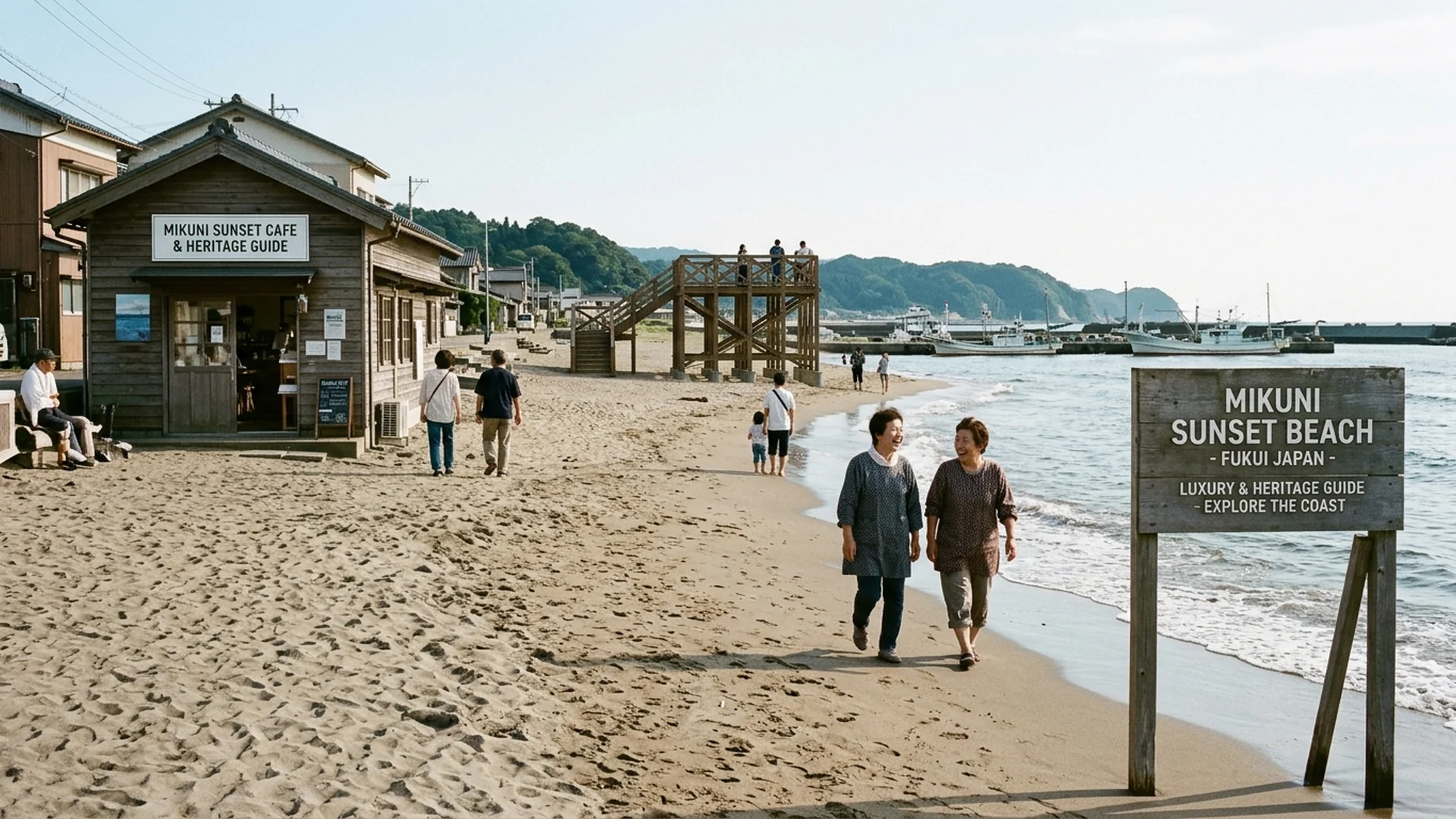
Where the vast expanse of the Sea of Japan meets the incandescent gold of the fading day at Mikuni Sunset Beach, the landscape transcends mere scenery to become a living canvas of time and tide. Located in Fukui Prefecture, this storied coastline whispers tales of a prosperous maritime past where trading vessels once braved the northern waters. Today, it offers discerning travelers a rare synthesis of profound tranquility, unhurried heritage, and legendary culinary mastery.
Stepping onto these shores feels like crossing a quiet threshold away from the relentless pace of the modern world. Here, the evening sky ignites in dramatic gradients of vermilion, rose, and indigo, earning the locale its revered status among Japan’s premier twilight vistas. Yet the allure of Mikuni extends far beyond the water’s edge, winding through the timber-lined alleys of the ancient port town of Mikuni Minato and resting deeply in the restorative warmth of historic natural hot springs.
The Poetics of Twilight: Contemplating Mikuni’s Golden Hour
Positioned gracefully where the Kuzuryu River empties into the bracing waters of the Sea of Japan, Mikuni Sunset Beach commands an open, uninterrupted horizon. As dusk descends, the shoreline transforms into a vast natural mirror, capturing the amber and violet reflections of the setting sun in breathtaking detail. Standing at the water’s edge amidst the gentle cadence of incoming waves evokes a meditative stillness rarely found on more frequented coasts. When summer arrives, the beach serves as a dramatic amphitheatre for the Mikuni Fireworks Festival, where thousands of pyrotechnic displays illuminate the dark northern sea in a dazzling symphony of light and reflection.
Tracing the Kitamaebune Legacy in Mikuni Minato
Just steps away from the sweeping sands lies the living heritage district of Mikuni Minato. During the Edo and Meiji periods, this bustling port served as a pivotal hub for the legendary Kitamaebune merchant fleets that navigated the treacherous northern routes, carrying prized Hokkaido kelp and coastal commodities down to Kyoto and Osaka. Today, narrow cobblestone lanes wind past meticulously preserved merchant houses, timber storefronts, and earthen storehouses. Walking through these historic quarters offers an intimate glimpse into a bygone era of maritime wealth, where architectural craftsmanship reflects a deep, enduring harmony with the sea.
A Culinary Tapestry: Echizen Crab and Thermal Sanctuaries
No exploration of Fukui’s rugged coast is complete without partaking in the seasonal ritual of dining on Echizen crab. Harvested from the cold, nutrient-rich depths of the Sea of Japan, authentic Echizen crab is distinguished by the iconic yellow tag affixed to its shell, signifying peerless provenance. The sweet, firm meat and rich, buttery tomalley are celebrated in exquisite preparations—whether served as delicate sashimi, gently simmered, or charred over charcoal embers, perfectly paired with regional artisanal wines. Following this gastronomic pinnacle, the journey naturally leads to Awara Onsen, a tranquil hot spring retreat where mineral-rich waters soothe travel-weary limbs within the embrace of traditional omotenashi hospitality.