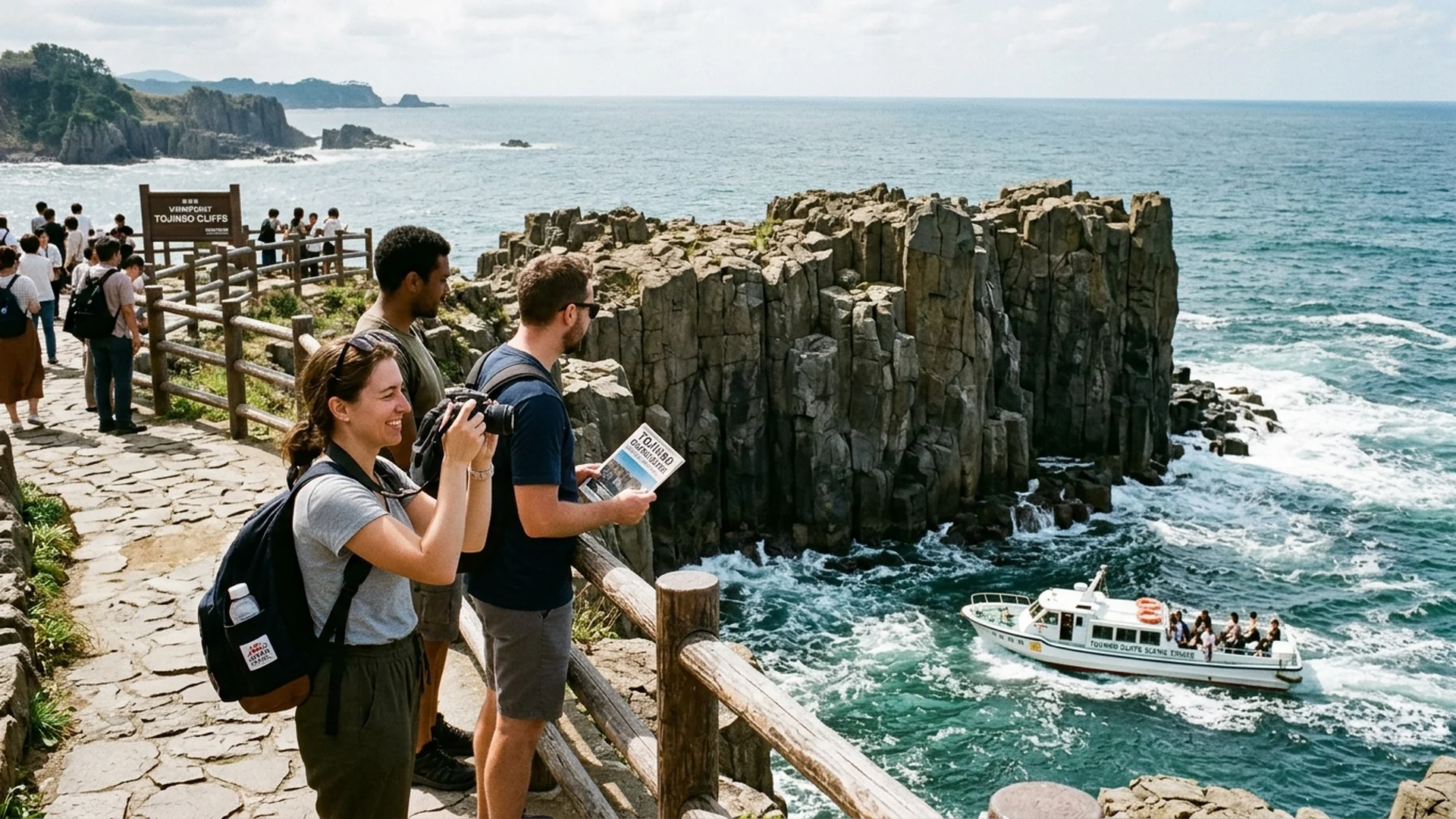
The thundering roar of waves crashing against colossal geometric stone pillars is a timeless symphony composed along the rugged coast of Fukui Prefecture. Here, the Tojinbo Cliffs stand not merely as weathered rock formations, but as a breathtaking geological phenomenon found in only a handful of places across the globe. Sculpted by cooling magma some thirteen million years ago, these extraordinary five- and six-sided basalt and andesite columns rise defiantly above the deep indigo tides.
Stepping onto the sweeping expanse of Tojinbo is akin to crossing a threshold into deep geologic time. It invites discerning travelers to surrender to the raw, untamed beauty and profound majesty of the natural world, beneath an expansive sky where the raw power of the Sea of Japan commands absolute reverence.
Architecture of Time: The Hexagonal Pillars of Fukui’s Coast
Stretching for over a kilometer along the coastline, the Tojinbo Cliffs soar steeply to an average height of 25 meters. This singular geological marvel was forged when subterranean magma forced its way upward, cooling and contracting rapidly to fracture into immense, crystalline stone columns. Local folklore attributes the dramatic name to Tojinbo, a notoriously unruly Heian-period monk who was purportedly lured over the precipice by weary villagers. This enduring legend lends an aura of dark romance and formidable mystery to the landscape. Rambling across the jagged, unrailed stone affords an unmediated encounter with nature’s raw magnitude, though it demands a mindful step and a deep appreciation for the powerful undertows below.
Perspectives from the Waves and the Bridge to Sacred Oshima
To truly appreciate Tojinbo in its entirety, one must take to the water aboard the Tojinbo Sightseeing Cruise. Vessels glide past surreal rock formations, including the imposing Teangu Rock and cavernous grottoes shaped entirely by the elements. Gazing upward from the surface reveals the true, imposing scale of the stone pillars standing resolute against the tide. Nearby lies Oshima Island, a pristine sanctuary of primeval forest connected to the mainland by a striking 224-meter vermilion bridge. Crossing this pedestrian bridge to Oshima Shrine offers an immediate transition into profound stillness, providing a serene sanctuary far removed from the modern world.
Culinary Heritage: Echizen Crab and the Flavors of Fukui
An exploration of Fukui is incomplete without experiencing Echizen crab, harvested from the freezing depths of the offshore winter seas. Regarded as the premier branded crab in Japan with a royal lineage spanning centuries, its intensely sweet flesh and rich, savory tomalley symbolize the absolute bounty of the region. Along the historic Tojinbo Shopping Street leading up to the cliffs, the air is perfumed with the scent of charcoal-grilled seafood—succulent oysters, briny scallops, and glistening kaisen-don bowls composed of the morning’s catch, honoring a generational fishing culture forged in these tempestuous waters.