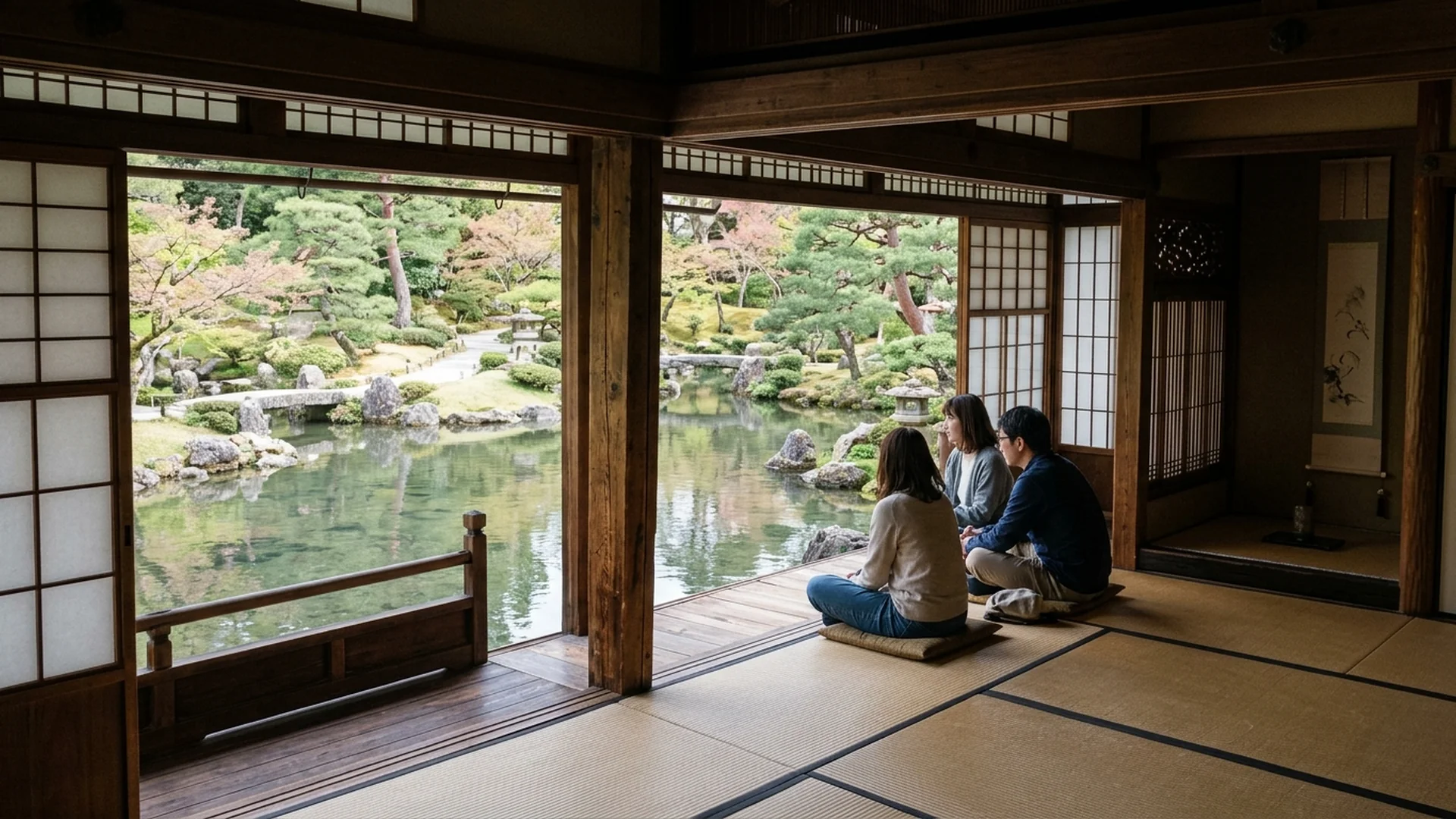
When the autumn breeze brushes across the shimmering expanse of the grand central pond in Fukui, the whispered rustle of ancient pines and the mirrored silhouette of a traditional sukiya-style wooden villa evoke a living masterpiece of antiquity. Yokokan Garden, once the secondary pleasure residence of the Matsudaira clan who ruled the Echizen domain during the Edo period, is far more than a mere urban sanctuary. It stands as a lyrical triumph of architecture and landscape design, famously lauded by the United States-based Journal of Japanese Gardening as one of the top seven Japanese gardens in the world, far transcending the predictable pilgrimages to Kyoto’s crowded corridors.
Crossing the historic threshold of Yokokan feels akin to slipping beyond the temporal anchor of the modern era. The primary sensation is one of profound, resonant silence, cradled by shoin-zukuri architecture delicately tempered with the refined minimalism of sukiya aesthetics. The timber pavilion extends so intimately to the water’s edge that it appears to drift effortlessly upon an ocean of absolute stillness. This is iconic beauty, quietly concealed within the Hokuriku region, waiting for the discerning devotee of traditional arts and culture to witness with their own eyes.
The Matsudaira Legacy: Summer Pleasure Villas and the Politics of Aesthetics
During the Edo period, the Matsudaira lineage—scions carrying the bloodline of the Tokugawa shogunate—crafted this secondary estate as a tranquil sanctuary for private retreat and the gracious reception of high-ranking dignitaries. Yokokan embodies the sophisticated vision of a ruling elite who looked beyond mere displays of territorial dominance, prioritizing instead the cultivation of spiritual aesthetics. The open-plan timber construction dissolves the boundary between the exterior natural world and the interior chamber, allowing nature and human habitation to breathe as one. This architectural vernacular reveals a deep-seated attunement to Zen philosophy and a harmonious coexistence with the surrounding living landscape.
Sukiya Architecture and Otsukiminoma: When Architecture Transcends Time
The beating heart that distinguishes Yokokan from conventional Japanese gardens is the purity of its sukiya-style timber architecture, which champions natural materials, fine-grained hardwoods, and the wabi-sabi appreciation of unadorned, subtle complexity. Viewed from the elongated wooden veranda, the structure casts gentle reflections upon the crystalline waters, creating the sublime illusion of a pavilion adrift upon the ripples. Particularly captivating is the Moon-Viewing Room (Otsukiminoma), engineered with subtle ingenuity to allow visitors to sit in quiet contemplation as nocturnal moonlight shimmers across the pool. It is an atmosphere of transcendent serenity exceedingly rare in the contemporary world.
Kaiyu-Shiki Landscapes and Stonecraft from the Tojinbo Cliffs
The garden follows the kaiyu-shiki tradition—a strolling style centered around a vast pond designed to reveal shifting perspectives with every deliberate footstep. Winding stone paths, arched wooden footbridges, and boulders of varying proportions are placed with meticulous care. A central highlight is the incorporation of distinct natural stones transported from the celebrated Tojinbo coastal cliffs of Fukui Prefecture. These rugged geological forms dialogue effortlessly with seasonal foliage, transforming from vibrant summer greens to fiery autumn maples and, eventually, a pristine mantle of winter snow blanketing the historic tiled roofs.