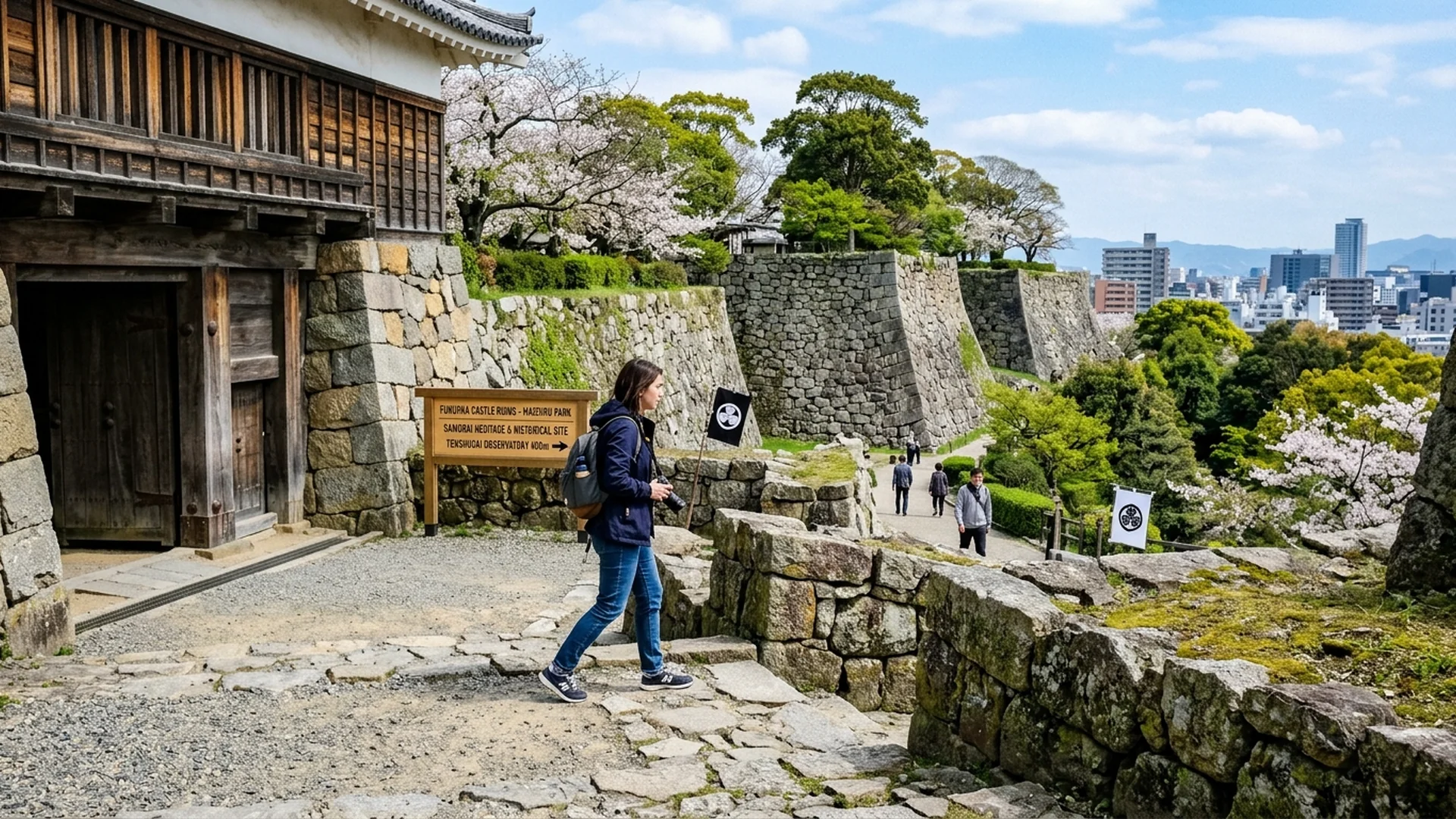
Stepping into the green expanses at the heart of metropolitan Fukuoka reveals far more than mere remnants of ancient stonework; it uncovers an open-air historic sanctuary where the echoes of the past breathe in quiet harmony with the present. Fukuoka Castle Ruins, historically revered as Maizuru Castle, have stood defiant against the passage of time since the dawn of the seventeenth century, serving as an enduring testament to the formidable ambition and brilliant tactical mastery of Kuroda Nagamasa, a visionary daimyo of the Edo period.
Journeys here transcend conventional sightseeing, inviting travelers to retrace centuries past along towering, meticulously interlocking granite ramparts constructed entirely without mortar. The sigh of the wind through ancient pine branches and the gentle drift of cherry blossoms across Maizuru Park resemble whispered secrets from generations of samurai. This destination represents the ultimate convergence of austere military architecture and the profound, delicate beauty of Japanese natural artistry.
Monuments of Authority: The Kuroda Legacy and the Rise of Maizuru Castle
The chronicle of Fukuoka Castle began in the aftermath of the pivotal Battle of Sekigahara, when Kuroda Nagamasa was granted the domains of Hakata and elected to establish a new seat of power upon the Fukuoka hillsides. Originally named in honor of the Kuroda ancestral home in Okayama Prefecture, construction spanned over seven years, deploying master artisans and skilled engineers specializing in traditional stone-stacking techniques known as Ishigumi. Their signature graceful curves were engineered to absorb seismic shocks while brilliantly repelling potential invaders. Although the primary residential donjon now survives only in foundational outline, the magnificent sweep of the stone walls, stately gateways, and encircling moats vividly evoke the formidable scale of a bygone era.
Architecture Resilient to Time: The Tamon Yagura and Ancient Relics
For design connoisseurs and history enthusiasts, the cornerstone of any visit is the Tamon Yagura tower, officially designated as an Important Cultural Property of Japan. Positioned at a strategic vantage point offering commanding sightlines across the grounds, this dual-purpose armory and observation watchtower is the sole fortification structure within the entire complex to have escaped demolition during the Meiji Restoration and the bombings of the Second World War. Step inside to examine sturdy hardwood joinery and deliberate defensive slit openings—known as Yusama—designed for archers and matchlock gunners, offering a tangible connection to the tense realities of feudal civil conflict. Nearby, the archaeological remains of the Korokan, an ancient Heian-period diplomatic guesthouse, further underscore this ground as a millennium-old gateway linking Japan to the wider world.
Maizuru Park: A Botanical Eden of Cherry Blossoms and Four-Season Aesthetics
When the formidable stone ramparts are embraced by the seasonal flora of Maizuru Park, the atmosphere shifts gracefully with every footstep. Spring paints the landscape in delicate shades of pink as over a thousand cherry trees—predominantly Somei Yoshino and Shidarezakura varieties—burst into bloom against weathered grey stone. After dark, artful illuminations accentuate the architectural contours of the fortress walls and cast enchanting reflections across the stillness of the moats. Through the changing seasons, the park offers distinct realms of quietude, from iris and lotus blossoms adorning the outer moats to the gradual amber and crimson transformation of autumn foliage.