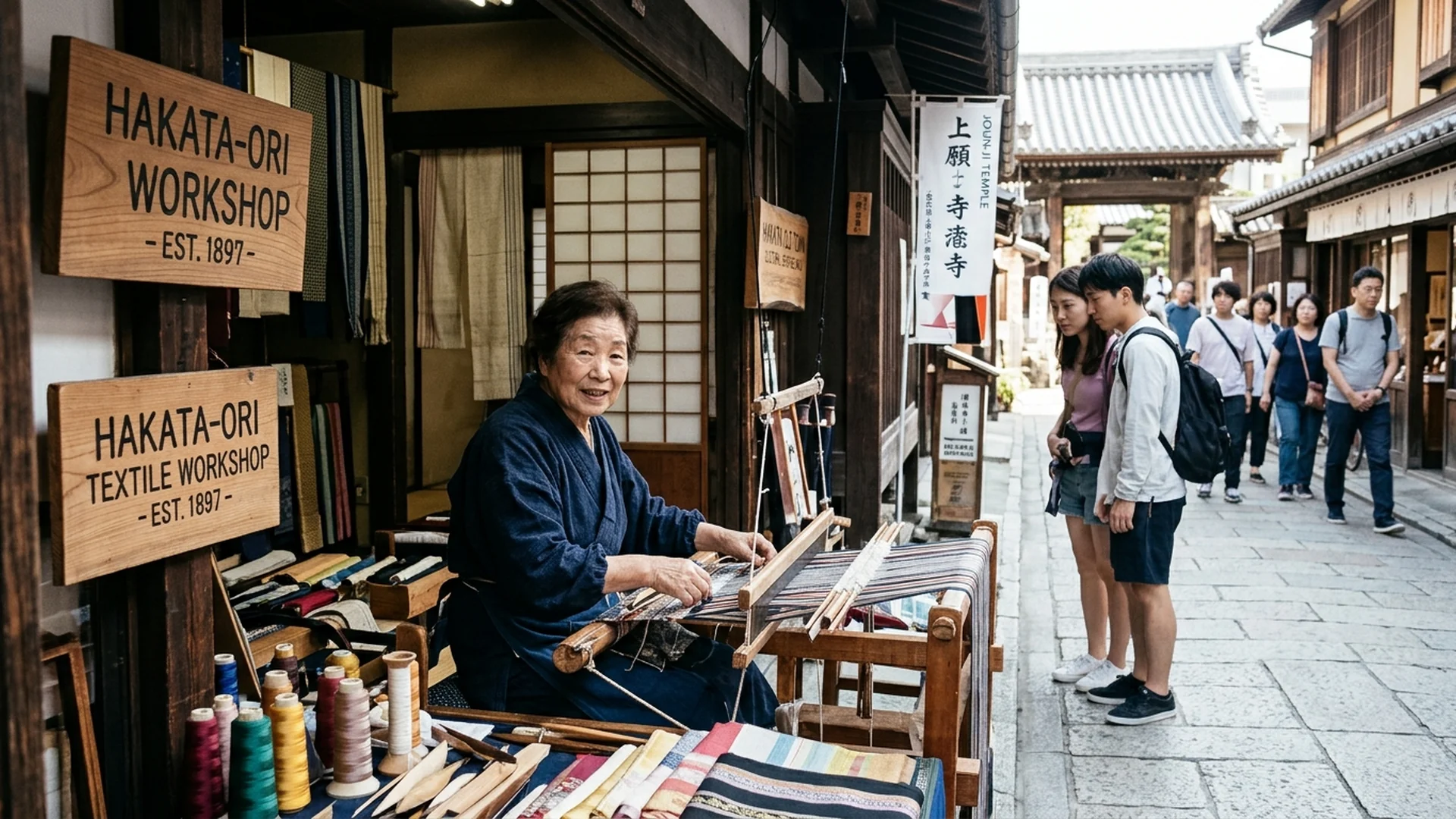
Crossing the threshold from Fukuoka’s bustling commercial districts into the tranquil embrace of Hakata Old Town feels akin to turning the pages of an ancient manuscript. Here, time moves with deliberate grace. This historic quarter is far more than a mere collection of weathered wooden buildings; it is the vital, beating heart and spiritual crucible of Kyushu, having served for centuries as a pivotal gateway for continental trade, philosophy, and art.
To journey through Hakata Old Town is to read the intricate layers of history written in stone and timber. It is found in the morning chime of temple bells echoing softly across misty courtyards, the gentle aroma of roasted green tea drifting from ancestral shops, and the awe-inspiring presence of colossal wooden Buddhas sequestered away from the modern sprawl. This is cultural exploration at its most deliberate and refined, revealing a contemplative side of Fukuoka that casual travelers routinely overlook.
Architecture and Devotion: Timber Shrouds and the Colossal Buddha of Tochoji
An immersive exploration of Hakata Old Town rightfully begins at Tochoji Temple, the city’s oldest Shingon esoteric Buddhist foundation, established in 806 AD by the revered monk Kobo Daishi upon his return from China. The sacred precinct is an oasis of profound stillness, where a striking vermilion five-tiered pagoda pierces the cerulean sky, creating a breathtaking counterpoint to the centuries-old timber architecture.
Yet, the true spiritual heart of the temple reveals itself on the upper floor of the main hall, where the Fukuoka Daibutsu rests in serene majesty. Carved entirely from wood, this monumental seated Buddha is the largest of its kind in Japan. Flanked by an intricate halo of thousands of miniature glowing manifestations of the divine, the gentle, compassionate expression of the deity invites travelers to pause, quiet their minds, and detach entirely from the frantic rhythm of the contemporary world outside.
The Roots of Flavor: How Jotenji Birthed Japan’s First Udon and Soba
Few visitors realize that the global culinary phenomena of Japanese noodles trace their ancestral roots directly to the peaceful enclave of Jotenji Temple. Founded in 1241 AD by the Zen master Enni Ben’en—who returned from China bearing sacred texts, seeds, and the arcane knowledge of stone-milling flour—this serene Zen temple changed Japanese gastronomy forever.
Within Jotenji’s immaculate rock gardens and meditative courtyards lies a silent monument to the harmonious marriage of Zen philosophy and culinary craft. The temple is also credited with introducing tea ceremony protocols and traditional confectionery techniques to Japan. To stroll along the moss-bordered stone pathways here is to trace the invisible threads connecting monastic discipline to the daily rituals of Japanese dining.
The Soul of Hakata: Kushida Shrine and the Breath of Hakata-ori Weaving
The beating pulse of the old district resides at Kushida Shrine, revered by locals for well over a millennium as the spiritual guardian of the city. Beyond its sacred halls dedicated to protective deities, the shrine is the eternal custodian of the Hakata Gion Yamakasa—a legendary festival featuring towering, elaborately decorated wooden floats that thunder through the narrow streets in a breathtaking display of communal vigor and ancestral pride.
Beyond these sacred precincts, the surrounding quarter preserves the rarefied world of Hakata-ori textile weaving. Known for its dense, intricate patterns, supple hand-feel, and imperial-grade refinement, this aristocratic fabric reflects the discerning aesthetic sensibilities of a bygone era, meticulously carried forward by contemporary master weavers who refuse to let the art form fade into antiquity.