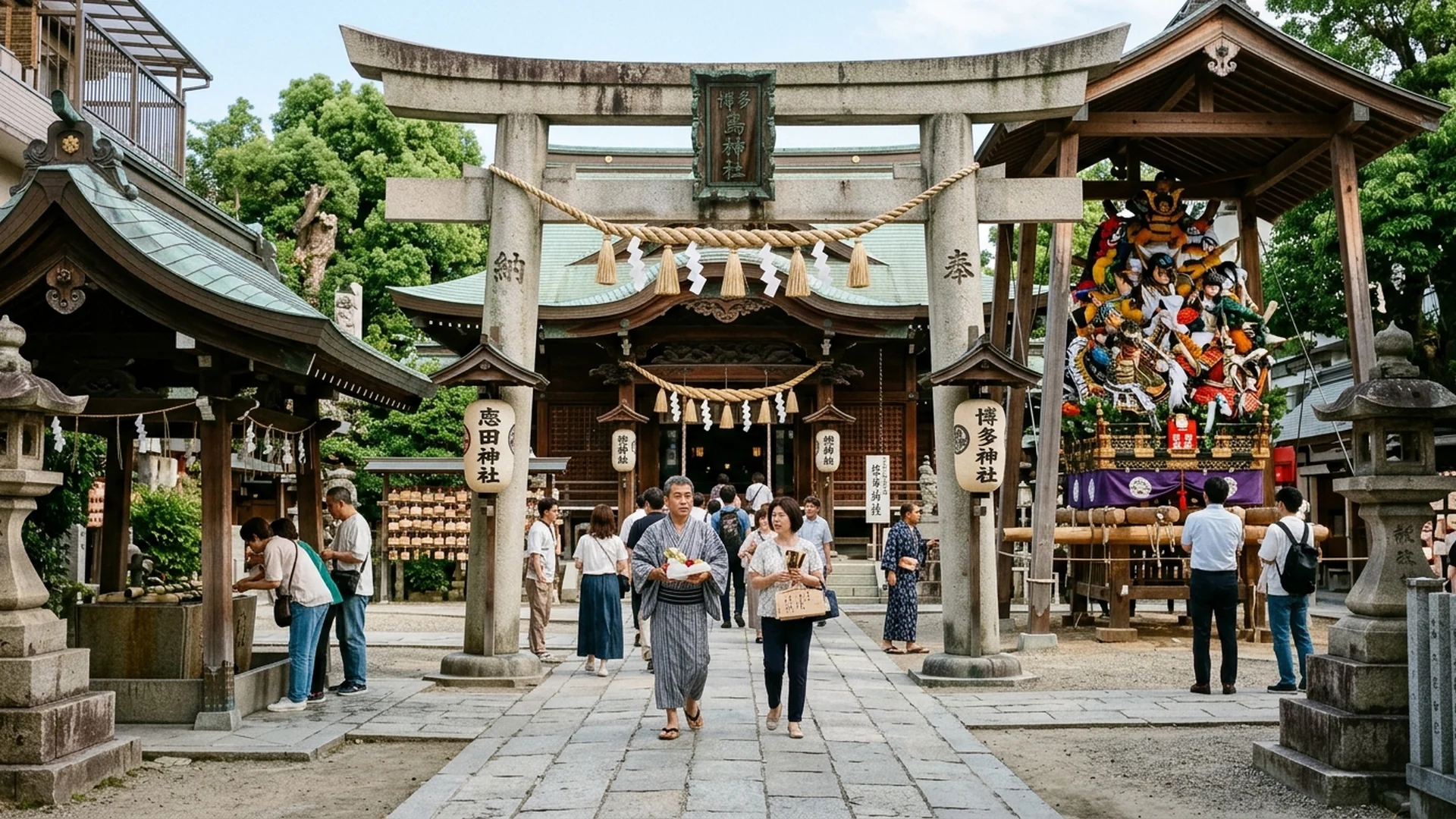
When the gentle winds of time sweep through the bustling commercial alleys of Fukuoka, a tranquil sanctuary remains hidden, harboring the primordial spirit that has nurtured generations for over 1,200 years. Kushida Shrine is far more than a conventional sacred site; it is the beating heart of the Hakata people. Travelers regularly pass beneath the vermilion torii gates to immerse themselves in the restorative shade of ancient canopies. Yet, beneath the intricate wood carvings and classic eaves lies an epic tapestry of faith that seamlessly binds past, present, and future.
Crossing the threshold into this sacred domain is not merely checking off an itinerary item; it is an unhurried pilgrimage to the cradle of authentic Hakata culture. From its foundational roots in 757 AD to the thunderous footsteps of sturdy men participating in world-renowned float races, this transcreation explores the hidden nuances often overlooked by casual tourists, peeling back the layers of architectural brilliance and decoding the sacred symbols concealed within this divine realm.
Roots of Faith: A Millennium Legend That Shaped Hakata
Dating back to an era of profound historical transition, Kushida Shrine was formally established in 757 AD, consecrated to three principal deities: Oshutunushi-no-Mikoto, the deity of agricultural abundance and well-being; Amaterasu-Omikami, the radiant sun goddess; and Susanoo-no-Mikoto, the deity of storms and protective valor. Historically, Hakata served as a vital gateway for commerce and continental civilization, making this shrine an essential spiritual anchor that offered solace to merchants and fishermen setting out to sea. Although the timber structures have undergone careful restoration across various dynastic eras, they retain the authentic atmosphere of the Edo period. Every polished pillar and curved beam whispers timeless tales of unwavering devotion.
Architectural Grandeur: Hakata Gion Yamakasa and Nail-Free Floats
Mention Kushida Shrine, and the mind invariably conjures the vibrant imagery of the Hakata Gion Yamakasa, a storied festival with a lineage exceeding 700 years, designated as an intangible cultural heritage by UNESCO. While the principal dynamic footraces occur annually in mid-July, the shrine permanently exhibits the towering, breathtaking Kazariyama decorative floats for visitors to admire year-round.
Most astonishingly, the intricate engineering of these floats is brought to life by master local artisans completely without the use of a single iron nail. Every component is meticulously interlocked and bound using traditional braided hemp cord. The vibrant motifs adorning the floats narrate ancient folklore, samurai history, and legendary literary figures. Their dazzling hues contrast beautifully with the solemn, weathered wood of the shrine interiors, reflecting the raw yet refined artistic energy quintessential to Hakata.
Decoding Four Hidden Auspicious Symbols Often Overlooked
Beyond the principal prayer halls, Kushida Shrine conceals subtle theological symbols and sacred relics that discerning travelers should examine with quiet contemplation:
- The 12-Zodiac Astrological Compass (Eto-Ehoban): Gazing upward at the wooden ceiling near the main entrance reveals a circular woodcarving of the twelve zodiac animals. At its center, a pointer is adjusted annually to indicate the auspicious or lucky direction according to ancient cosmological traditions.
- The Millennium Crane Spring (Reisui-no-Ido): Located within the sacred ablution pavilion, a subterranean natural spring flows freely. Believed to bestow longevity and profound blessings upon those who partake, the spring is vigilantly guarded by a striking golden crane sculpture.
- The Sacred Millennium Ginkgo Tree: This arboreal elder spreads its grand canopy across the courtyard, having offered shade for centuries. In autumn, its foliage transforms into a golden natural carpet, symbolizing resilience and enduring vitality.
- The Sumo Lifting Stones (Chikara-ishi): Placed throughout the courtyard are colossal boulders once utilized by legendary sumo wrestlers to condition their strength, serving as timeless monuments to perseverance, endurance, and triumph over adversity.