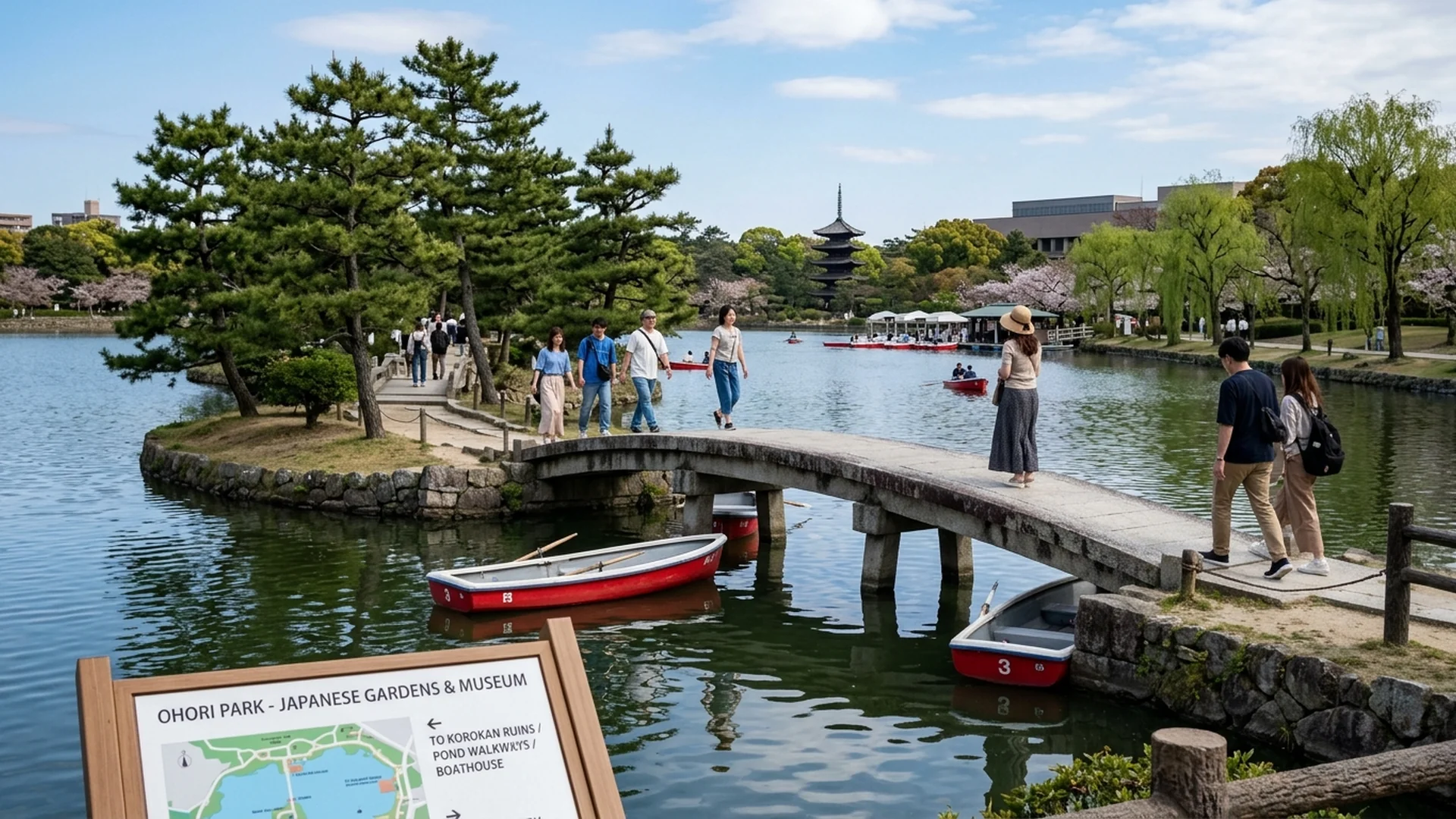
When stepping beyond the spirited pulse of Fukuoka’s commercial district, an alternate realm governed by unhurried rhythms and deep, restorative breaths reveals itself. Ohori Park is far more than a conventional urban green space; it is a profound landscape heritage transformed from the ancient moats of Fukuoka Castle into a vast, mirror-like expanse of water that effortlessly captures the shifting skies and wandering clouds. This is a sanctuary for aesthetic pilgrimage, where pristine nature, meticulously manicured Japanese garden architecture, and contemporary global artistry fuse in seamless harmony.
To spend time at Ohori Park is not merely to take an afternoon stroll, but to elevate the spirit through the contemplation of nuance—from the mirrored arch of ancient stone bridges to the leaning silhouettes of veteran pine trees and the quiet cultural whispers tucked into secluded corners of the grounds. For the discerning traveler seeking deep aesthetic resonance and yearning to experience Fukuoka beyond the ordinary tourist itinerary, this is an invitation into a realm of grace where time itself seems to slow its pace.
The Aesthetics of Water and Historical Echoes Around Lake Ohori
The name Ohori (大濠), translating to grand moat, speaks volumes of its historic origins during the construction of Fukuoka Castle. Once an integral part of the western defensive fortification network, the area was later envisioned and transformed into a magnificent aquatic park, drawing design influences from the famed West Lake gardens of China while masterfully honoring Japanese landscape traditions.
The two-kilometer perimeter path is framed by weeping willows and ancient black pines that have stood witness to decades of change. Three interconnected central islands, bridged by classic stone arches—most notably the heritage-listed bridges linking the paths—reveal shifting vistas with every step. In the early morning stillness, the surface of the lake assumes the quality of dark obsidian glass, reflecting the skyline in counterpoint to the deep greenery. It is a living canvas that quietly invites visitors to leave their preoccupations behind and match their stride to a gentler rhythm.
Ohori Park Japanese Garden: Horticultural Artistry and Sacred Silence
Tucked away in the southwestern quarter of the park lies the Ohori Park Japanese Garden, a dedicated sanctuary created to commemorate the park’s anniversary. This enclave serves as a supreme manifestation of Zen aesthetics and traditional Tsukiyama-rinisen landscape design.
Within its walls, artificial hills, cascading waterfalls, pristine streams, and tranquil ponds offer sanctuary to schools of gliding koi carp. Every stone and boundary planting is placed with precise philosophical and naturalistic intent. Travelers may pause at the traditional teahouse to partake in a bowl of freshly whisked matcha paired with seasonal confectionery, gazing through teak wood frames out upon sculpted rock arrangements and moss gardens. The murmur of water and the strict architectural quietude filter out the turbulence of the modern world, offering a genuine moment of restorative solitude.
Fukuoka Art Museum: Where Global Art Meets Lakeside Nature
What elevates Ohori Park beyond standard urban parks is its curation of the Fukuoka Art Museum, a premier cultural institution designed by Kunio Maekawa, one of Japan’s legendary modernist architects. The building utilizes warm ceramic brick tones that blend effortlessly into the surrounding lakeside environment.
Upon passing Yayoi Kusama’s iconic spotted pumpkin sculpture standing sentinel in the outdoor courtyard, visitors enter an interior thoughtfully divided between ancient Asian art—including masterworks of Buddhist sculpture and historical tea utensils—and a modern-to-contemporary wing featuring heavyweight international creators such as Salvador Dalí, Andy Warhol, and Joan Miró. The architectural triumph lies in the expansive glass walls that continuously frame views of the park’s waters and resident waterfowl, forging an unbroken dialogue between interior aesthetic contemplation and the natural world outside.