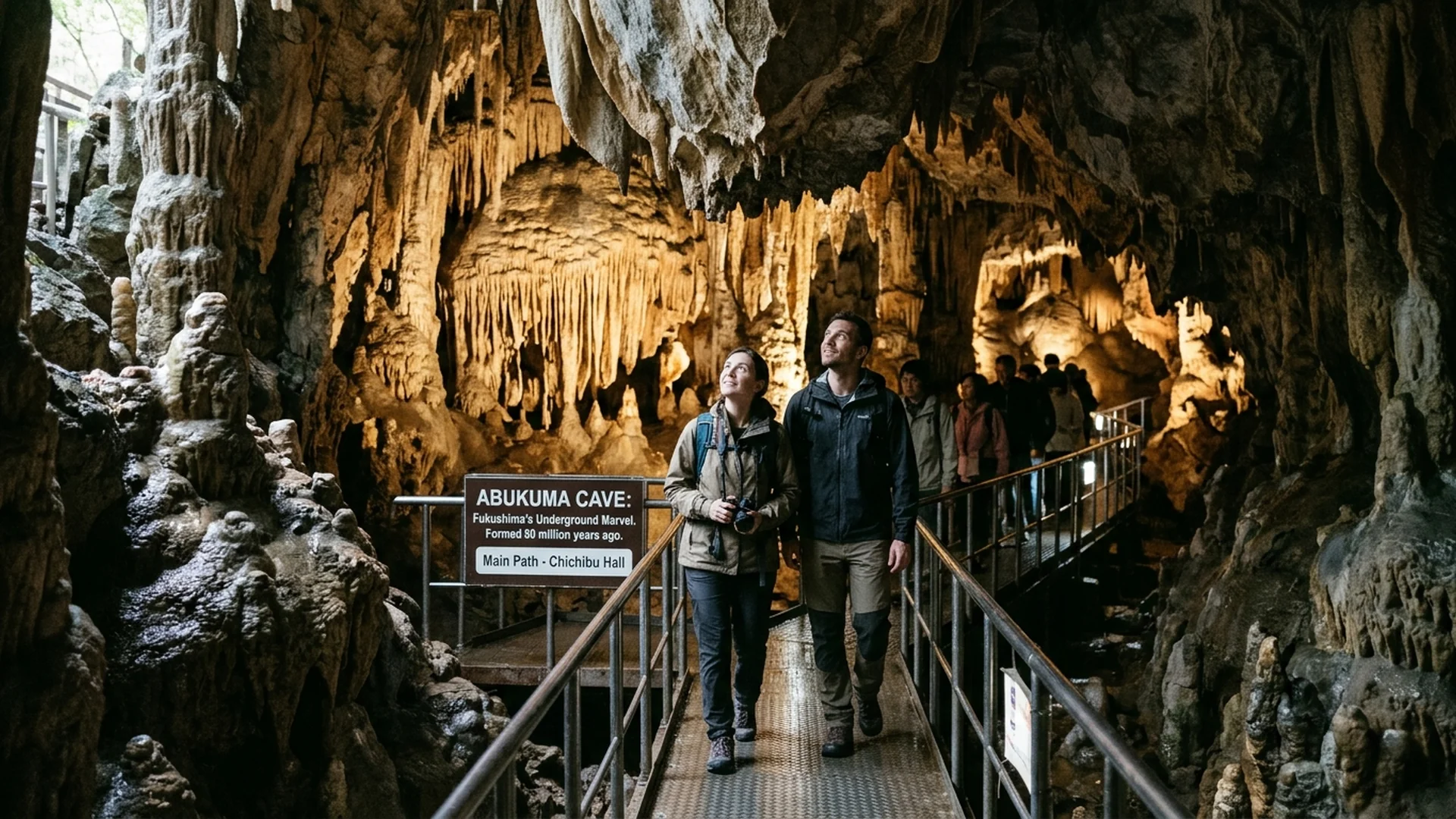
Beneath the serene pastoral surface of the mountains in Takine, Fukushima, lies a hidden realm where time has stood frozen for eighty million years. The steady, rhythmic cadence of dripping water echoing against ancient stone serves as nature’s hourglass, meticulously carving limestone formations of astonishing intricacy.
Abukuma Cave is far more than a mere geological curiosity; it is a subterranean art gallery shaped across eons by the patient hands of the earth. When contemporary illumination catches the crystalline draperies and shimmering stalactites, the cavern transforms into a celestial expanse echoing the distant stars of a quiet galaxy. Every footstep descending deeper into the velvet gloom is a pilgrimage backward to the earth’s primal genesis, where profound silence speaks with an eloquence beyond words.
Architecture of Time: Deciphering Eighty Million Years Beneath Fukushima
The genesis of Abukuma Cave stretches back into deep geological antiquity, when ancient subterranean currents relentlessly carved through dense limestone beds over countless millennia, hollowing out a labyrinthine network stretching over three thousand meters. Following this carving phase, slow and deliberate mineral deposition introduced calcium carbonate drop by delicate drop, eventually manifesting into towering stalagmites, descending stalactites, and surreal crystalline curtains.
As one ventures further into the heart of the cavern, a breathtaking array of geological diversity unfolds. Massive stone columns bridge the span between floor and vaulted ceiling, while translucent sheets of calcite shimmer under soft illumination like woven crystal. The profound, meditative quietude reigning within the stone halls is punctuated only by the subtle dripping of water, turning this subterranean expanse into a living classroom that eloquently demonstrates the untamed artistry of the natural world.
Takine Goten and the Subterranean Symphony of Light and Shadow
The emotional crescendo of any pilgrimage to Abukuma is the discovery of Takine Goten—a cathedral-like subterranean chamber soaring twenty-nine meters high, ranking it among the grandest underground halls in the Japanese archipelago. Modern architectural lighting design has been thoughtfully integrated to honor the raw majesty of these ancient formations, casting gentle, sculptural glows that rival the masterpieces found in classical museums.
Warm amber and slate-blue illumination washes over the iconic Christmas Tree, a magnificent, asymmetrical stalagmite standing as the silent guardian of the chamber. Nearby, rare Boxwork structures display intricate geometric lattices of mineral veins etched into the limestone walls—a geological rarity that earth scientists celebrate as a crowning feature of this regional landscape.
Two Paths, Two Visions: From Serene Promenade to Subterranean Expedition
Abukuma Cave accommodates the contemplative traveler by offering distinct pathways tailored to individual rhythms of exploration. For those who prefer an unhurried, meditative pace, the Main Walking Course spans approximately six hundred meters along an expertly integrated concrete walkway, ensuring safe passage while affording intimate views of the cave’s most celebrated chambers.
Conversely, those possessing an adventurous spirit may opt for the Exploration Course. This invigorating one-hundred-and-twenty-meter route invites travelers to duck through narrow clefts, navigate uneven rock corridors, and experience the cavern’s hidden topography from visceral angles rarely witnessed by casual visitors. This dual nature ensures that Abukuma effortlessly satisfies both slow-travel connoisseurs and intrepid seekers of subtle thrills.