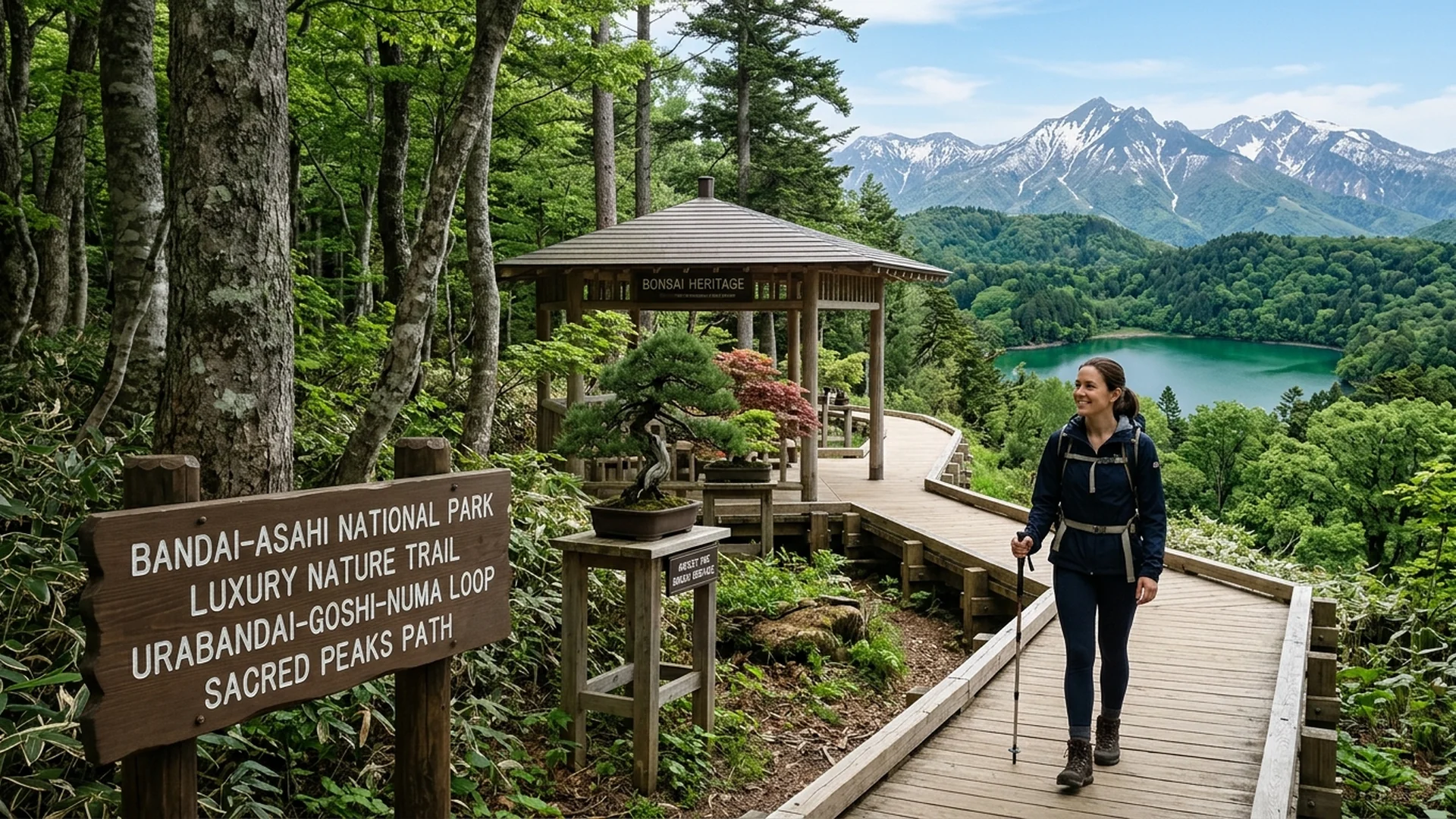
As the morning mists gently brush against the rugged peaks of the Tohoku region, the quiet rustle of wind through ancient forests in Bandai-Asahi National Park tells a timeless story of stillness. Encompassing a sprawling expanse across the prefectures of Fukushima, Yamagata, and Niigata, this protected sanctuary represents one of Japan’s most ecologically diverse and expansive wildernesses. A journey here transcends conventional tourism, offering an escape into understated luxury where dramatic volcanic topography, profound spiritual traditions, and meticulous craftsmanship blend in absolute harmony.
Amidst landscapes forged by subterranean forces, this national park conceals breathtaking beauty at every turn—from the jewel-toned, shifting waters of the Goshikinuma ponds and the lingering geological scars of Mount Bandai’s historic eruption, to the sacred mountain pilgrimage routes of Dewa Sanzan that echo the deep-rooted soul of traditional Japan. For the discerning traveler seeking pristine natural splendor paired with absolute privacy and tranquility, this is an unmatched destination.
Geological Marvels: The Shifting Waters of Goshikinuma and Mount Bandai
The historic eruption of Mount Bandai in 1888 did far more than reshape the physical terrain; it birthed one of Japan’s most exquisite natural masterpieces: the cluster of pristine bodies of water known as the Goshikinuma, or ‘Five-Color Ponds.’ The secret behind these stunning lakes lies in the unique blend of minerals and sulfur dissolved in the water, which, interacting with aquatic plants and plankton, creates an extraordinary spectrum of shifting hues. Ranging from brilliant emerald green and turquoise to deep cobalt and amber, each pond seems to possess a living spirit, transforming its palette as sunlight strikes the surface from different angles like an impressionist canvas.
A leisurely trek along the nature trails skirting the Goshikinuma ponds offers a deeply therapeutic form of mindfulness. The crunch of crisp leaves beneath your feet, the crisp aroma of pine forests, and the cool mist drifting off the water gently anchor the senses in the present moment. This is especially true during autumn, when fiery red, orange, and golden canopies contrast sharply against the translucent blue waters—realizing the quintessential seasonal aesthetic sought by global connoisseurs of slow travel.
The Soul of Tohoku: Sacred Dewa Sanzan Trails and Living Bonsai Heritage
Beyond its natural grandeur, Bandai-Asahi National Park preserves a profound cultural dimension as the home of Dewa Sanzan—the three sacred mountains of Dewa province (Haguro, Gassan, and Yudono). Historically serving as a sanctuary for Shugendo mountain ascetics, these sacred heights weave together elements of Shingon Buddhism, Shintoism, and ancient nature worship. Walking paths shaded by centuries-old cedar trees and passing a majestic five-story wooden pagoda evoke a powerful sense of quiet reverence. Here, travelers may catch a glimpse of the enduring ascetic traditions practiced amid untamed wilderness.
In addition to its spiritual lineage, this region nurtures exquisite craftsmanship, most notably in the ancient art of bonsai. The volcanic rocky slopes of Mount Azuma are the native cradle of the prized Azuma Goyomatsu (five-needle pine), specimens that endure harsh alpine climates and are meticulously tended across generations by master artisans. These living sculptures embody patience, balance, and compressed natural majesty—representing a treasured intellectual heritage intrinsic to the Tohoku identity.
The Art of Slow Travel: Premium Hot Spring Ryokans Amidst the Peaks
No exploration of Bandai-Asahi National Park is truly complete without retreating to a distinguished hot spring ryokan discretely tucked into mountain gorges and stream valleys. The architecture of these sanctuaries embraces an understated aesthetic that honors the surrounding ecosystem, blending traditional craftsmanship with contemporary refinement. Expansive windows frame sweeping views of forested ridges and shifting mists, while open-air rotenburo baths invite guests to immerse themselves in pure, mineral-rich thermal waters as the mountain foliage transitions through the seasons.
Evenings unfold with thoughtfully curated kaiseki dinners celebrating the philosophy of shun—the celebration of peak seasonal ingredients. From foraged mountain mountain vegetables and sweet river fish to renowned regional beef, every dish highlights meticulous attention to detail. Sipping locally brewed artisan sake under a quiet, starlit mountain sky defines the pinnacle of meaningful, luxury hospitality rooted deeply in the natural world.