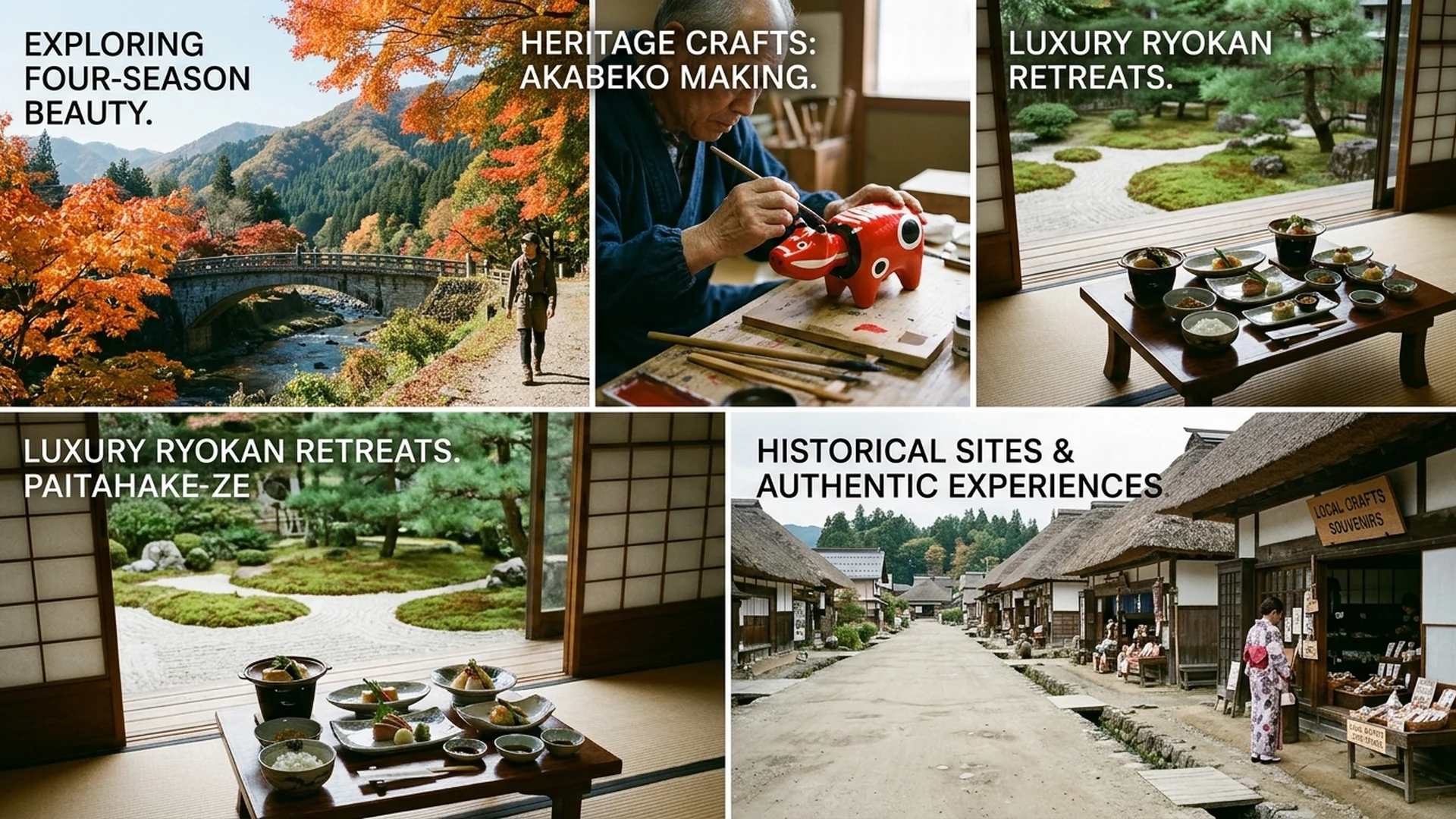
When the name Fukushima is spoken, public perception is often hastily tethered to the pages of modern history. Yet for the discerning traveler seeking untamed natural splendor and profound cultural resonance, Japan’s third-largest prefecture reveals itself as a meticulously curated masterpiece painted across four distinct seasons.
Stepping into Fukushima as a luxury explorer offers a quiet sanctuary away from the frenetic pace of major metropolises. Here, mist-shrouded mountain ranges, mirror-like alpine lakes, and ancient samurai architecture intertwine seamlessly. Beyond the sweeping vistas lies an unwavering dedication to omotenashi—the timeless Japanese art of soulful hospitality—harmoniously fused with contemporary sophistication.
The Symphony of Time: Architecture and the Spirit of Aizu
The Aizu-Wakamatsu region serves as the historical beating heart of Fukushima, where the echoes of the Edo period still whisper through historic corridors. Tsuruga Castle—distinguished as the sole stronghold in Japan crowned with striking red tiles—stands resilient against the passage of time, bearing witness to the enduring courage of the samurai. When spring arrives, thousands of cherry trees burst into delicate blossoms encircling the ancient stone ramparts, while autumn cloaks the surrounding vistas in warm gradients of amber and vermilion.
Just beyond lies the preservation village of Ouchi-juku, inviting travelers to step backward into a bygone era. Main streets lined with steeply thatched-roof dwellings remain stringently protected, offering an authentic glimpse into rural Edo-period life. Here, visitors can savor local culinary traditions such as negi-soba, where a crisp stalk of raw leek replaces traditional chopsticks—a delightfully rustic cultural encounter unavailable in modern urban centers.
Four-Season Splendor and Pristine Wilderness
Fukushima is an exquisite canvas of geographic wonders. In spring, the legendary Miharu Takizakura—a majestic weeping cherry tree boasting over a thousand years of history—spreads its cascading branches of pink blossoms in a breathtaking display that captivates global onlookers. Summer arrives with the Goshikinuma Ponds, a cluster of multi-hued glacial lakes shifting dynamically between emerald green and cobalt blue under changing sunlight, perfectly suited for contemplative boating excursions.
As autumn descends, the forested slopes of Mount Bandai and the dramatic winding curves of the Bandai-Azuma Skyline transform into a sweeping tapestry of gold and crimson. Winter ultimately blankets the landscape in hushed powdery snow, creating an atmosphere of profound solitude ideal for retreating from the outside world.
The Art of Rest: Luxury Onsen Ryokans and Regional Gastronomy
The pinnacle of a luxury exploration in Fukushima is surrendering to the restorative embrace of an exclusive onsen ryokan, nestled within the secluded enclaves of Aizu Higashiyama Onsen or Iizaka Onsen. Historic inns and contemporary design retreats alike are tucked quietly against forested riverbanks. Immersing oneself in mineral-rich natural hot springs while observing the seasonal shifting of the mountain scenery melts away worldly fatigue entirely.
As evening falls, guests are treated to meticulously crafted kaiseki dinners highlighting the region’s finest bounty: prized Aizu beef, exceptionally harvested mountain rice, and immaculate seasonal fruits including honeyed peaches and pristine strawberries. Every single bite tells a quiet story of Fukushima’s fertile, life-giving earth.