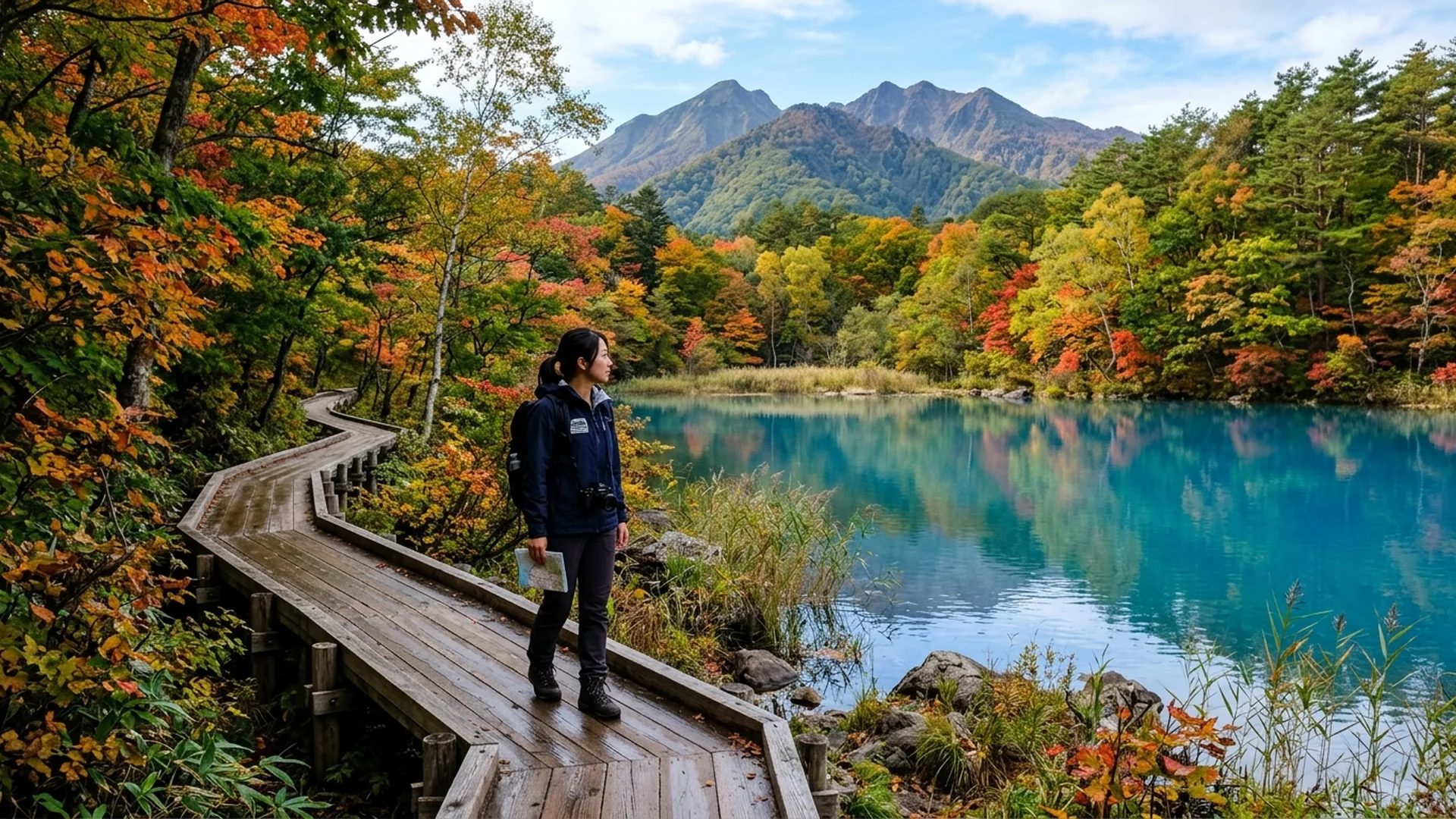
When the primordial forests of Urabandai awaken in Fukushima Prefecture, nature does not simply arrange greenery for our gaze; she composes a living canvas of shifting brilliance through a constellation of pristine waters known as Goshikinuma, the Five-Color Lakes. To journey here is to step beyond the ordinary boundaries of a woodland hike, entering an open-air art gallery pigmented by volcanic minerals and subterranean chemistry. As sunlight strikes the water at shifting angles, the pools transform in hue with mesmerizing fluidity—from crystalline emerald reminiscent of fine jade to deep cobalt and soft, translucent pastels.
For the discerning traveler seeking profound stillness and a deeper communion with the natural world, Goshikinuma offers an elevated slow-travel experience. Here, pristine wilderness intertwines with fascinating geological mysteries. Every footstep along the unhurried nature trail dissolving into the dense canopy provides a rare sanctuary from the modern clamor, inviting quiet introspection alongside subtle natural wonders—such as the legendary heart-marked carp of Bishamon-numa, whispered to bestow quiet fortune upon those patient enough to find them.
The Architecture of Water: Decoding the Mystery of Shifting Hues
The supreme wonder of Goshikinuma lies in the distinct coloration of each adjacent pool. Geologists and natural scientists attribute this phenomenon to varying concentrations of dissolved volcanic minerals, including aluminum and silicon compounds. When sunlight pierces the water column and strikes these suspended microscopic particles, it triggers an optical scattering akin to the atmospheric conditions that paint the sky azure. Each lake functions as a natural palette touched by an unseen brush.
Bishamon-numa, the grandest of the sister lakes, welcomes visitors with deep, pearlescent emerald depths. Standing upon its quiet shores, one looks down to witness sleek koi gliding effortlessly beneath the mirrored silhouettes of Mount Bandai’s forested ridges. Nearby, Akane-numa and Benten-numa present crystalline azure or turquoise tones dictated entirely by daily atmospheric nuances. Observing these living waters transform across the hours serves as a poetic reminder of impermanence—an artistic masterpiece crafted entirely beyond the reach of human hands.
Rhythm and Rest: The Art of the Premium Nature Trail
The Goshikinuma Nature Trail has been thoughtfully engineered to harmonize flawlessly with its delicate ecosystem, avoiding any needless disruption of the primeval forest. Soft pathways paved with wood chips and rich mountain earth encourage an unhurried, meditative stride. The dry rustle of fallen leaves underfoot, the melodic counterpoint of endemic woodland birds, and the earthy aroma of pine and damp soil engage the senses in profound restoration.
Navigating this route invites a strictly slow-travel ethos, pausing on secluded wooden benches positioned at scenic overlooks. Every gentle bend reveals novel perspectives, framing quiet expanses of water that mirror sky and timber in evolving geometries. It is an excursion that grants the intellect space to wander, melting worldly tensions away on the mountain breeze.
The Aesthetics of Repose: Urabandai and Mountain Onsen Culture
A truly consummate exploration of Goshikinuma finds its natural complement in the boutique retreats and unhurried lifestyle of Urabandai. This elevated plateau at the foot of Mount Bandai is celebrated for crystalline air, profound tranquility, and secluded alpine resorts designed to dissolve seamlessly into surrounding pine forests.
After a morning spent tracing the lake margins, sinking into a mineral-rich natural onsen hot spring while gazing through expansive picture windows at snow-flurried or autumn-gilded pines provides an incomparable conclusion to the day. Local gastronomy honors the seasonal bounty of Fukushima, featuring mountain vegetables and pristine highland rice that reflect a refined culinary philosophy deeply attuned to the rhythms of the earth.