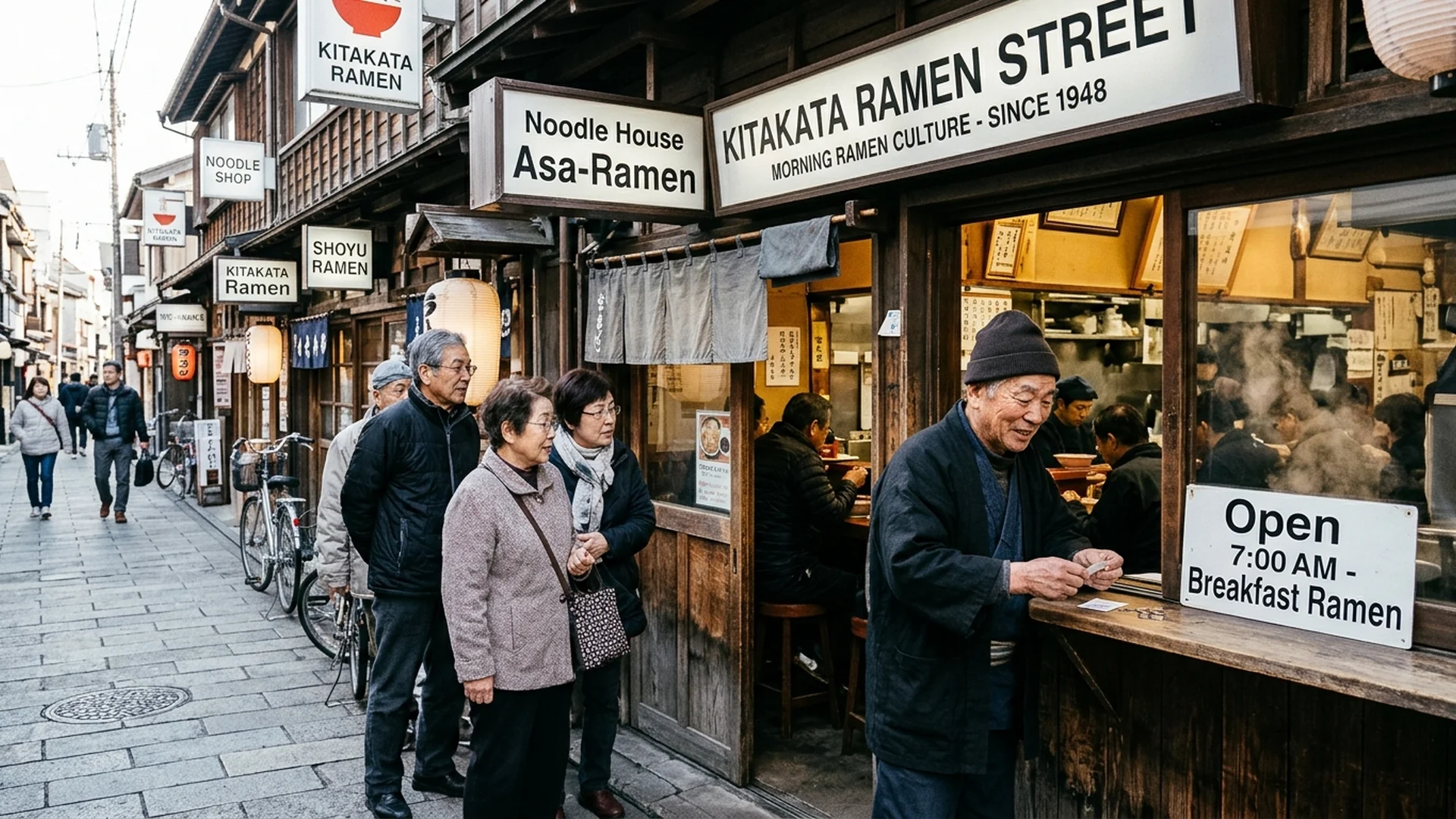
As a soft morning mist lingers over the summit of Mount Iide and the first rays of dawn strike the pristine white walls of traditional kura—centuries-old clay and timber storehouses—the historic town of Kitakata in Fukushima awakens not in silence, but to the gentle hiss of broth and the comforting aroma of simmering pork bones and artisanal soy sauce. Here lies Kitakata Ramen Street, a culinary destination celebrated alongside Sapporo and Hakata as one of Japan’s three great ramen capitals, yet possessed of an intimate, soulful character entirely its own. In this corner of the Tohoku region, ramen is never merely a hurried meal for sustenance; it is a living craft, an ancestral philosophy, and a tradition intimately entwined with crystalline mountain waters and the rhythms of daily life.
To wander down Kitakata Ramen Street is to step beyond the polished pursuit of Michelin stars or fleeting food trends, embarking instead on an unhurried pilgrimage into the heart of a proud agricultural and brewing community. From dawn, when neighborhood kitchens begin welcoming early risers with steaming bowls of noodles, to the quiet elegance of timber-framed architecture lining every lane, every element narrates a profound reverence for craftsmanship, provenance, and time.
From Historic Storehouse Town to Culinary Icon: The Roots of Kitakata Ramen
The foundation of Kitakata’s culinary renown is deeply rooted in its geography and rich history. Nestled within a mountain-ringed basin, the town is blessed with abundant, pristine mineral springs fed by the melting snows of the Iide mountain range. This exceptional water purity long served as the lifeblood for local sake breweries and artisanal shoyu makers, eventually laying the chemical and aesthetic groundwork for the town’s legendary ramen broth. During the 1920s, Chinese immigrants introduced mobile noodle carts to the area. Local residents, already masters of fermentation and subtle culinary arts, refined and adapted these techniques into a distinctive regional style. Over decades, as the fortunes of prosperous merchants shifted, the majestic kura storehouses that once stored rice and textiles gracefully evolved to embrace and shelter the town’s burgeoning noodle culture, leaving behind a breathtaking architectural tapestry to explore between meals.
Decoding Asaramen: Japan’s Singular Morning Noodle Tradition
While Sapporo is renowned for warming miso ramen to combat northern winters, and Hakata is famed for its rich tonkotsu, Kitakata charms the discerning palate with ‘Asaramen’ (朝ラー)—the rare custom of eating ramen as the first meal of the day. This charming tradition originated from the rigorous schedules of local artisans, farmers, and factory workers who rose before dawn to labor in the crisp mountain air. Independent ramen establishments began opening their doors at sunrise, offering steaming, clean-tasting shoyu broths and toothsome noodles to nourish the community. Today, partaking in this morning ritual offers travelers a rare window into authentic local life, delivering a comforting warmth that bustling metropolitan routines simply cannot replicate.
The Anatomy of Mastery: Hand-Crimped Noodles and Amber Shoyu Broth
The defining characteristic that sets Kitakata ramen apart is its ‘Hirauchi Chijire-men’—flat, hand-crimped noodles meticulously crafted by local masters. These noodles feature exceptionally high hydration levels and are kneaded with deliberate care, resulting in a springy texture and gentle curls designed to embrace and lift the amber-clear broth with every single bite. The soup itself is typically simmered from pork and beef bones blended with dried sardines (niboshi) and local aged soy sauce, yielding a flavor profile that is deceptively light yet remarkably complex, completely free of excessive heaviness. Crowned with melt-in-the-mouth chashu pork belly and freshly sliced scallions, it represents a harmonious masterpiece of balance and restraint.