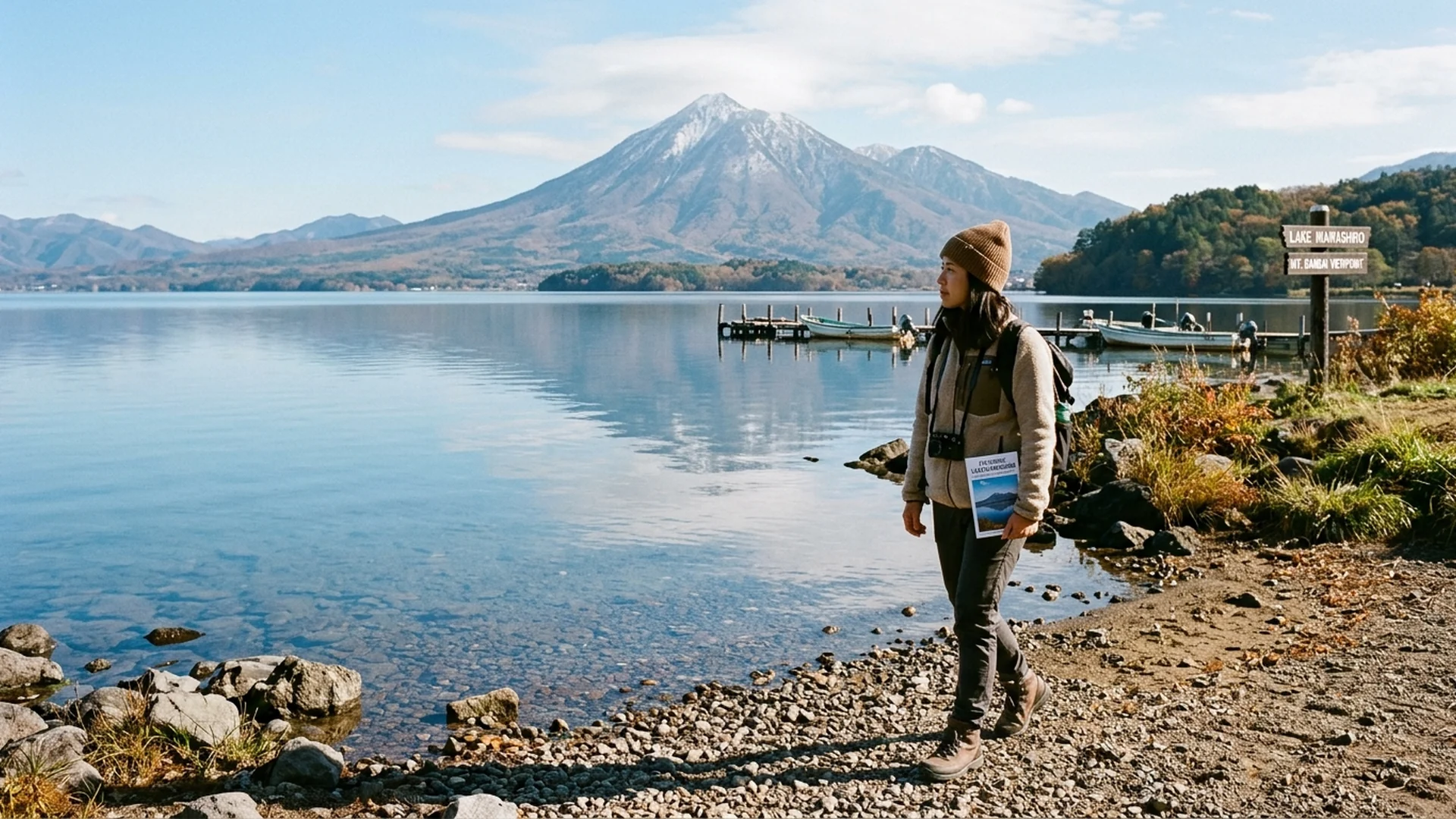
Set amid the undulating mountain ranges of Fukushima Prefecture lies a vast expanse of water that serves as a living canvas, reflecting the infinite sky and towering peaks with astonishing clarity. Affectionately known by the Japanese as ‘Tenkyoko’—the Heavenly Mirror Lake—Lake Inawashiro is not merely the fourth-largest freshwater body in the country, but a sanctuary where time unspools gently. Here, discerning travelers seeking solitude and unadorned beauty are invited to immerse themselves in the timeless aesthetics of changing nature.
From crystal-clear waters that mirror the stately silhouette of Mount Bandai to Meiji-era architectural heritage tucked quietly among ancient woodlands, this destination weaves together history, culture, and rare natural phenomena. Surrounded by the tranquil embrace of the Tohoku region, Lake Inawashiro offers an enduring impression of quiet luxury and grace.
Tenkyoko: The Jewel of Waters and Mirror of the Heavens
Perched at an elevation exceeding 500 meters, with a remarkable depth that purifies its waters to extraordinary clarity, Lake Inawashiro possesses a rare physical property: it mirrors the sky and the volcanic form of Mount Bandai with the precision of an oil painting. The moniker ‘Tenkyoko’ (天鏡湖)—translating to ‘Heavenly Mirror Lake’—is far more than poetic hyperbole. It is a tangible reality for every visitor who watches sunlight strike the water, igniting a shimmering dance of golden morning light and soft, pastel twilight hues.
A Four-Season Aesthetic: From Petals to Frozen Sculptures
The landscape surrounding Inawashiro transforms entirely with the turning of the year. In spring, the shoreline blooms in delicate shades of pink against a backdrop of snow-capped peaks. Summer brings brilliant, sunlit waters that welcome peaceful boating and unhurried recreation in the crisp highland air.
As autumn arrives, the encircling forests burst into crimson and gold, mirrored flawlessly in the glassy surface below. When winter casts its chilly spell, the lake transforms into a haven for migrating white swans from Siberia, accompanied by the breathtaking natural phenomenon known as ‘Shibuki-gori’. Splashing waves freeze instantly upon contact with shoreline branches, forming intricate ice sculptures found in only a handful of places worldwide.
Echoes of the Past: Tenkyokaku Mansion and Meiji Elegance
Just steps from the lakeshore stands the Tenkyokaku Mansion, an exquisite European Renaissance-style architectural masterpiece constructed in 1908 as a summer retreat for Prince Arisugawa Takehito. The pristine white wooden building has been meticulously preserved. Its interiors whisper of high-society Meiji-era Japan through classic patterned carpets, crystal chandeliers, and European fireplaces. Strolling through these sunlit rooms while looking out through grand windows toward the tranquil expanse of Lake Inawashiro deepens the historical resonance of the journey.