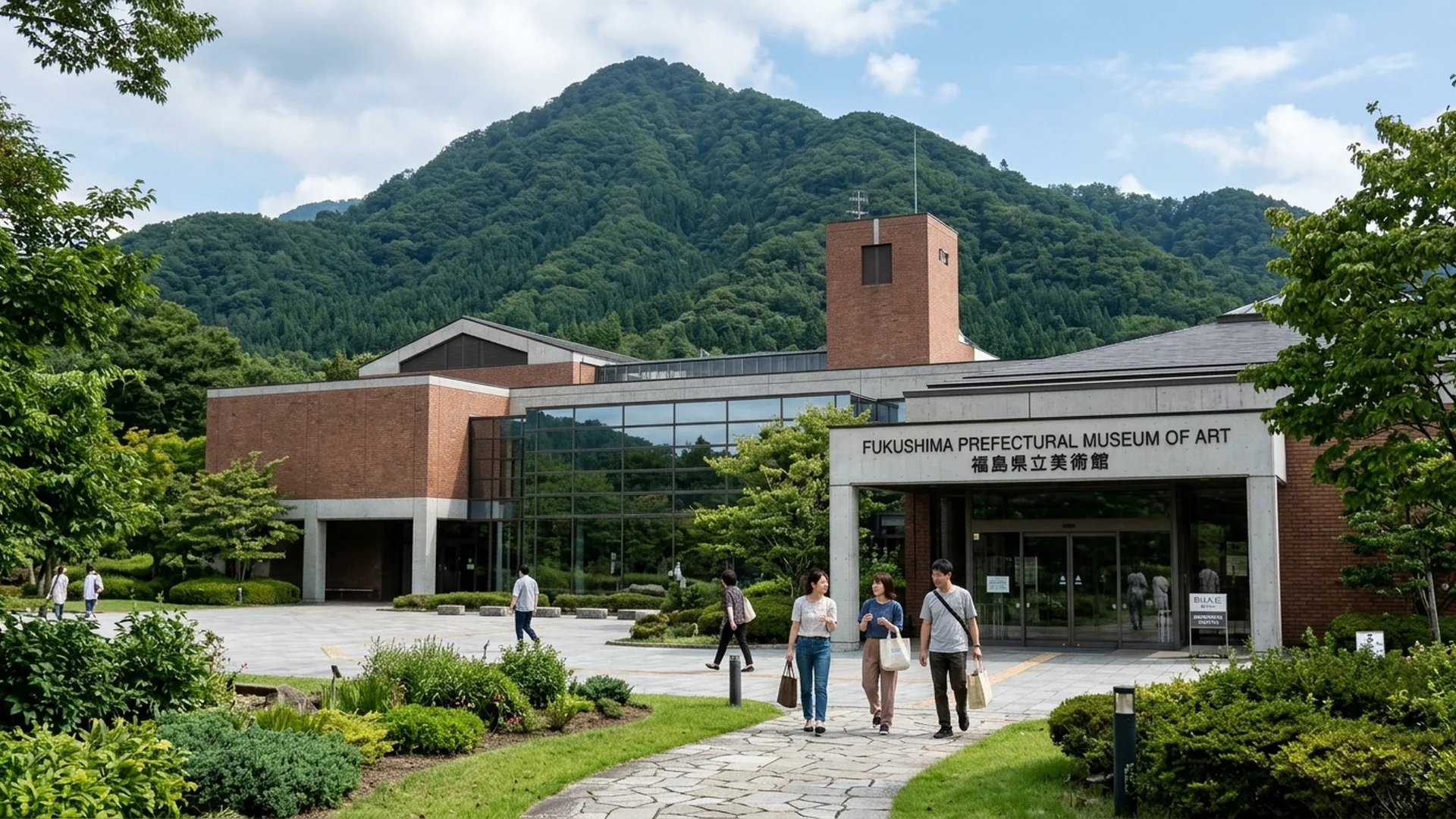
Far beyond the familiar pastoral horizons and restorative onsen thermal waters of the Tohoku region, the tranquil topography of Fukushima prefecture conceals a world-class aesthetic radiance at the foot of Mt. Shinobu. Here, modern red-brick architecture stands in quiet harmony with ancient forests and expansive natural gardens. This is the Fukushima Prefectural Museum of Art—a profound cultural repository that transcends the traditional boundaries of exhibition space, functioning instead as an enduring dialogue between legendary Western artists and the contemplative spirit of the East.
To cross the threshold of this sanctuary is to slip away from the relentless velocity of the modern world and immerse oneself in an oasis of unhurried thought. The interplay of light and shadow dancing across Impressionist canvases evokes timeless ripples of grace, while masterworks by American realists and regional visionaries weave a poignant tapestry of human experience through brushstroke and clay. For the discerning traveler seeking intellectual enrichment and profound aesthetic resonance, this destination remains an essential pilgrimage.
A Cross-Cultural Bridge: When Western Impressionism Meets Japanese Solitude
The defining characteristic that elevates the Fukushima Prefectural Museum of Art above standard regional institutions is its courageous and refined curation of masterworks sourced from across the globe. Within the permanent galleries, visitors encounter a miraculous dialogue between late 19th- and 20th-century European aesthetics and the quietude of Japanese spatial design. Creations by French masters such as Claude Monet and Paul Gauguin are positioned to converse effortlessly with the natural light filtering through expansive architectural windows. To stand before these fluid brushstrokes and layered dimensions of light, untethered from the clamor of metropolitan capitals, is to experience art in its most pristine and contemplative form.
Realism and Resonance: American Masters and Legendary Woodblock Prints
Beyond its European holdings, the museum dedicates significant space to American Realism, most notably featuring works by Andrew Wyeth. Wyeth’s mastery in capturing the vast, melancholic space and delicate symbiosis between humanity and nature establishes a profound emotional kinship with the surrounding landscapes of Fukushima.
Simultaneously, the institution honors local genius through the striking woodblock prints of Kiyoshi Saito, whose signature technique distills the stark simplicity and enduring strength of rural Japan. Alongside the expressive oil paintings of Showa-era luminary Shoji Sekine, these collections function as emotional archives, recording the quiet resilience, isolation, and understated elegance of the Tohoku populace across changing eras.
Red Brick and Sculpture Gardens in the Embrace of Mt. Shinobu
The museum’s physical structure was envisioned by acclaimed Japanese architect Masato Otaka, who prioritized the harmonious integration of geometric forms with surrounding topography. Constructed from warm, grounding red bricks, the building anchors itself within 60,000 square meters of verdant grounds sprawling across the slopes of Mt. Shinobu. Strolling through these gardens offers the sensation of traversing an open-air gallery, where significant contemporary sculptures are interspersed among indigenous flora that shift in color with the seasons. Whether cloaked in vibrant summer greens or hushed beneath a blanket of winter snow, nature here is an inseparable partner to the art.