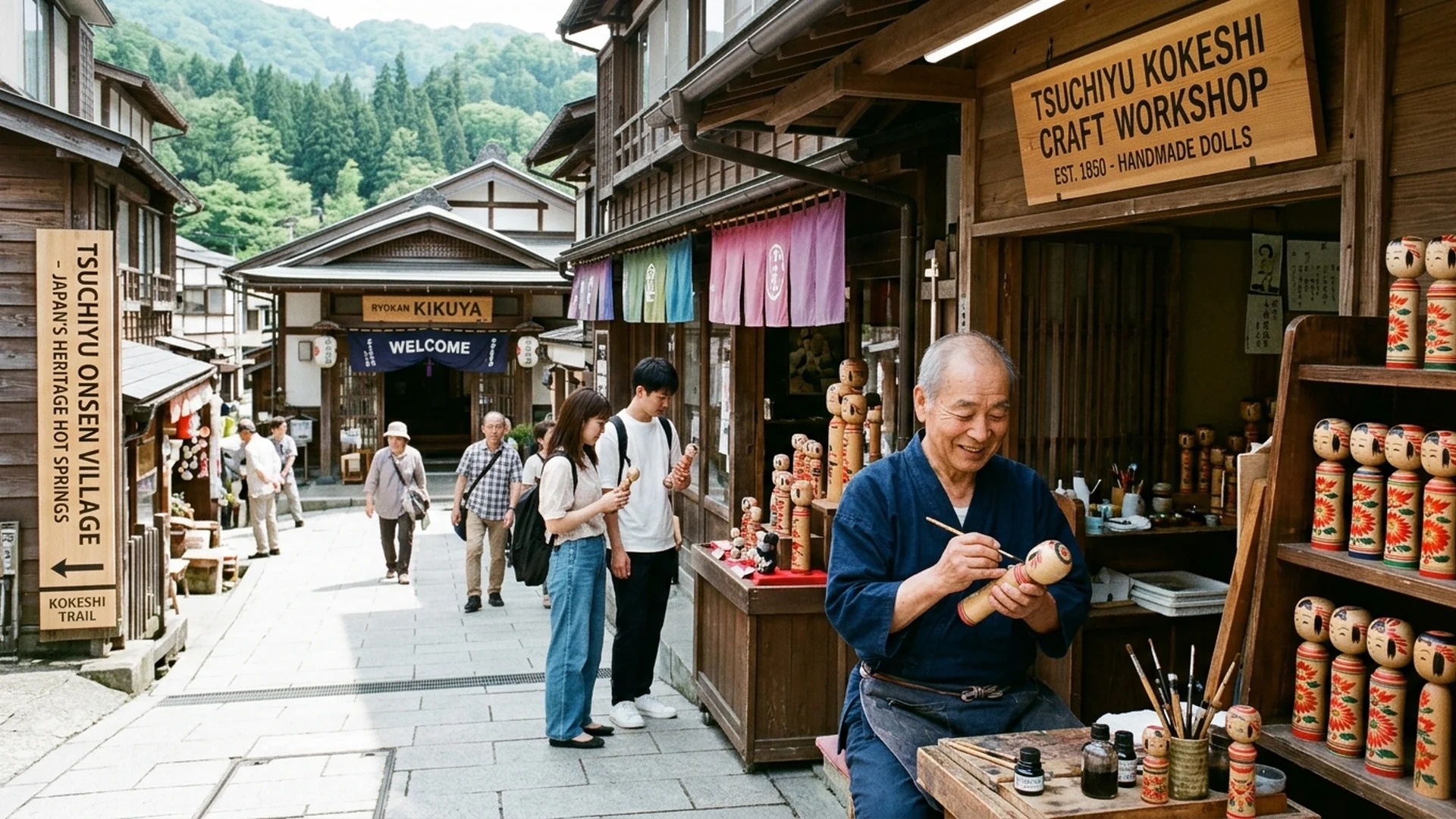
Far from the relentless clamor of hyper-commercialized tourist thoroughfares lies a hushed mountain valley where the crystalline waters of the Arakawa River have carved their path through millennia. Tsuchiyu Onsen, an ancient hot spring village nestled in the heart of Fukushima Prefecture, is a realm where nature, vernacular art, and the unhurried pace of rural Japanese life converge in perfect equilibrium. This is far more than a mere destination for physical rejuvenation; it is a profound landscape where the discerning traveler’s spirit may pause to absorb beauty in its most elemental and exquisite forms.
Enfolded by the verdant peaks of the Tohoku region, Tsuchiyu Onsen preserves a rich lineage stretching back over fourteen centuries. It is defined by exceptional mineral-rich thermal springs surging from deep within the earth, the delicate artistry of indigenous Kokeshi woodcraft, and the timeless embrace of heritage ryokan where hospitality—omotenashi—is practiced as an elevated fine art.
1. The Heritage of Thermal Waters: The Healing Heart of the Arakawa Valley
The thermal springs of Tsuchiyu Onsen offer far more than simple relaxation; they are imbued with therapeutic virtues forged by the earth itself. The mineral waters here are distinguished by a complex chemical composition, offering varied thermal springs that alleviate muscular tension, soften the skin, and stimulate invigorating circulation. Submerging into an open-air rotenburo bath thoughtfully integrated into the surrounding wilderness—while listening to the Arakawa River murmur over ancient river stones as the forest canopy shifts its pigments with the passing seasons—represents the pinnacle of unhurried travel luxury.
2. The Soul of Turned Wood: Narratives Etched in the Smiles of Tsuchiyu Kokeshi
If the thermal springs are the breathing pulse of Tsuchiyu, its hand-carved Kokeshi dolls are its enduring cultural soul. Tsuchiyu Kokeshi are instantly distinguished by their delicate hand-painted crimson and black linework adorning flawlessly turned hardwood bodies, their characteristic painted eyes, and the gentle, nostalgic squeak emitted when the wooden head is delicately rotated. Wandering through quiet alleys to visit multi-generational artisan workshops, observing the precise lathe work and hand-painting techniques firsthand, offers an intimate cultural immersion that connects the traveler directly to ancient ancestral wisdom.
3. The Aesthetics of Slowness: Premium Ryokan Living and Contemplative Rhythm
Residing within a traditional ryokan in Tsuchiyu Onsen is an invitation to inhabit a meticulously preserved world of tranquility. These sophisticated retreats seamlessly blend contemporary refinement with classic architecture. Tatami-matted chambers frame serene Japanese gardens or rushing streamlets, while multi-course kaiseki dinners showcase the fleeting bounty of Fukushima’s pristine local terroir—from delicate mountain greens to prized regional beef. Every detail is curated to honor the spirit of the season. Beyond the private baths of the ryokan, public footbaths (ashiyu) are thoughtfully scattered throughout the village, inviting quiet moments of pause during leisurely strolls.