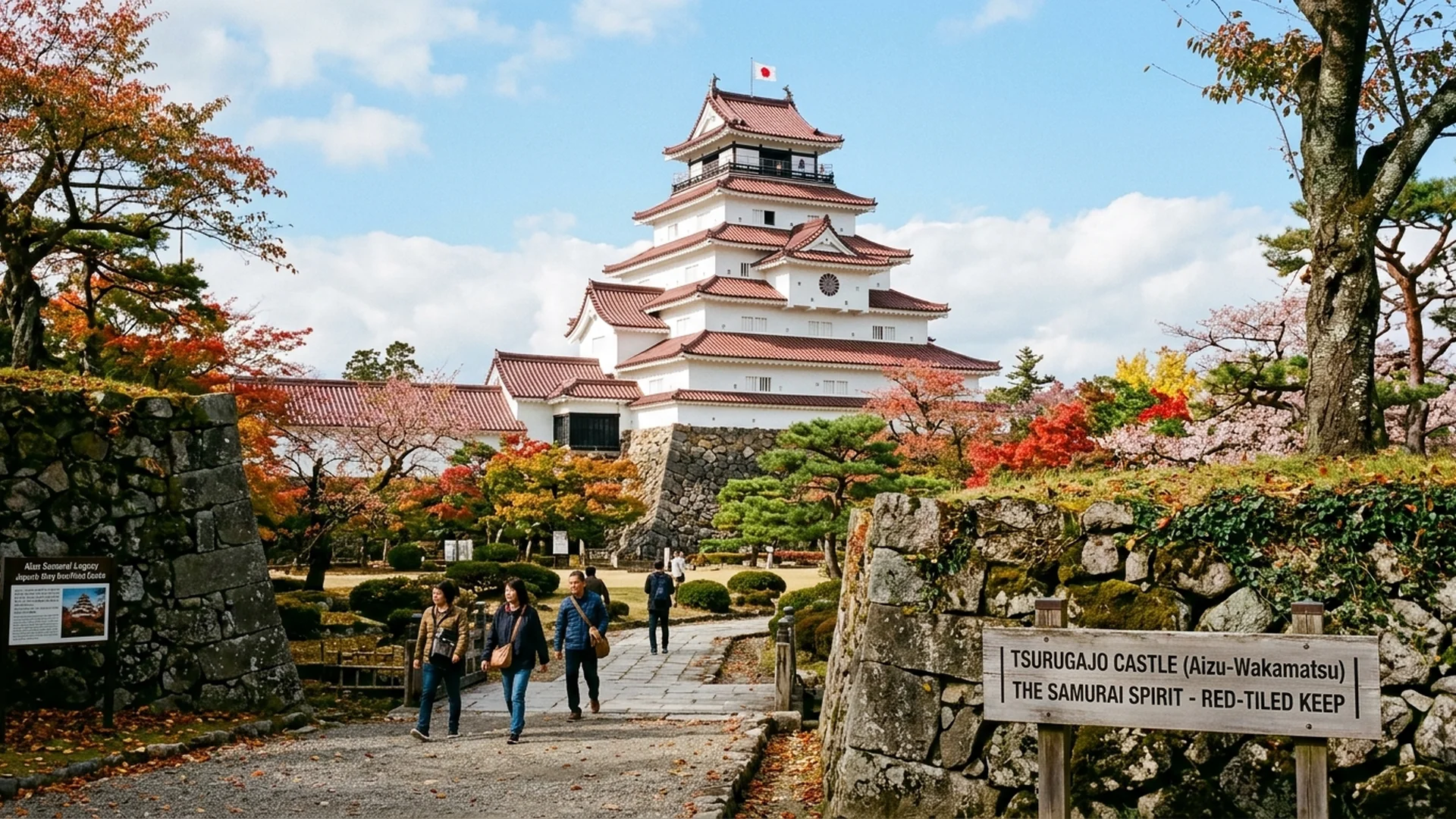
Across the sweeping, storied landscapes of the Tohoku region, an architectural masterpiece stands as an enduring monument to history, resilience, and unyielding devotion. Tsurugajo Castle, historically anchored in Aizu-Wakamatsu, transcends mere antiquity; it serves as a hallowed sanctuary of honor, steadfast loyalty, and the indomitable spirit of the Aizu samurai.
Approaching its formidable stone fortifications, the discerning traveler is immediately struck by a rare visual harmony: the brilliant crimson of glazed roof tiles contrasting against immaculate white plaster walls and a soaring five-tier keep. This is the sole historic castle in Japan to retain its traditional red-tiled (Aka-kawara) exterior, creating a stunning counterpoint to the shifting seasons—whether framed by the delicate blush of spring sakura, the deep emerald of summer foliage, the fiery canvas of autumn, or the immaculate silence of winter snow. Tsurugajo invites the modern traveler to step backward into an era where personal honor outweighed life itself.
Red-Tiled Architecture: The Timeless Engineering of Aizu
The architectural brilliance of Tsurugajo extends far beyond its striking aesthetic, rooted deeply in ingenious adaptations to Tohoku’s formidable climate. While the keep originally featured standard dark tiles, extensive restorations during the late Edo period and post-war era introduced specialized red glazed tiles fired at exceptionally high temperatures. This advanced ceramic process yields a high-density material highly impervious to severe frost and heavy winter snowpacks, effectively preventing freeze-thaw cracking. The vibrant crimson glaze not only provides extraordinary structural durability against harsh weather conditions but also embodies an elevated artistic sensibility, ensuring the citadel commands the wintry horizon with timeless elegance.
The Aizu Samurai Spirit: Honor Etched in Stone
Beneath the pristine exterior of the fortress lies a profoundly moving chronicle of courage and sacrifice. During the turbulent twilight of the samurai era in the 1868 Boshin War, the Aizu domain faced a devastating siege by imperial forces. Outnumbered and subjected to months of relentless bombardment, the domain’s warriors—including the tragic youthful ranks of the Byakkotai (White Tiger Force)—exemplified absolute loyalty to the Bushido code. Although the original castle suffered severe structural damage and was subsequently dismantled, the indomitable ethos of its defenders remains permanently embedded within every stone foundation. Walking through the contemporary museum housed within the keep is an immersive journey of reverence for an imperishable legacy.
The Aesthetic of Tea at Rinkaku Tea House
Stepping away from the citadel’s martial history reveals an enclave of profound tranquility within the castle grounds: the Rinkaku Tea House. Miraculously spared from the destruction that claimed other structures, this historic pavilion is deeply tied to the heritage of Sen no Rikyu, the grand master of the Japanese tea ceremony. Built by Gamo Shoyei, son of the domain’s lord, it served as a refined salon for welcoming esteemed guests and cultivating inner peace. To kneel quietly upon woven tatami mats, breathing in the subtle aromas of freshly whisked matcha and tasting seasonal wagashi sweets while gazing out upon falling leaves or tranquil gardens, is an exquisite cultural experience bridging past and present.