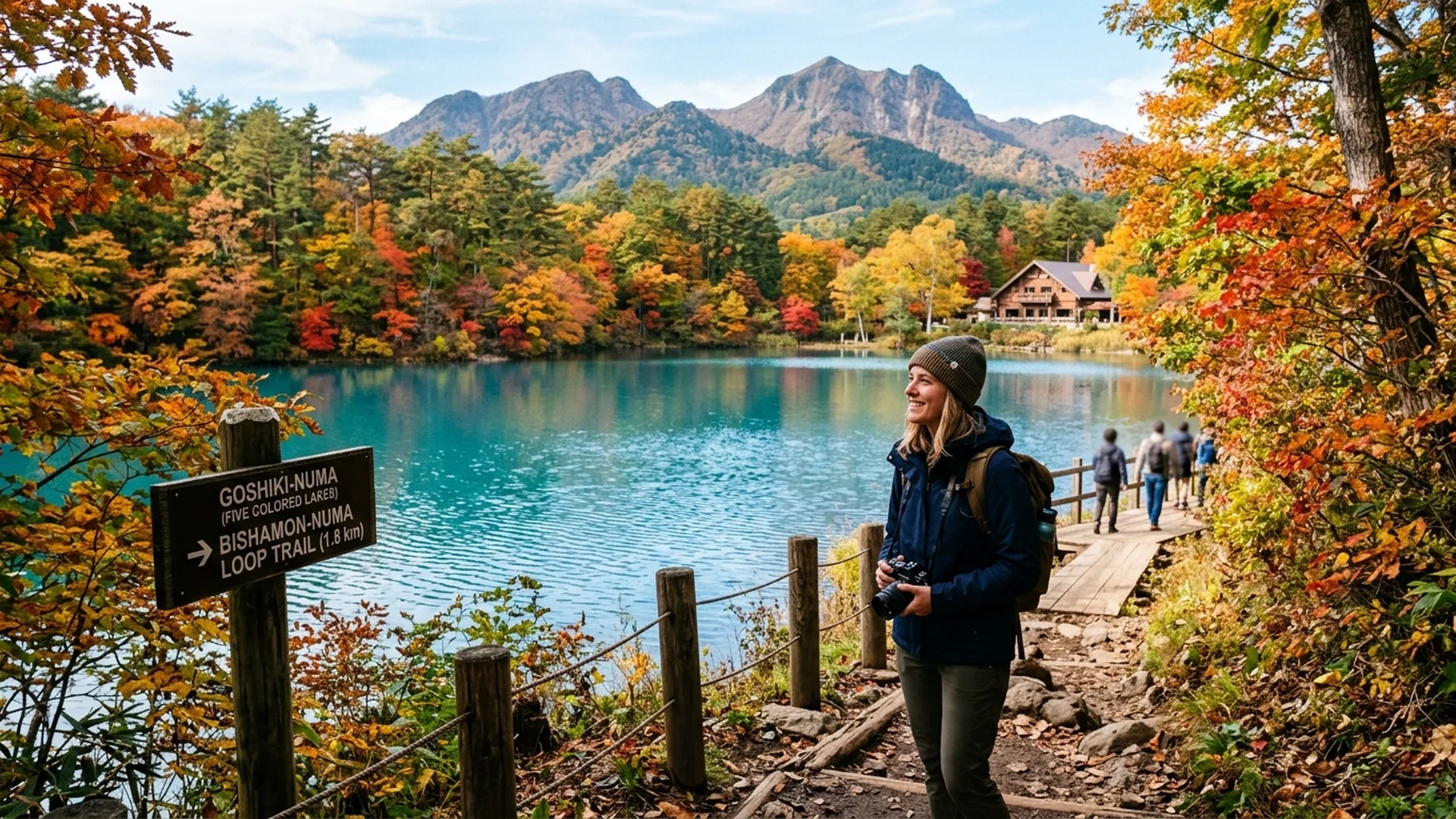
As ethereal mists linger over waters shimmering in shades of emerald and cobalt, nature quietly whispers tales of rebirth from the ashes of time. Urabandai, cradled in the dramatic shadow of Mount Bandai within Fukushima Prefecture, is far more than a mere sanctuary from the clamor of modern life. It is an extraordinary living laboratory sculpted by the Earth itself following a cataclysmic volcanic eruption in 1888. Honored by the prestigious Michelin Green Guide, this destination harmonizes raw geological power with profound spiritual tranquility, creating an untouched alpine haven that discerning global travelers dream of discovering.
Journeying to Urabandai is an invitation to step into a realm where time unfurls at a gentler pace. Amidst dense pine forests and over a hundred hidden tarns tucked beneath the mountain’s embrace, every footstep reveals the resilience of a flourishing ecosystem. The waters shift hues in response to passing sunlight and mineral currents, offering a purity and depth of beauty rarely found elsewhere in the world.
Goshikinuma: A Geological Masterpiece of Kaleidoscope Lakes
At the beating heart of Urabandai lies the Goshikinuma lake cluster, universally known as the ‘Five-Color Lakes.’ Born from the catastrophic eruption of Mount Bandai, the blast blocked ancient waterways, giving rise to more than a hundred pristine ponds and tarns. The true wonder lies within their chemical composition: varying concentrations of volcanic minerals, aquatic plants, and microscopic plankton dissolve into each individual basin. As sunlight shifts across the landscape, these waters ignite in an array of mesmerizing hues—from translucent turquoise and brilliant emerald to profound indigo and subtle violet.
Exploring this aquatic constellation is effortless along the four-kilometer Goshikinuma Nature Trail. The pathway remains gentle and deeply shaded by ancient canopy trees. Along the route, travelers encounter iconic bodies of water such as Bison-numa, the largest tarn where golden carp glide through crystalline depths, and Ruriko-numa, which alters its chromatic appearance with the changing light. Every step transforms into a moving meditation, soothing the spirit within an impeccably preserved wilderness.
The Rhythm of Seasons: From Autumn Flames to Pristine Winter Silence
Urabandai is a destination of timeless allure, where each passing season unfurls an entirely distinct aesthetic. During autumn, spanning from mid-October to early November, the forests encircling the lakes erupt in brilliant tones of crimson, amber, and molten gold. This vibrant canopy contrasts sharply against the cool azure waters, creating compositions reminiscent of classical oil paintings—a fleeting spectacle eagerly anticipated by landscape photographers and nature connoisseurs alike.
With the arrival of winter, Urabandai settles beneath a thick blanket of pristine snow, transfiguring the landscape into a hushed, storybook solitude. Engaging in exclusive activities such as snowshoeing across the frozen expanse of Lake Hibara or ice-hole smelt fishing offers intimate access to the season’s quiet majesty, far removed from conventional tourist pathways.
Slow Luxury and Elevated Repose Along Lake Hibara
True appreciation of Urabandai involves retreating into refined accommodations designed to integrate seamlessly with the natural topography, particularly along the shores of Lake Hibara, the district’s largest body of water. These properties embrace an architectural philosophy rooted in profound respect for the environment, framing uninterrupted vistas of the serene lake and the volcanic contours of Mount Bandai directly from private guest sanctuaries.
Unwinding within an open-air rotenburo hot spring bath—surrounded by falling snowflakes in winter or turning leaves in autumn—epitomizes contemporary refinement. This restorative ritual pairs effortlessly with exquisite kaiseki dining that celebrates Fukushima’s renowned seasonal harvests, featuring foraged mountain vegetables and exceptional local beef that speak to the fertility of this storied volcanic plateau.