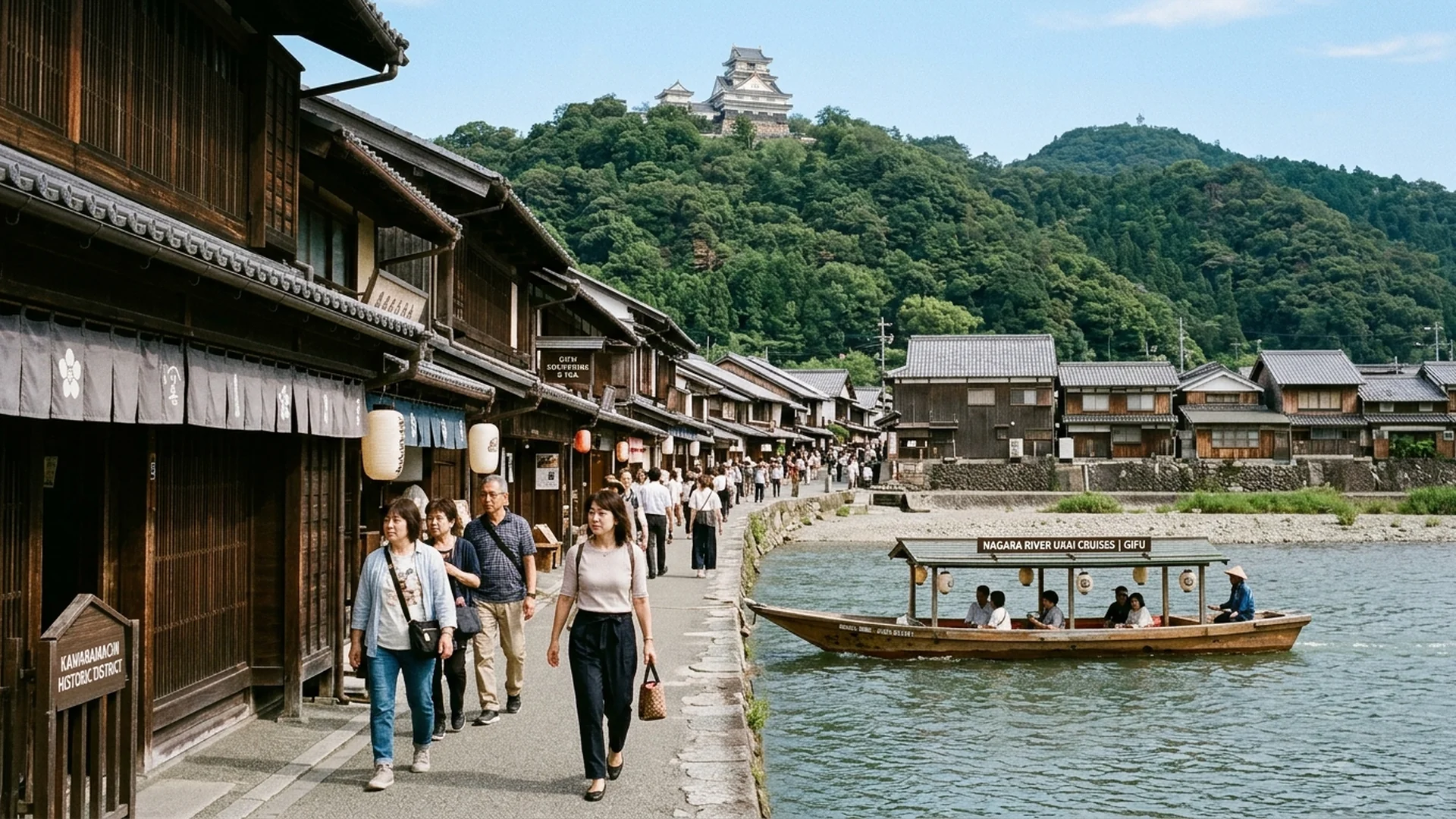
Travelers frequently bypass Gifu, reducing the historic city to a mere transit station on the way to Nagoya or the misty alpine village of Shirakawa-go. Yet, hidden beneath the shadow of rugged peaks and crystalline waters lies a foundational chapter of Japan’s martial history. Gifu is far more than a geographical coordinates on a map; it is the grand stage where Oda Nobunaga established his stronghold, plotting the unification of a fractured realm.
As the morning mist lifts, Gifu Castle stands sentinel atop Mount Kinka, appearing suspended in the clouds and inviting modern pilgrims to cross the threshold into the Sengoku period. By nightfall, the mirror-like surface of the Nagara River reflects the amber glow of iron cressets aboard ancient fishing vessels, keeping alive the 1,300-year-old heritage of Ukai cormorant fishing. This narrative journey invites discerning global travelers to discover the profound beauty that casual itineraries invariably overlook.
Footprints of Ambition: Gifu Castle and the Legend of Oda Nobunaga
Comprehending the spirit of Gifu begins upon the slopes of Mount Kinka, where Gifu Castle commands the summit. Formerly known as Inabayama before Nobunaga seized the fortress and christened it Gifu in homage to ancient Chinese lore, the citadel remains a monument to fierce vision. Ascending via the ropeway feels akin to passing through a veil of mist and time. Upon reaching the summit, the gleaming white fortifications contrast sharply against deep green canopies, unfurling breathtaking vistas of the Nobi Plain and the serpentine Nagara River below. Inside, carefully curated historical exhibitions chronicle the strategic brilliance of the warlord who reshaped the Japanese archipelago, rendering this site far more than picturesque ruins—it is a lasting testament to unwavering resolve.
The Alchemy of the River: VIP Cruises and the Art of Ukai
As dusk descends, the Nagara River transforms into a theater of velvety shadows and theatrical stillness. Ukai, the imperial art of cormorant fishing, is a sacred heritage preserved with immaculate dedication for over thirteen centuries. Boarding a chartered wooden VIP vessel while sipping warmed artisanal sake and tasting freshly grilled sweetfish caught straight from the river represents the pinnacle of contemporary slow travel. The sight of fishing boats adorned with blazing iron cressets casting shimmering orange light across the water, accompanied by the swift, elegant plunges of cormorants directed by master handlers in classical attire, leaves an indelible impression on the soul.
Aesthetics Across Time: The Kawaramachi District and Master Artisans
Along the northern banks of the Nagara River lies Kawaramachi, a preserved conservation district lined with dark-latticed wooden merchant houses dating back to the Edo period. The atmosphere here is hushed, carrying the distinct olfactory notes of aged timber and quiet contemplation. Today, these historic structures have been thoughtfully reimagined into artisan boutiques, minimalist tea houses, and independent design studios. Among the district’s crown jewels is Gifu Wagasa, handcrafted paper umbrellas celebrated for their diaphanous lightness, intricate internal bamboo structures, and botanical motifs realized through generations of specialized craftsmanship. Complementing this exploration with a visit to the monumental Gifu Great Buddha at Shoho-ji Temple—a serene masterpiece constructed from woven bamboo, clay, and gold leaf—brings an exquisite balance to the cultural pilgrimage.