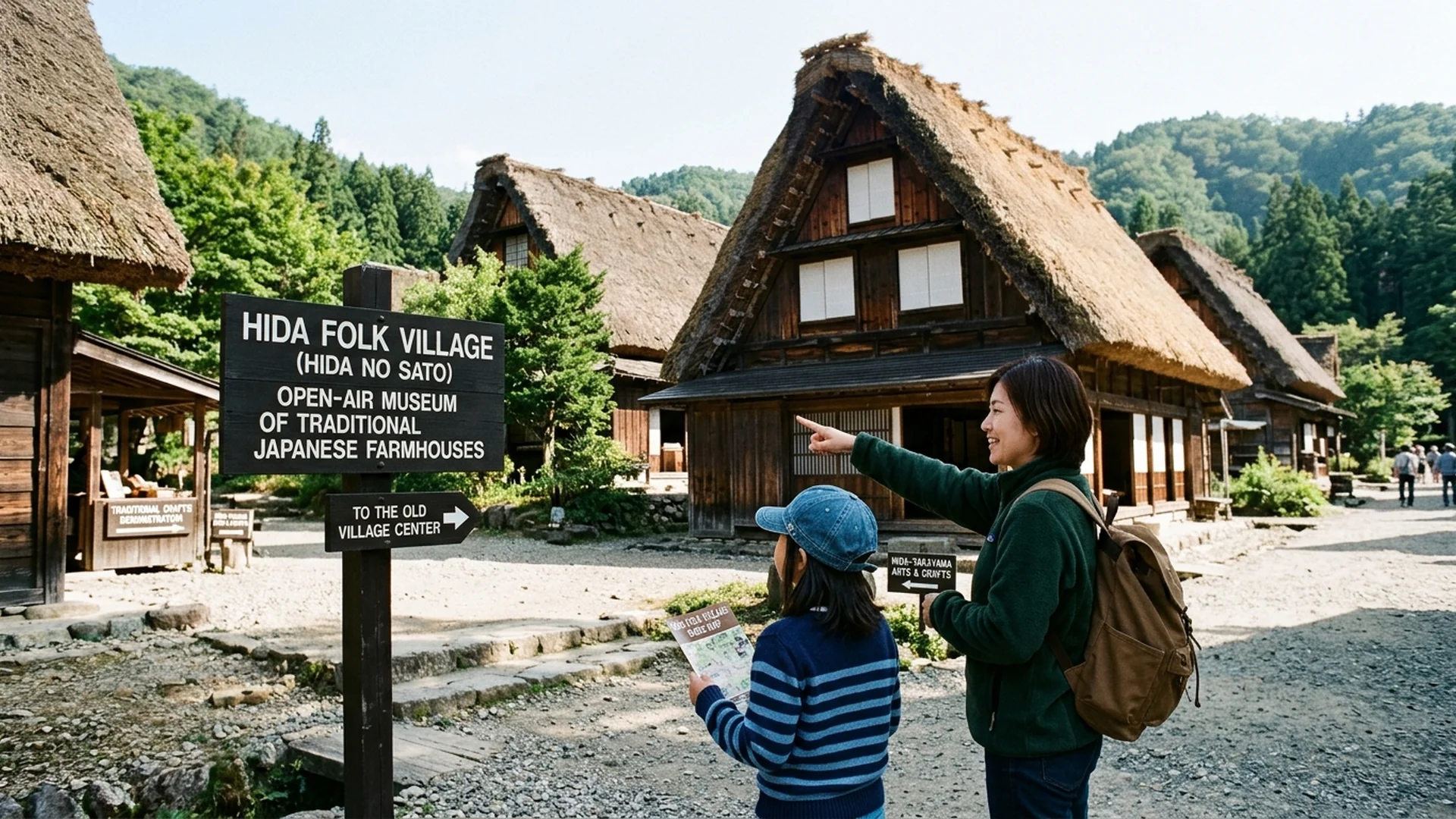
As delicate morning mists gently brush the peaks of the Hodaka mountain range, soft golden sunlight begins to warm the thick, thatched roofs of ancient farmhouses lining the tranquil waters of the Hida valley. This is Hida Folk Village, or Hida no Sato, a place where time appears gracefully preserved in the Edo period. Yet this is far more than a silent museum or artificial replica; it is a living, breathing sanctuary meticulously gathering invaluable Gassho-zukuri timber dwellings from across the entire Hida region.
Amidst the hurried pace of contemporary travel, crossing the threshold into this timeless landscape feels akin to turning the pages of a living history book. The gentle creak of ancient pine flooring beneath one’s feet, the subtle, comforting aroma of woodsmoke drifting from a central irori hearth, and the profound stillness embraced by surrounding nature offer the rare, contemplative experience that discerning global travelers continually seek.
Gassho-zukuri Architecture: A Legacy of Faith and Snow-Resilient Engineering
The beating heart of Hida Folk Village is its collection of Gassho-zukuri, or ‘hands pressed in prayer,’ architectural masterpieces, widely celebrated as world heritage icons. Their defining characteristic is the steep, steeply pitched thatch roof made from thick susuki grass, designed at angles of up to sixty degrees to effortlessly shed the monumental winter snowfalls characteristic of the Chubu region. The interior timber framework is constructed entirely without the use of nails, relying instead on intricate joinery and mortise-and-tenon craftsmanship that provides exceptional flexibility and earthquake resilience.
Inside each residence, multi-level structures reflect histories once dedicated to sericulture and agricultural storage. Sunlight filtering softly through diminutive windows illuminates centuries of authentic patina, allowing visitors to walk quite literally through the preserved domestic spaces of early Japanese ancestors.
A Living Museum: Echoes from the Irori Hearth and Artisan Traditions
The distinction of Hida no Sato extends far beyond exterior observation, inviting travelers to encounter its living spirit through the tending of the irori—the traditional sunken hearth that serves as the social and physical center of domestic life. Wisps of woodsmoke rise to cure ancient structural timbers, imparting a distinct, comforting fragrance while crackling quietly to establish a meditative ambiance.
Furthermore, the historic interiors house extensive collections of daily utensils and folk art, alongside dedicated spaces where guests can engage in hands-on craftsmanship. Visitors may try their hand at sewing a Sarubobo doll, the iconic faceless red talisman symbolizing protection, familial love, and well-being deeply rooted in Hida heritage.
Seasonal Elegance: From Vibrant Autumn Foliage to Serene Winter Snowscapes
The aesthetic character of the village transforms dramatically through the shifting cycles of nature. During the autumn months, stretching from October through November, the surrounding forested slopes burst into warm tones of amber and crimson, providing a striking contrast against the dark timber and thatch of the historic homes as they mirror perfectly upon clear waters like a classical ink wash painting.
When winter arrives, pristine snow blankets the heavy gassho roofs. During special evening illumination events, soft golden light glows warmly from within the historic windows against the crisp alpine chill, transmuting the sanctuary into an enchanting fairytale realm untouched by modern clamor.