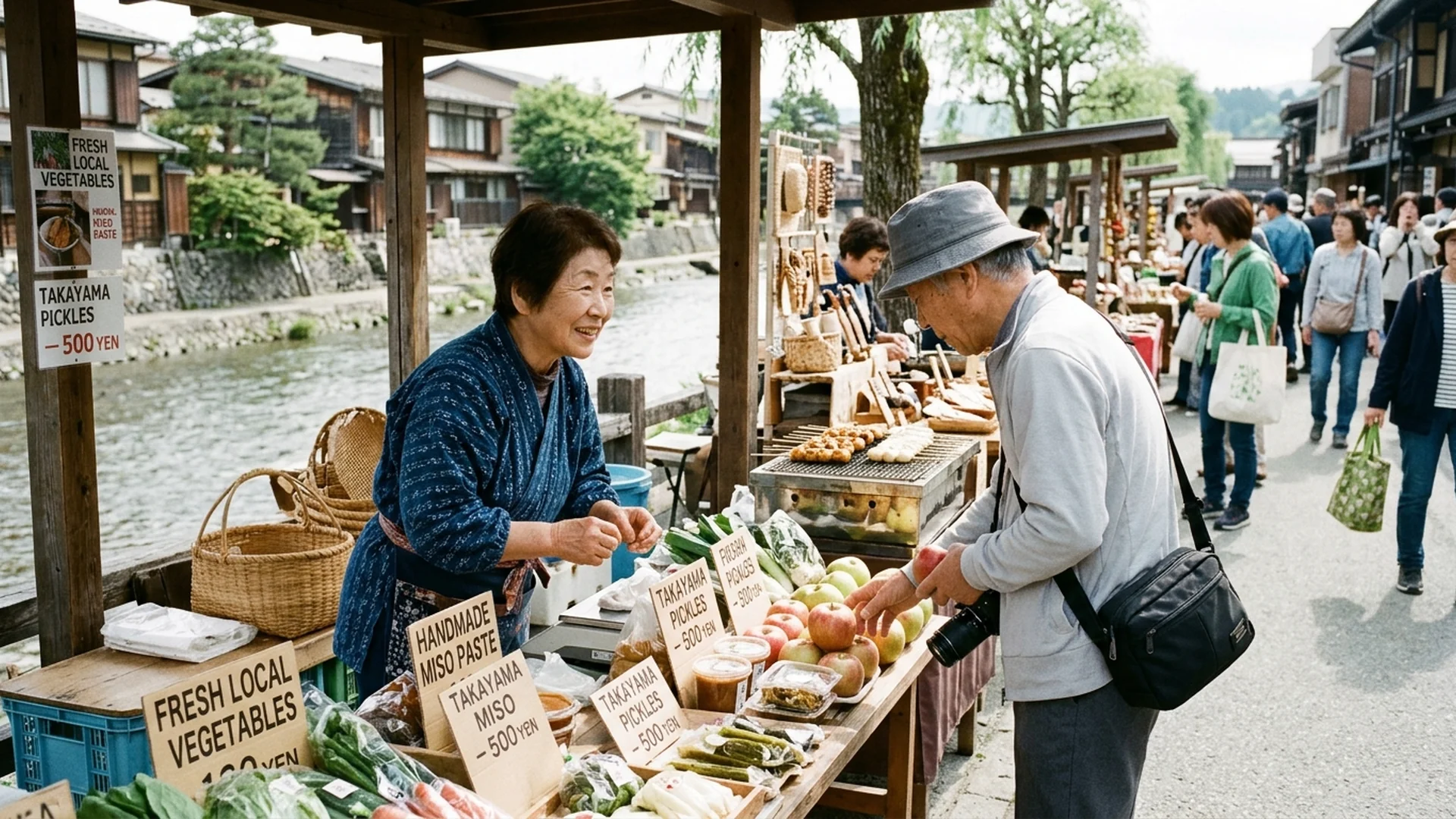
As a soft morning mist lingers over the crystalline waters of the Miyagawa River, the warm, familiar greetings of local vendors begin to orchestrate the daily symphony of Takayama. Here lies the Miyagawa Morning Market, one of Japan’s most celebrated and enduring morning markets. Far more than a simple bazaar for agricultural yields and regional provisions, it functions as a living museum preserving the rustic soul of the Hida mountain range in every unhurried step.
Stepping into this riverside market in the early hours feels like slipping backward into the Edo period, framed by impeccably preserved timber merchant houses. The gentle smiles of the local elders—known affectionately as grandmothers, or yaya—who display freshly harvested produce from their kitchen gardens alongside handcrafted artisan goods, reflect a profound, generational harmony between humanity, nature, and the ticking clock of time. This guide explores every nuanced dimension of the Miyagawa Morning Market, from its historical roots and masterclass flavors to insider secrets often overlooked by the casual tourist.
A Legacy of Rivers and Edo-Era Commerce
The history of the Miyagawa Morning Market is inextricably tied to the prosperity of Takayama as a castle town governed directly by the Tokugawa shogunate during the Edo period. The Miyagawa River served as the arterial lifeline for transit and commerce, drawing villagers from surrounding mountain settlements to trade their agricultural bounty along its banks. Though centuries have shifted the mechanics of trade, the core tenets of commercial integrity, uncompromising quality, and communal warmth have been fiercely safeguarded across generations. Strolling along the riverbank, flanked by weeping cherry trees and bridges adorned with intricate woodwork, offers more than simple retail browsing; it is an immersion into a living past that breathes quietly within the present.
The Tastes of Hida: Premium Riverside Street Food
Gastronomically speaking, the Miyagawa Morning Market is an unpretentious sanctuary for epicures seeking exceptional seasonal terroir. The undisputed crown jewel is Hida beef sushi—marbled perfection resembling intricate abstract art, served atop crisp, edible rice crackers or ceramic vessels designed to eliminate waste and honor sustainability. The moment the culinary blowtorch meets the rich fat, the beef achieves a sublime, melt-away texture on the palate. Equally compelling is Mitarashi dango, traditional charcoal-toasted rice dumplings brushed with a savory, proprietary soy glaze that balances depth without cloying sweetness. Depending on the season, crisp Hida apples and localized strawberries round out the offerings, presented with immense pride by the growers themselves.
Craft and Artistry: The Spirit of Mountain Artisans
Beyond its culinary allure, the market serves as an invaluable showcase for regional handicrafts. Hida woodworking, renowned across Japan for its precise joinery achieved entirely without metal nails, manifests in daily household utensils and miniature decorative arts defined by pristine utility. Perhaps most iconic is the sarubobo—faceless red cloth amulets traditionally sewn as talismans of protection and good fortune by grandmothers for their families. Each colorway of the sarubobo carries distinct blessings, from health and longevity to romantic fulfillment. Engaging in quiet conversation with the makers infuses each acquired heirloom with personal resonance and cultural context.