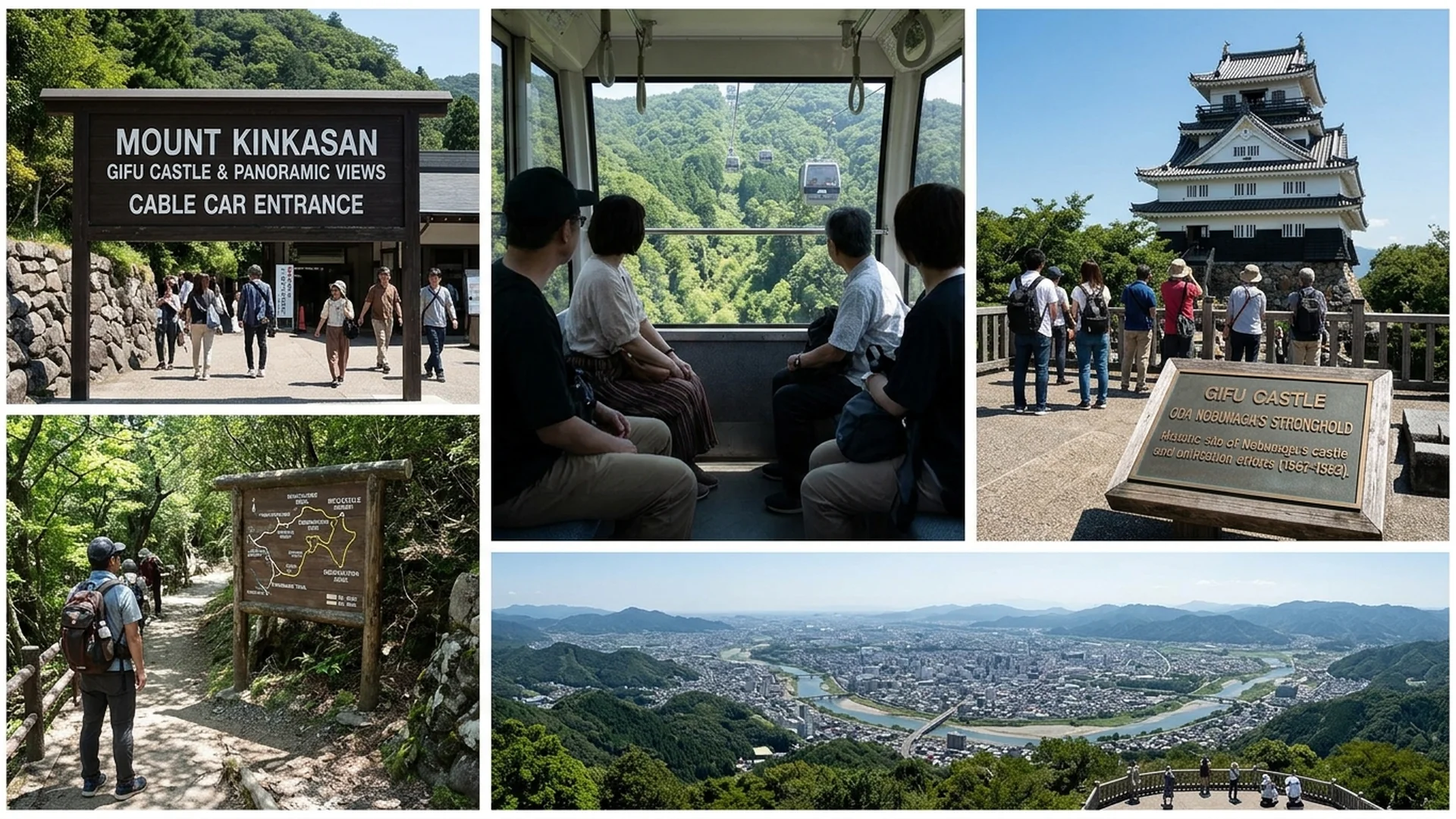
Amidst the ceaseless flow of time across the Japanese archipelago, few geographical coordinates possess the historical gravitas of Mount Kinkasan. Rising majestically above the city of Gifu in Gifu Prefecture, this densely forested peak is far more than a natural sanctuary defined by pristine woodlands and the crystalline waters of the Nagaragawa River. It stands as the legendary bastion of victory where the formidable Sengoku-period warlord Oda Nobunaga once established his command center to unify a fractured realm.
Ascending Mount Kinkasan feels less like an ordinary excursion and more like a deliberate passage through dimensions—leaving the tranquil riverbanks below to encounter the imposing silhouette of Gifu Castle cutting across the horizon. This narrative invites discerning travelers and history enthusiasts to delve deeply into ancient strata of civilization, military strategy, and sublime panoramas refined by centuries, rendering every footstep upon these storied slopes an exercise in profound contemplation.
Footprints of the Sengoku Era: How Oda Nobunaga Forged a Power Center
Originally designated as Mount Inaba, this elevation was seized by Oda Nobunaga from the Saitō clan in 1567. He subsequently rechristened the settlement ‘Gifu,’ drawing inspiration from ancient Chinese dynastic history. Perching Gifu Castle atop the 329-meter summit granted absolute strategic superiority, offering commanding long-range surveillance and formidable defensive advantages. Within the restored stone ramparts and castle architecture lies the visionary mindset of Nobunaga, who recognized the supreme importance of commerce, waterborne transit along the Nagaragawa River, and the assimilation of innovative technologies—foundational elements that propelled Gifu into a transformative epoch of Japanese history.
Soaring Above the Canopy: The Aesthetic Journey of the Kinkasan Ropeway
Reaching the summit of Mount Kinkasan offers a dual choice: meandering through serene, shaded woodland hiking trails or gliding effortlessly aboard the Kinkasan Ropeway. A journey lasting barely over three minutes delivers an astonishing visual spectacle. The cabin gently ascends above a dense emerald carpet of trees, gradually unveiling a sweeping panorama. Below, the Nagaragawa River meanders like a silver ribbon reflecting the sunlight, extending all the way toward the formidable backdrop of the Japanese Alps. Witnessing these landscapes framed by vibrant autumn foliage or a pristine blanket of winter snow constitutes a masterpiece experience for the discerning traveler.
Hidden Summit Dimensions: From Feudal Fortresses to Squirrel Sanctuaries and Nightscapes
Upon arriving at the upper plateau, the grounds surrounding Gifu Castle present delightful discoveries that enrich the expedition. The castle interior houses invaluable antiquities and chronicles detailing the Oda clan. A short stroll away lies the Kinkasan Squirrel Village, an intimate enclosure hosting friendly resident squirrels that imparts a gentle, tranquil atmosphere. As twilight descends and the horizon shifts colors, Mount Kinkasan transforms into one of the Chubu region’s most celebrated nocturnal vantage points. The shimmering city lights of Gifu tracing the curves of the Nagaragawa River create a mesmerizing synthesis of ancient heritage and modern sophistication.