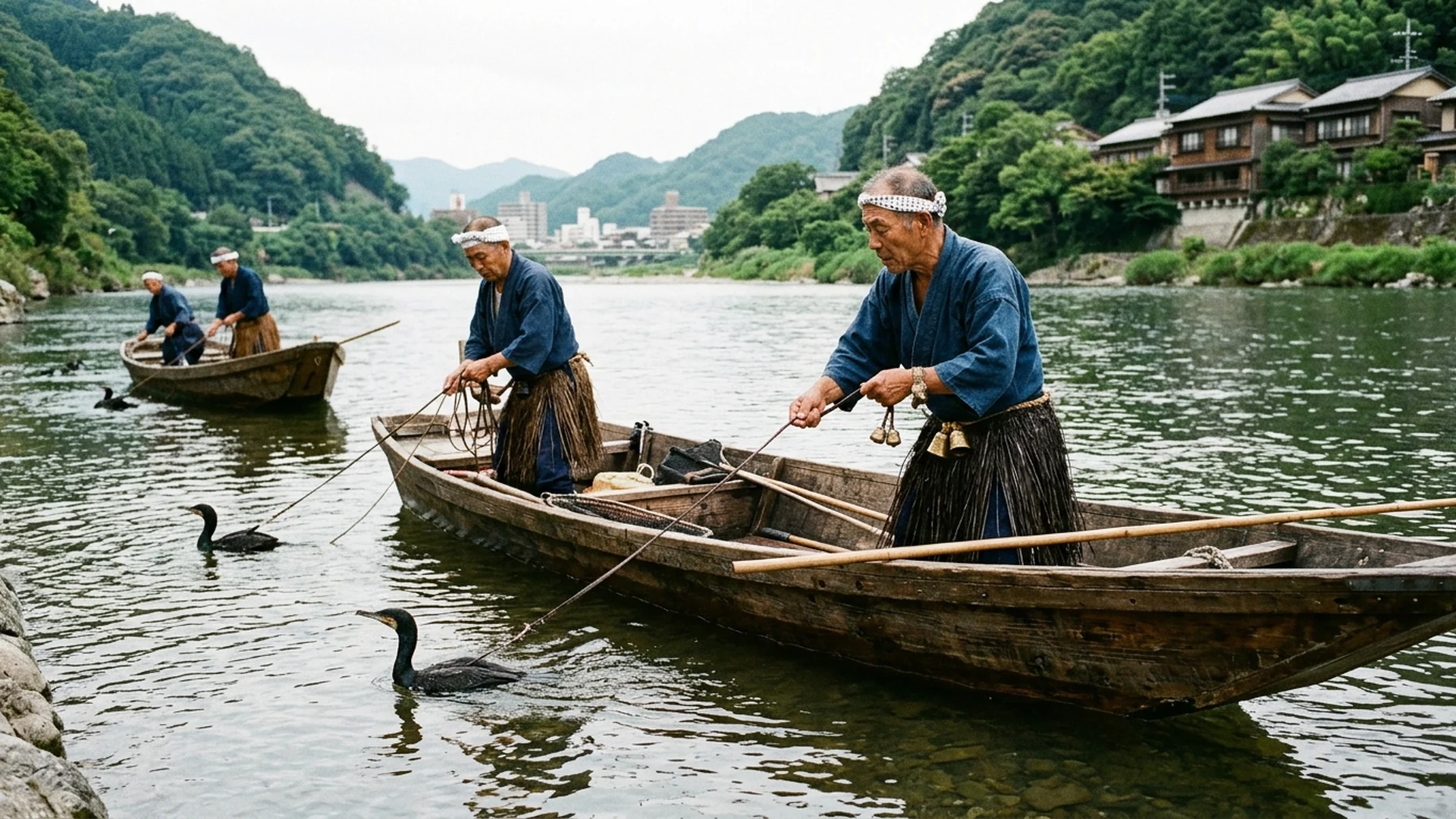
As dusk unfurls its velvety stillness over the tranquil expanse of the Nagara River, the warm, amber glow of kagaribi torches upon ancient wooden vessels begins to flicker across the ripples like scattered jewels upon a nocturnal canvas. Here lies the Nagara River, celebrated as one of Japan’s three purest waterways—a natural sanctuary in Gifu Prefecture where time appears to stand suspended yet pulses vibrantly with cultural heritage unbroken for over thirteen centuries, bridging the storied legacy of the Sengoku warlords and the modern Imperial Household.
This pristine river is far more than a geographical marvel; it serves as the grand outdoor stage for Ukai, the ancient art of cormorant fishing that mirrors the profound harmony between humanity, nature, and wildlife. For the discerning global traveler seeking profound and distinctive resonance, a pilgrimage to the Nagara River opens a portal to an unhurried dimension where the quietude of the natural world merges seamlessly with the exquisite refinement of high Japanese civilization.
Ukai: Imperial Patronage and the Ancient Art of Cormorant Fishing
At the heart of the Nagara River’s allure for cultural connoisseurs is Ukai, the traditional cormorant fishing ceremony conducted annually from May through October. Its distinction lies not merely in its archaic technique, but in its prestigious endorsement by the Imperial Household of Japan. Usho, or master cormorant handlers, inherit their arcane craft through unbroken familial lineages spanning generations. These masters are not ordinary fishermen; they hold official appointments as hereditary artisans to the Imperial Court, tasked with presenting freshly caught ayu sweetfish to the Emperor during sacred ceremonies.
When the fishing skiffs glide into the obsidian current, the percussive thrum of wooden oars, the rhythmic splashing designed to drive the fish, and the unwavering brilliance of iron baskets crackling with pine wood forge an atmosphere of profound, archaic power. Specially trained cormorants plunge into the rushing depths, guided by slender leashes held expertly in the master’s hand. This mesmerizing interplay of man, bird, and flame amid the absolute darkness of the river has captivated world luminaries—most notably Charlie Chaplin, who attended twice and lauded the spectacle as an unmatched wonder.
A Gastronomic Symphony: The Legendary Ayu and Culinary Refinement
The bountiful purity of the Nagara River nurtures an ideal habitat for ayu sweetfish, revered as the queen of clear streams. Feeding exclusively on pristine riverbed algae, the fish develop a delicate, unmistakable aroma reminiscent of fresh melon, accompanied by an inherent sweetness unattainable in farmed varieties.
Savoring salt-grilled ayu—skewered in undulating waves resembling current—aboard a luxury observation boat at night while sipping warmed sake encapsulates the ultimate dream of the luxury gourmet. This seasonal delicacy forms an integral chapter within exquisite kaiseki dining, honoring the foundational Japanese culinary philosophy of shun, or seasonal peak. Every single bite transcends mere nourishment, delivering a poetic celebration of the river’s living spirit.
Sengoku Echoes: The Kawaramachi District and Gifu Castle’s Vantage
Just above the riverbanks lies the Kawaramachi historic district, a preserved streetscape maintaining the immaculate wooden architecture of the Edo and Meiji eras. Former wholesale paper godowns and merchant houses have gracefully evolved into shoji papercraft ateliers, traditional fan shops, and meditative tea houses, inviting unhurried afternoon strolls.
Looming as a powerful backdrop is Mount Kinkasan, crowned by Gifu Castle—the formidable mountaintop stronghold of Oda Nobunaga, the visionary warlord who unified war-torn Japan during the Sengoku period. Standing upon the heights to survey the serpentine curves of the Nagara River cutting through the valley below offers immediate clarity as to why this strategic domain has served as a central theater of civilization across the centuries.