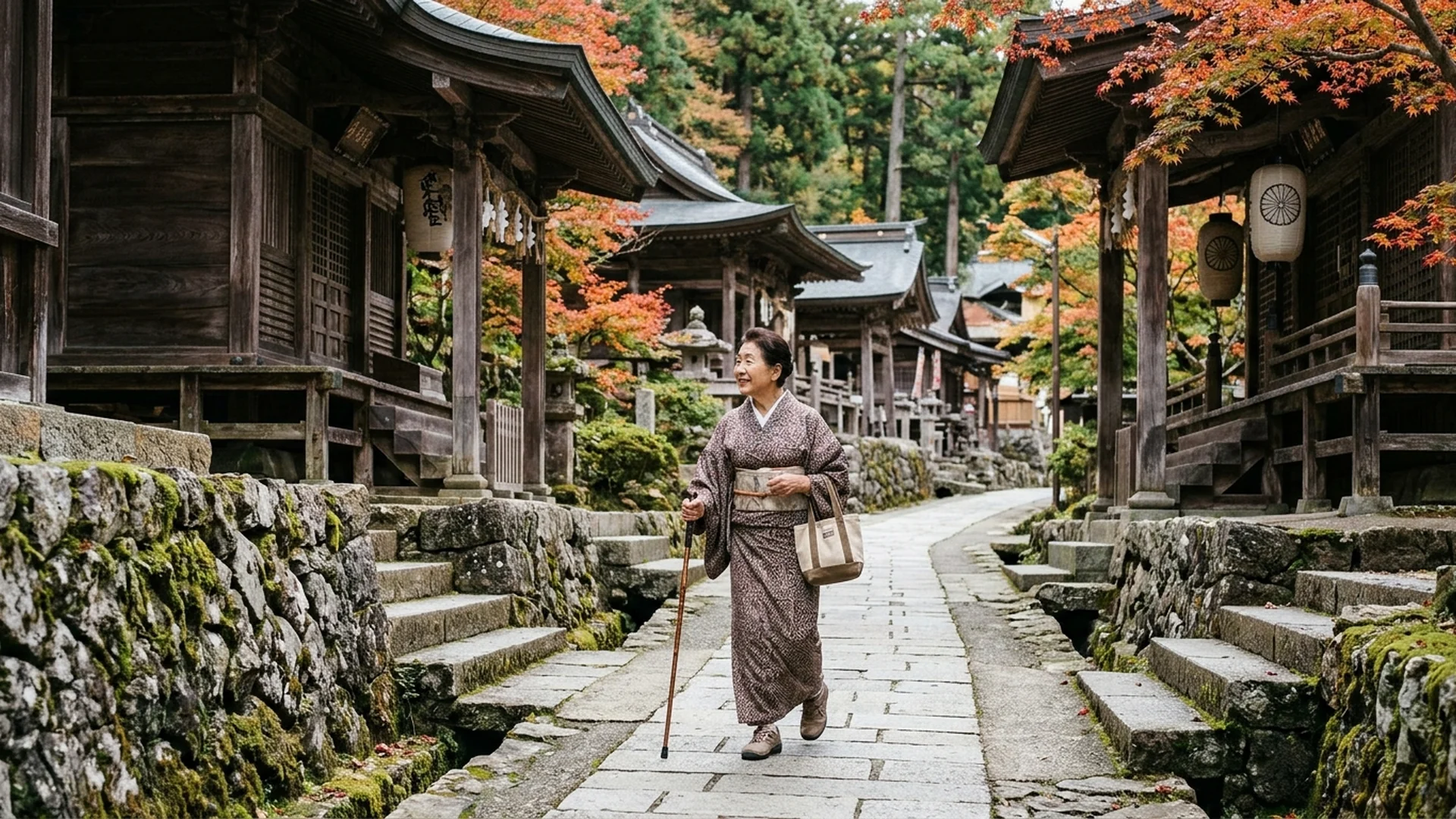
As the morning mist lifts over the soaring peaks of the Hida region, the resonant chime of an ancient temple bell drifts through the cypress forests, evoking a bygone era carefully preserved within the enclave affectionately known as Little Kyoto. Dating back to the late Sengoku period in the 16th century, the visionary daimyō Kanamori Nagachika meticulously modeled Takayama’s sacred topography and urban layout after the imperial elegance of Kyoto. Yet, while the bustling merchant lanes of Sanmachi Suji command much of the traveler’s attention, the Takayama Higashiyama Walking Course remains a tranquil sanctuary—a living time capsule safeguarding spiritual devotion and master-crafted wooden architecture in pristine isolation.
To step onto this 3.5-kilometer trail is not merely to take a physical walk, but to travel backward through centuries of Japanese history. Flanked by towering old-growth trees and punctuated by more than a dozen historic temples terraced along the slopes of Mount Higashiyama, the path invites the discerning traveler to step away from the clamor of mainstream tourism and immerse themselves in a quiet, minimalist aesthetic.
Architecture of Devotion: Deciphering Kyoto’s Blueprint in Hida
The conception of the Higashiyama Teramachi temple district reflects the sophisticated foresight of the Kanamori clan, who envisioned Takayama not merely as a center of military administration, but as a bastion of refined arts and spiritual culture. A careful examination of the urban layout reveals a deliberate arrangement of Zen and Buddhist sanctuaries along the eastern foothills. These sacred grounds once served as a strategic defensive barrier during times of conflict and as tranquil zones for contemplation in times of peace.
Strolling along the narrow, gravel-paved pathways and weathered stone steps leads the wanderer to monumental religious landmarks such as Unryuji Temple. Its impressive entrance gate, relocated directly from the former Takayama Castle, bears intricate wood-carving details that speak volumes of the legendary Hida no Takumi master craftsmen. Nearby, Sogenji and Daioji temples stand in quiet dignity amid the sheltering foliage. Each sanctuary maintains a distinct character, defined by dark-tiled roofs and meticulously raked Zen rock gardens.
From Sacred Shadows to Forest Paths: The Trail to Shiroyama Castle
Beyond the threshold of the temple district, the pathway gradually transitions into a shaded forest track, drawing travelers into the verdant embrace of Shiroyama Park—the historic site of the ruins of Takayama Castle. Once the seat of formidable regional power before its dismantling under Tokugawa shogunate decrees, the castle grounds now exist in a state of tranquil reclamation.
Today, little remains of the formidable fortress save for sturdy granite foundations and moats embraced by seasonal flora. Walking through this quiet woodland imparts a profound sense of stillness. The susurration of wind through pine needles and the dappled sunlight filtering through the canopy create an ideal environment for introspection, merging architectural heritage with the pristine alpine ecosystem of the Japanese Alps.
The Aesthetics of Seasons: The Transience of Color and Time
The Higashiyama Walking Course reveals a distinct, evocative beauty with every turn of the calendar. In spring, ancient cherry blossom trees arch gracefully over the pathways, showering delicate pink petals against the dark timber walls of the sanctuaries in a scene reminiscent of a classical ink painting. By autumn, typically stretching from October through November, the surrounding hillsides ignite with vibrant hues of crimson, amber, and gold, offering an unhurried vantage point for momijigari leaf-peeping.
In the depths of winter, when pristine blankets of snow settle silently over temple roofs and stone lanterns, Takayama assumes an almost dreamlike slumber. The crisp mountain air and absolute quiet elevate the solemnity and purity of the landscape to an unforgettable plateau.